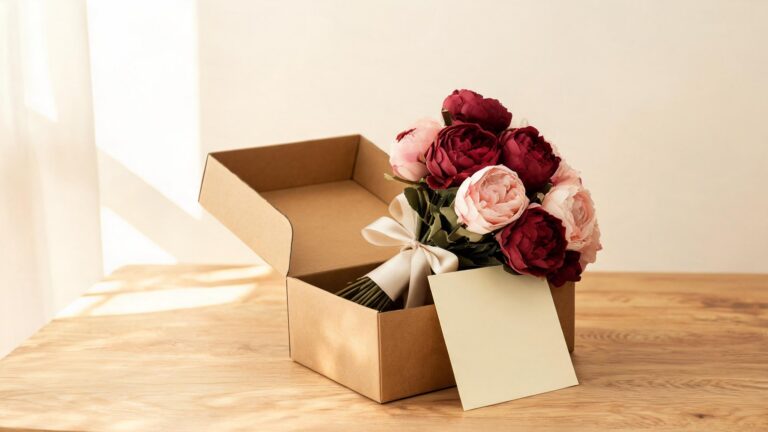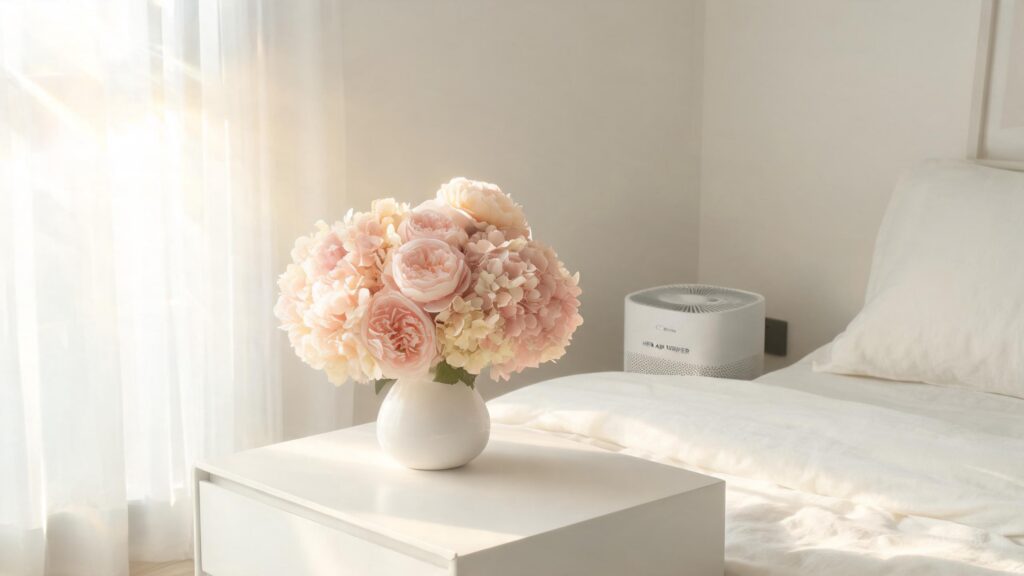
Short answer: Artificial flowers can be a practical choice for people who want to reduce exposure to natural flower pollen. Manufactured flowers do not grow or reproduce, so they do not produce their own pollen. However, no decorative product can be described as completely allergy-proof: faux flowers can collect household dust and outdoor pollen, and some people may be sensitive to fragrances, coatings, adhesives, or other materials.
This guide explains what artificial flowers can and cannot do, how to choose them carefully, and how to keep an arrangement cleaner in an allergy-conscious home.
Can artificial flowers help reduce pollen exposure?
Fresh flowers may bring pollen into a room. For someone with seasonal allergies or pollen sensitivity, replacing fresh arrangements with artificial flowers removes that particular source of newly produced pollen. This is the main reason faux flowers can be useful in bedrooms, offices, reception areas, dining rooms, and event spaces.
The benefit is simple: an artificial hydrangea, tulip, or rose does not release natural pollen. It can still collect particles that are already in the air, though. An open window, clothing, pets, or ventilation can carry pollen and dust indoors, where particles settle on petals and leaves.
The accurate way to describe the benefit: artificial flowers are pollen-free at the source, but they still need regular dusting and thoughtful placement.
What can still trigger allergy symptoms?
1. Dust and settled pollen
Textured petals and leaves can hold dust. If an arrangement is rarely cleaned, moving it may release particles back into the air. This does not mean the flower itself created the allergen; it means the surface has become a collector.
2. Added fragrance
Some decorative flowers, packaging, or room sprays are scented. Fragrance is not the same as pollen, but strong odors may bother people with fragrance sensitivity or sensitive airways. Choose unscented arrangements and avoid adding perfume, essential oils, or scented cleaning sprays.
3. Materials, coatings, and adhesives
Artificial flowers may contain fabric, plastic, polymer coatings, wire, dyes, and adhesives. Most people use them without difficulty, but individual sensitivities vary. Check the product information, air out a newly opened arrangement in a ventilated space, and avoid prolonged skin contact if you already know that certain materials irritate you.
4. Damp or poorly ventilated storage
Any decor stored in a damp area can become musty. Keep faux flowers dry and store them away from moisture. If an arrangement develops an unusual odor, visible residue, or damage, stop using it until it has been cleaned or replaced.
How to choose artificial flowers for an allergy-conscious home
- Choose unscented products. Do not assume that fragrance makes an arrangement feel more realistic.
- Read the material and care information. Clear product details make it easier to avoid a known sensitivity — our complete guide to choosing artificial flowers walks through what to look for on the product page.
- Prefer designs that are easy to clean. Open petals and removable stems are usually easier to dust than very dense arrangements.
- Inspect the item when it arrives. Look for strong odors, loose residue, damaged coatings, or excess dust from packaging.
- Place it thoughtfully. Avoid putting decor directly beside an open window, air vent, or humidifier where particles or moisture may collect faster.
Featured real-touch arrangement
Hydrangea Real Touch – $26
A lifelike decorative option available in multiple colors. The product page lists its materials and care instructions, so shoppers with known sensitivities can review the details before choosing a variation.
How to clean faux flowers without spreading more dust
Regular light cleaning is better than waiting for a heavy layer of dust to build up. Our how to clean artificial flowers guide covers the dust-free routine step by step. Always follow the care instructions for the specific product because water, heat, or cleaning solutions can damage some coatings and dyes.
- Move the arrangement carefully. If possible, clean it in a well-ventilated area away from the person who is most sensitive.
- Use a soft brush or dry microfiber cloth. Work from the top of each bloom downward so loosened particles fall away from clean areas.
- Use only cool, gentle airflow when permitted. Keep the dryer or air source at a distance. Strong airflow can damage petals and scatter dust.
- Clean the vase and nearby surface. Dust often settles around the base as well as on the flowers.
- Let the arrangement dry completely. If the manufacturer’s instructions allow a damp cleaning method, do not return the flowers to storage while moisture remains.
For the BloomWitness Hydrangea Real Touch arrangement, the product care instructions recommend a soft brush, dry cloth, or cool air and advise against washing it with water.
Where should you place artificial flowers?
Good placement reduces how quickly particles accumulate. A living-room console, dining table, covered reception desk, or shelf away from an open window is usually easier to maintain than a windowsill. In a bedroom, keep the arrangement away from the pillow area and include it in the room’s normal dusting routine.
If pets enter the space, place decorative flowers where they cannot chew loose pieces or pull the arrangement down. Artificial flowers are decor, not toys or food.
When should you speak with an allergist?
If symptoms are frequent, severe, or difficult to connect to a specific trigger, an allergist can help identify whether pollen, dust, mold, fragrance, or another exposure is involved. Seek professional medical advice instead of relying on a home-decor change to diagnose or treat symptoms.
Top Pick: Real-Touch Hydrangea for a Low-Dust Home
For the allergy-conscious placement guidance above, real-touch hydrangea combines a smooth, polymer-coated surface that traps less dust than open-petal blooms.
- Product: 6 Stems Real Touch Hydrangea Bouquet — lifelike faux silk blooms
- Price: $35.99 with free shipping
- Why it fits this guide: smooth coated petals dust off faster, matching the cleaning and placement advice above
Shop the Real Touch Hydrangea Bouquet →
Frequently asked questions
Are artificial flowers completely hypoallergenic?
No. They do not produce natural pollen, but they can collect dust and airborne pollen. Materials or added fragrance may also bother some individuals. “Lower-pollen decor” is more accurate than “completely hypoallergenic.”
How often should faux flowers be cleaned?
There is no single schedule for every home. Check the arrangement during routine dusting and clean it when particles become visible. Homes with open windows, pets, nearby construction, or high pollen levels may need more frequent care.
Are real-touch flowers better than silk flowers for allergies?
The label “real touch” describes feel and construction, not a medical safety rating — see how real touch flowers work for what the coating and finish actually are. For allergy-conscious shopping, the more useful questions are whether the product is unscented, what materials it contains, and how easily it can be cleaned.
Can artificial flowers be used in a bedroom?
Yes, if they are kept clean and do not contain a fragrance or material that bothers the person using the room. Place them away from the bed and direct airflow, and clean both the arrangement and the surface beneath it.
Bottom line
Artificial flowers can remove one common indoor source of flower pollen while providing long-lasting color. Their real advantage for allergy-conscious decorating comes from choosing unscented products, reviewing materials, keeping arrangements dry, and cleaning them regularly. They are a practical decor option, but they should not be marketed as a guaranteed treatment or as completely allergen-free.
Ready to bring flowers back into the room?
The Real Touch Hydrangea Bouquet pairs pollen-free blooms with a low-dust coated surface — $35.99 with free shipping and 30-day returns.
Sources and medical note
- American College of Allergy, Asthma & Immunology: Pollen Allergies
- American College of Allergy, Asthma & Immunology: Dust Allergies
- American College of Allergy, Asthma & Immunology: When to See an Allergist
This article provides general information about decor and allergen exposure. It is not medical advice and does not replace diagnosis or treatment from a qualified healthcare professional.