Key Takeaways
A step-by-step guide to cleaning artificial flowers — dry dusting, deep water baths, stain removal, and care tips that make silk and real-touch blooms look brand new.
Quick answer
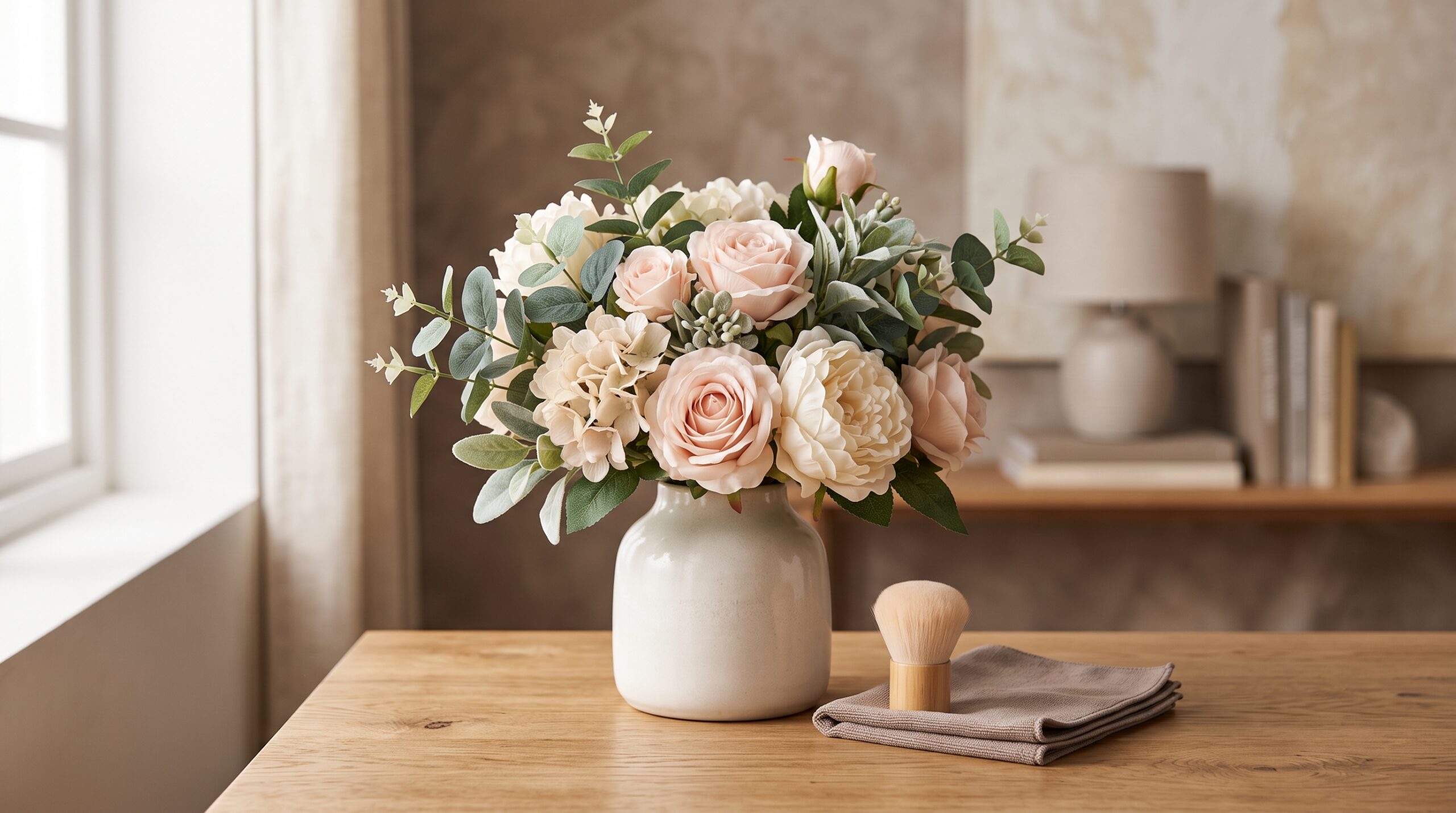
The safest way to clean artificial flowers is dry cleaning: a soft brush or makeup brush for dust, a dry lint-free cloth for leftovers, and a cool hairdryer on low for crevices. For silk and polyester, skip the sink — dry dusting is safest. Water-based washing is only for polyester and hard plastic blooms when the care label allows it. Deep clean every 2–3 months, dust weekly.
Jump to: The salt-shake trick · Compressed air & vacuum · Stain-by-stain fixes · FAQ
Why Artificial Flowers Collect Dust (And Yes, They Do)
Here’s a truth no one tells you when you fall in love with a beautiful silk bouquet: faux florals need just as much care as the real thing — but a very different kind. If you’re wondering how to clean artificial flowers the right way, you’ve landed in the right place.
Because they’re lightweight and often placed in living rooms, bedrooms and entryways, silk flowers act like tiny dust magnets. Over months, that micro-dust dulls the petals, flattens the texture of real-touch blooms, and turns a once-luxurious arrangement into something that looks tired.
The good news? Cleaning them correctly is easy, takes under an hour, and can make a premium arrangement look brand new again. In this guide, we’ll walk you through exactly how to clean artificial flowers — from quick weekly dusting to a deep water bath — without damaging silk, latex, or plastic petals.
Dry Cleaning Is the Safest Way to Clean Artificial Flowers
The easiest and safest way to clean most artificial flowers is dry cleaning — no water required. It keeps dust off petals and leaves without risking moisture damage to stems, fabrics, or any decorative coatings.
Although every arrangement differs, a gentle, dry routine works for most pieces. Here is a simple three-step method:
- Soft brush. Use a clean, dry, soft-bristled brush (like a small makeup or paintbrush) to sweep dust off petals and leaves.
- Dry cloth. Wipe surfaces with a soft, dry, lint-free cloth to pick up the loosened dust.
- Cool air dryer. For hard-to-reach areas, set a hairdryer to cool and low power, then gently blow dust away.
Want a low-maintenance option for everyday decor? The BloomWitness Hydrangea Real Touch is a good example of a piece designed for simple care.
How to Clean Silk Flowers: The Salt or Rice Shake Method)
This is the vintage trick florists use for silk blooms, and it is the one method that beats a brush on heavily textured petals. Coarse salt (or uncooked rice) acts as a gentle abrasive: it pulls embedded dust off the fabric without wetting or crushing it.
- Put the loose stems in a large paper bag or clean pillowcase. Add about a quarter cup of coarse salt or uncooked rice.
- Seal the top and shake gently for 45–60 seconds — not harder, or petals will bend.
- Lift the stems out and brush off the salt with a soft, dry brush.
Use it only on silk, polyester, and fabric petals. Skip it on real-touch latex, foam, glitter, or painted finishes — the granules can scratch a soft coating. When dusting an old dry arrangement, we always try this before anything wet: it removes more grime with less risk than a damp wipe.
* The low-suction + protective-screen approach follows textile conservation guidance from the Canadian Conservation Institute: Washing non-coloured textiles. The same principle — control the force, support the object — applies to faux petals.
Compressed Air & Vacuum: When a Brush Can’t Reach
Tight peony and hydrangea centers collect dust that no brush touches. Two tools solve this: a can of compressed air (the kind sold for keyboards) and a low-suction vacuum with a soft brush attachment. Support the flower head with one hand while you work. Conservation practice keeps the nozzle away from the petals and uses suction only to collect loosened dust — never press a vacuum nozzle directly onto a flower or you will pull off petals and leave a dent.
For lint and pet hair, a cool, low-speed hairdryer held about 30 cm away lifts it off; a rubber glove wiped across the surface pulls hair off fabric petals in one pass.
How Often Should You Clean Artificial Flowers?
| Environment | Quick dusting | Deep clean |
|---|---|---|
| High-traffic living room | Every 1–2 weeks | Every 2–3 months |
| Bedroom / low-traffic | Every 2–3 weeks | Every 4–6 months |
| Kitchen / near open windows | Weekly | Every 1–2 months |
| Outdoor covered patio | Weekly | Every 4–6 weeks |
Rule of thumb: if you can see a dull haze when light hits the petals, or if running a finger across the flower leaves a visible line, it’s time to clean.
What You’ll Need
- A soft feather duster or a clean, dry microfiber cloth
- Hairdryer (cool/low setting) — optional but brilliant for crevices
- Lukewarm water
- Mild dish soap or gentle laundry detergent
- An empty spray bottle
- White vinegar (for stubborn mineral build-up)
- Soft toothbrush or makeup brush (for tight petal folds)
Method 1: Quick Dry Dusting (Weekly)
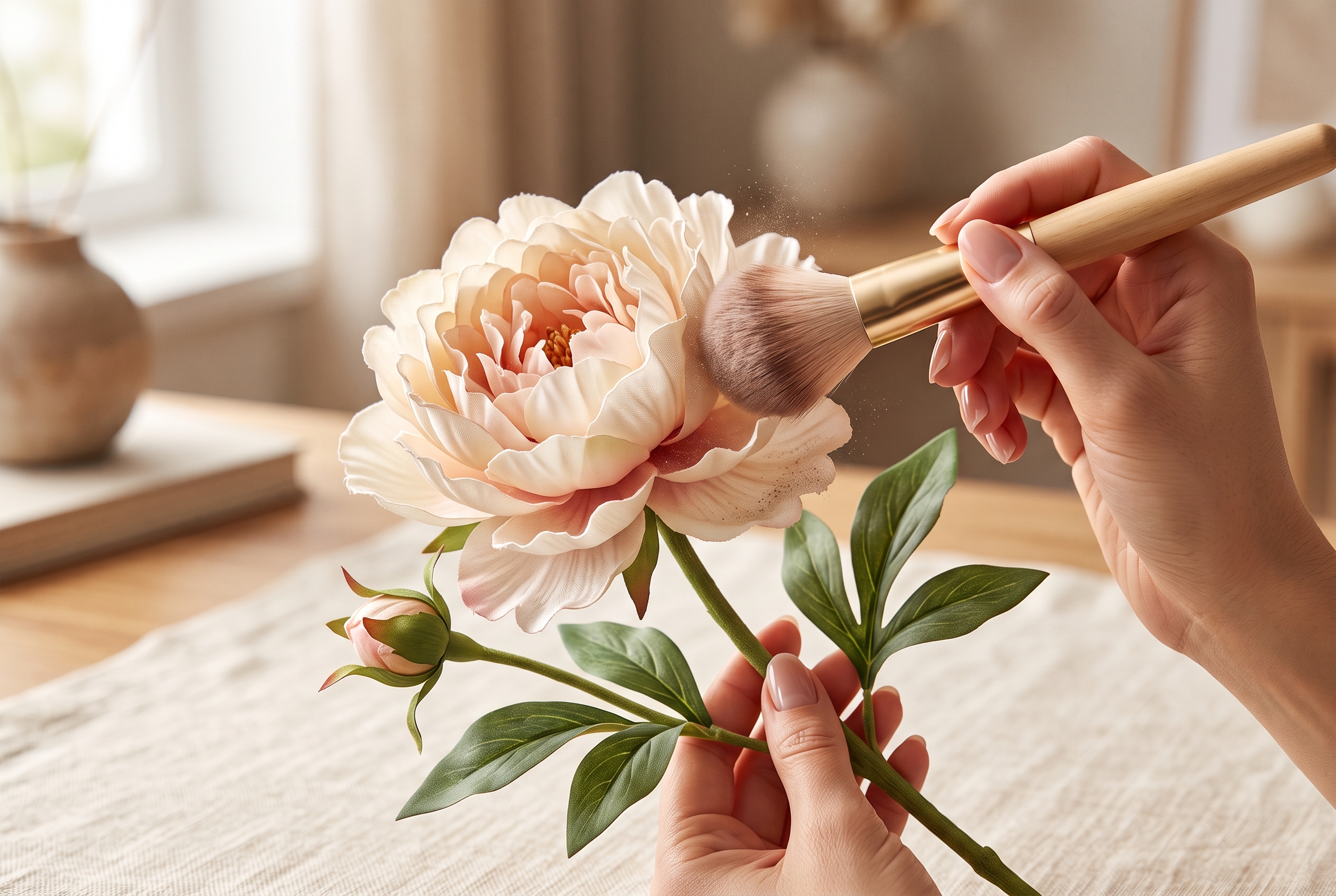
For regular maintenance, dry dusting is all you need — and it’s the safest method because it never risks saturating silk or latex.
- Use a soft feather duster or dry microfiber cloth.
- Gently brush from the top of the stem down toward the base, following the direction of the petals.
- For hard-to-reach creases, use the cool setting on a hairdryer held about a foot away — the airflow lifts dust without touching the petals.
Good for: silk, real-touch latex, PE foam, and plastic blooms. This is the go-to for the hero bouquet on your mantel.
How to Wash Artificial Flowers: Spot Clean (Polyester & Plastic Only)y
Use this method only when the product care instructions say the flowers are washable. It is generally suited to polyester and hard plastic flowers—not real-touch, latex-coated, PE foam, hand-dyed, glued, or foam-based designs.
- Test a hidden area first and stop if color transfers or the surface changes.
- Use a soft microfiber cloth that is only slightly damp, not wet.
- Wipe petals and leaves gently, working one small area at a time.
- Keep glued bases, foam, and wired stems as dry as possible.
- Let the arrangement air-dry fully away from direct sunlight and heat.
For real-touch flowers, use a soft dry brush or cool, low-speed air only unless the product care instructions specifically confirm that water is safe.
How to Remove Stubborn Stains & Yellowing
For hard plastic only, test a hidden area before wiping mineral residue with a cloth lightly dampened with a 50/50 water and white vinegar mix. Do not use this mixture on silk, real-touch, latex-coated, foam, or hand-dyed petals.
For silk or polyester flowers, start with dry dusting. If the care instructions allow spot cleaning, use a barely damp microfiber cloth and test a hidden area first. Never use bleach, abrasive pads, or harsh solvents.
For pet hair and lint, use a soft dry brush or a cool, low-speed hairdryer held at a distance.
How to Dust Artificial Flowers: Job-Specific Fixes (Oil, Pet Hair, Foggy Film)m
Oily or greasy film — heavy residue from kitchens is greasy, and dry dusting alone will not remove it. On sturdy hard plastic only, wipe with a cloth slightly dampened with mild dish soap and water, then dry immediately. Do not use soapy water on silk, real-touch, foam, or hand-painted petals — the surfactant can dull their finish.
Pet hair — a dry rubber glove or a lint roller lifts hair off fabric petals faster than a brush ever will. Then finish with a cool, low-speed hairdryer to remove the last specks.
Foggy white film — on hard plastic, test a hidden area, then wipe with a 50/50 water and white vinegar mix. Never use vinegar on silk, real-touch, latex-coated, foam, or hand-dyed petals.
How to Care for Artificial Flowers Between Cleans
- Keep them out of direct, prolonged sunlight — UV causes silk and polyester to fade over months.
- Avoid placing them directly over a heat vent or radiator; high heat can warp PET stems and dry out latex.
- Fluff petals gently every few weeks to maintain their shape.
- Store seasonal blooms in a cool, dry box with tissue between layers when not in use.
Cleaning by Material (Quick Reference)
| Material | Best method | Avoid |
|---|---|---|
| Silk / polyester | Dry dust; spot-clean only if product care instructions allow | Scrubbing, bleach, wringing, soaking glued parts |
| Real-touch / latex-coated | Soft dry brush or cool, low-speed air | Standing water, steam, heat, solvents |
| PE foam | Dry dust; gentle spot clean | Immersion, solvents, abrasive cloth |
| PVC / hard plastic | Damp cloth; mild soap if needed | Abrasive pads, bleach |
How to Make Artificial Flowers Look Brand New Again
The #1 secret to making faux flowers look fresh isn’t harsh chemicals — it’s fluffing. Petals and leaves get compressed against each other in a vase, which flattens their silhouette. Gently bend each layer outward with your fingertips to restore the bloom’s natural volume, then arrange them with rotated stems so flowers face different directions. Combine that with a quick dusting, and an older arrangement genuinely looks newly shipped.
How Long Should Artificial Flowers Last?
With proper indoor care, quality artificial flowers typically last 3–5 years, and premium silk or real-touch blooms can last 5 years or more. Actual lifespan varies by material, sunlight, humidity, and handling. Regular dry dusting and careful storage help preserve their appearance over time.
Top Pick: A Real-Touch Bouquet That Stays Easy to Clean
If you are shopping for blooms that combine realism with low maintenance, real-touch hydrangea is the sweet spot: it cleans with the dry routine above — a soft brush and a cool-air blowout — and never needs a sink.
- Product: 6 Stems Real Touch Hydrangea Bouquet — lifelike faux silk blooms
- Price: $35.99 with free shipping
- Why it fits this guide: dry dusting and fluffing only; no water, no steam, no soaking
Shop the Real Touch Hydrangea Bouquet →
Common Artificial Flower Cleaning Questions
Can I put artificial flowers in the washing machine?
Generally no. The agitation can fray silk petals, crack latex, and warp stems. Hand-cleaning in lukewarm water is safer for water-safe materials, and dry dusting is safest of all.
Can I use a steamer on silk flowers?
Use it sparingly and from a distance. A quick, low steam burst can de-wrinkle flattened petals, but holding it too close can warp or pucker silk — test on a hidden petal first.
Are real-touch flowers waterproof?
No. Real-touch latex blooms are soft and realistic, but not designed to sit in water. Dry cleaning methods are always best for them.
How do I keep fake flowers dust-free longer?
Place them away from vents and open windows, and give them a 30-second cool-air blowout or dry-dust every week. A little routine is all it takes.
Can I vacuum artificial flowers?
You can, but only with low suction, a soft brush attachment, and the nozzle kept away from the petals — use it to collect dust your brush loosens, not to pull directly on the flower. High suction will bend stems and detach petals.
Does vinegar hurt silk flowers?
Yes, avoid it. Vinegar can dull or distort silk, real-touch latex, and hand-painted finishes. Use it only on hard plastic, 50/50 with water, after testing a hidden area.
Do I need to clean indoor and outdoor artificial flowers differently?
Outdoor blooms pick up pollen, road dust, and rain residue, so they need a deeper clean more often — every 4–6 weeks rather than quarterly. For outdoor-grade plastic, a gentle rinse and air-dry works; real-touch and silk should never be hosed down. UV light causes the fading that makes outdoor pieces look tired. See how quickly that happens in our test: do faux flowers fade in sunlight.
Related: Not sure which material suits your space? Read our guide on what artificial flowers are made of, or explore the Real-Touch collection that stays beautiful season after season. Rebuilding a vase after a clean? Our how to arrange artificial flowers in a vase guide has the step-by-step.
Ready to build a low-maintenance arrangement?
The Real Touch Hydrangea Bouquet cleans up with a soft brush in minutes — $35.99 with free shipping and 30-day returns.