The Short Answer
Real touch flowers are made with polyurethane (PU) or latex polymer coatings that compress and spring back like real petal tissue, delivering a soft, slightly tacky, lifelike feel. Silk flowers are woven polyester fabric (despite the name, rarely true silk) treated with stiffeners, giving a smooth, fabric-like texture. Real touch wins on tactile realism and close-up photography; silk wins on affordability, colour range and fuller, structured blooms like hydrangeas and orchids.
If you have ever ordered artificial flowers online and been surprised by how they felt in your hand, you have already hit the core of the real touch vs silk flowers difference. Both are “fake” in the best possible way, but they are built from completely different materials and engineered for different jobs.
This guide breaks down exactly how the two compare — material, feel, realism, price, lifespan, cleaning and best use cases — so you can choose the right stem for the right room, wedding or commercial space.[1][3]
Key Differences at a Glance
Material
Real touch: PU / latex polymer over a fabric or foam core
Silk: woven polyester fabric
Realism Score
9/10
Real touch (close contact)
8/10
Silk (viewed at distance)
Price per Stem
Real touch: $12 – $30
Silk: $8 – $20
Silk runs 30–50% lower in bulk
Lifespan
Real touch: 5 – 7 years
Silk: 3 – 7 years
Both indoor, with proper care
Feel
Real touch: soft, slightly tacky, springs back
Silk: smooth, fabric-like, structured
Best For
Real touch: roses, tulips, peonies, calla lilies
Silk: hydrangea, orchid, lilac, lavender
What Are Real Touch Flowers?
Real touch flowers are premium artificial florals made from polyurethane (PU) or latex polymer, engineered to mimic the feel, weight and gentle “squish” of fresh petals. The name “real touch” refers to the defining trait: when you press a petal between your fingers, it compresses and then recovers with a 2–3 second delayed spring-back that closely mirrors living petal tissue — something silk never achieves.[1]
In our workshop, the first test we run on a new batch of petals is the one you can do in a shop: pinch a petal between your fingers for five seconds and let go. A genuine PU petal springs back within two or three seconds and leaves no crease; a cheap latex copy stays dented and feels sticky. Temperature is the quieter tell — cup a real touch bloom in your palm and it warms slowly, then cools back when you set it down, the way a freshly cut flower does.[1] Want the full engineering story? We broke it down in how real touch flowers work.
The manufacturing process is what sets them apart. Rather than being stamped from fabric rolls, premium real touch petals are created using 3D precision injection molding. Molds are cast directly from living, blooming flower petals, capturing every microscopic vein, organic wrinkle and natural curvature. Pigments are mixed directly into the liquid PU resin — not painted on afterward — which is why high-end real touch petals do not chip or flake.[6][7]
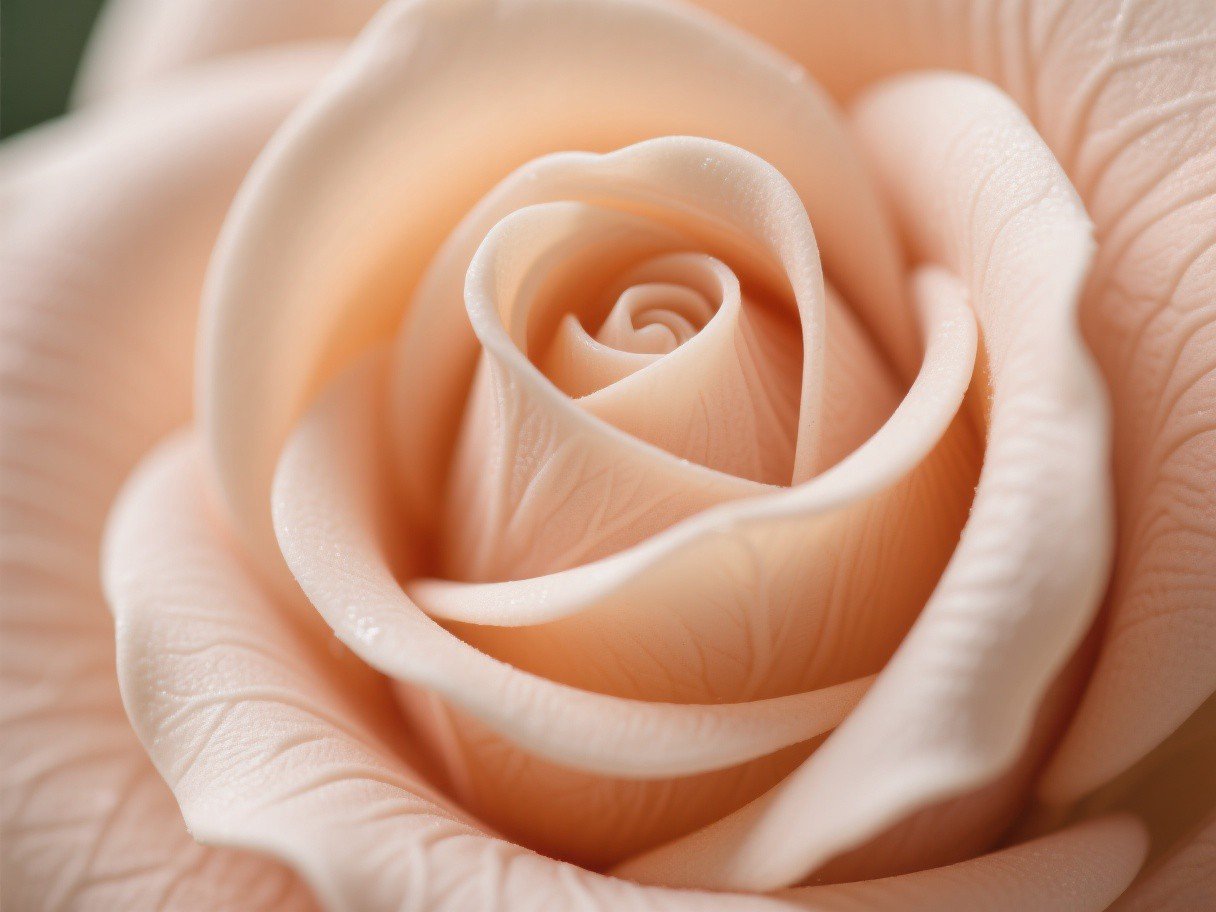
Because they replicate the botanical structure of fresh flowers so faithfully, real touch blooms photograph beautifully and are the first choice for wedding bouquets, bridal portraits and professional styling where guests will be within arm’s reach.[2]
What Are Silk Flowers?
Silk flowers are fabric-based artificial flowers. Despite the name, most modern “silk” flowers are made from polyester or synthetic fabrics rather than actual silk. They are typically lightweight, brighter in colour, more structured in shape, and remain smooth and predictable to the touch.[2][4]
Cost efficiency is silk’s superpower. Per-stem costs in bulk orders can run 30–50% lower than PU equivalents, which makes silk the obvious choice when you need to fill a four-foot urn, line a ceremony aisle or dress a large commercial space without breaking the budget.[4] If you are also weighing plastic stems, our silk vs plastic comparison covers where the two split.
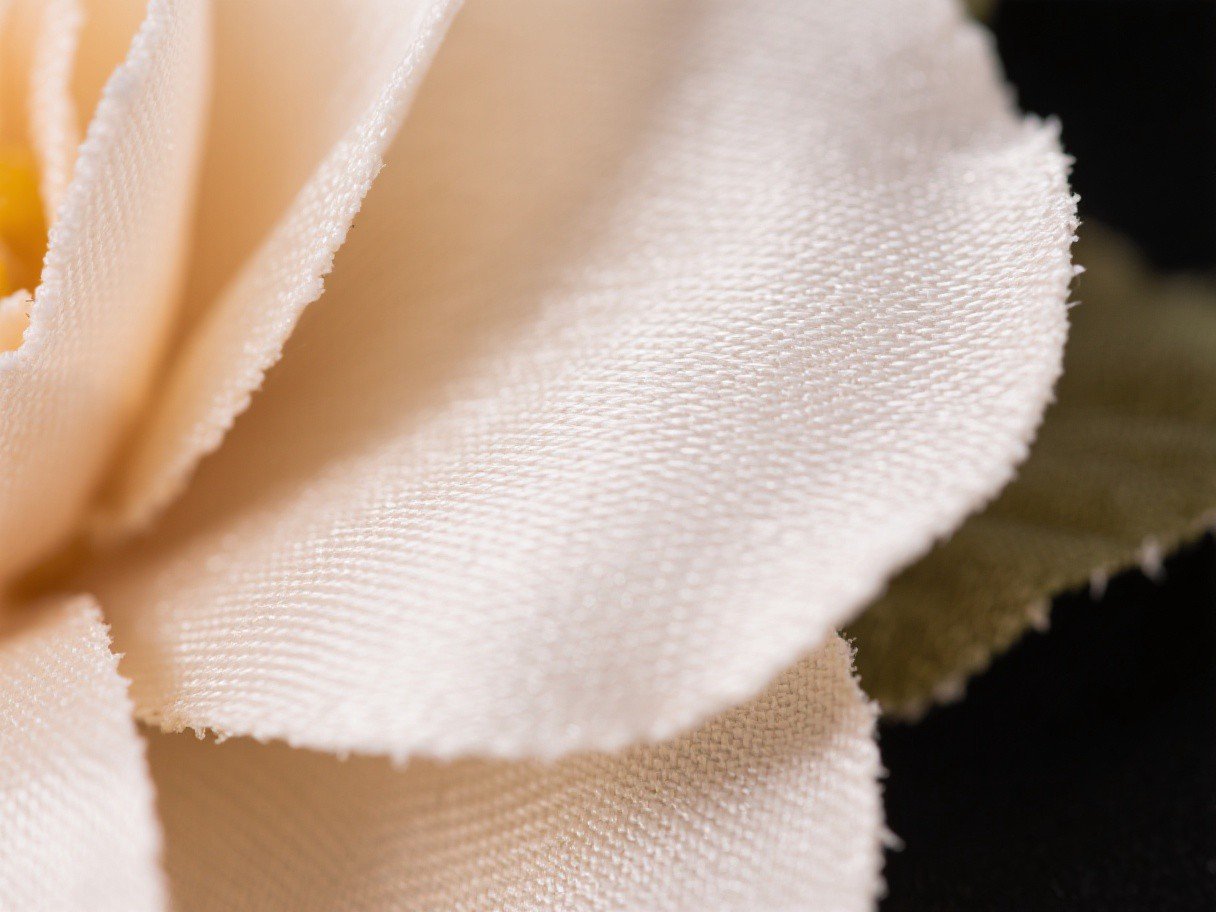
High-grade silk flowers are hand-dyed polyester woven to mimic real silk’s drape, with hand-painted edges, veining and slight asymmetry signalling higher craftsmanship. Machine-dyed uniformity, by contrast, can look artificial at close range.[9]
“Real touch flowers use specialized polyurethane polymer that compresses and springs back like actual petal tissue, while silk flowers are fabric treated with stiffeners that remain smooth and predictable. That 2–3 second delayed recovery is what mimics real petals — something silk never achieves.”
— Prestige Botanicals, Real Touch Science[1]
Detailed Comparison Table
| Feature | Real Touch | Silk |
|---|---|---|
| Core material | PU / latex polymer over fabric or foam core | Woven polyester fabric (rarely true silk) |
| Tactile feel | Soft, slightly tacky, springs back in 2–3s | Smooth, fabric-like, structured and predictable |
| Visual realism (close-up) | Excellent — matte, catches light naturally | Very good at distance, fabric visible up close |
| Realism score | 9/10 | 8/10 |
| Price per stem | $12 – $30 | $8 – $20 (30–50% lower in bulk) |
| Indoor lifespan | 5 – 7 years | 3 – 7 years |
| Light rain | Dries in 2–4h, no damage | May deform or bleed dye |
| Colour application | Pigment mixed into resin — will not chip | Dyed/painted fabric — can fade with UV |
| Cleaning | Damp microfiber cloth, mild soap | Damp cloth or hairdryer on cool; never soak |
| Best for | Roses, tulips, peonies, calla lilies, magnolia | Hydrangea, orchid, lilac, lavender, fuller blooms |
Sources: Prestige Botanicals, Realistic Artificial Flowers, FakeFlowers Buyer’s Guide, Alibaba B2B sourcing data.[1][3][8]
How They’re Made: Material & Manufacturing
The real touch vs silk flowers difference is ultimately a materials-science story. Cheap fabric flowers are stamped and cut from large rolls of dyed cloth using cookie-cutter machines. Premium real touch petals, by contrast, are created using 3D precision injection molding, with molds cast directly from living, blooming flower petals.[6]
The real touch production pipeline typically runs:[7]
- Botanical scanning — a fresh petal is 3D-scanned or pressed to capture vein structure at ~50 micron resolution.
- Master mold creation — silicone negatives are cast from the scan, preserving every ridge and pore.
- Color formulation — pigments are mixed directly into the liquid PU resin, not painted on afterward. This is why premium real touch petals do not chip.
- Casting and curing — the resin is poured, vacuum-degassed to eliminate bubbles, and cured under controlled temperature.
Silk flowers skip the molding stage entirely. Polyester fabric is dyed, cut and heat-shaped, then assembled onto wire or plastic stems. The result is faster, cheaper and highly scalable — which is exactly why silk dominates bulk commercial orders.[4]
Best Use Cases: Which Should You Choose?
Choose Real Touch when…
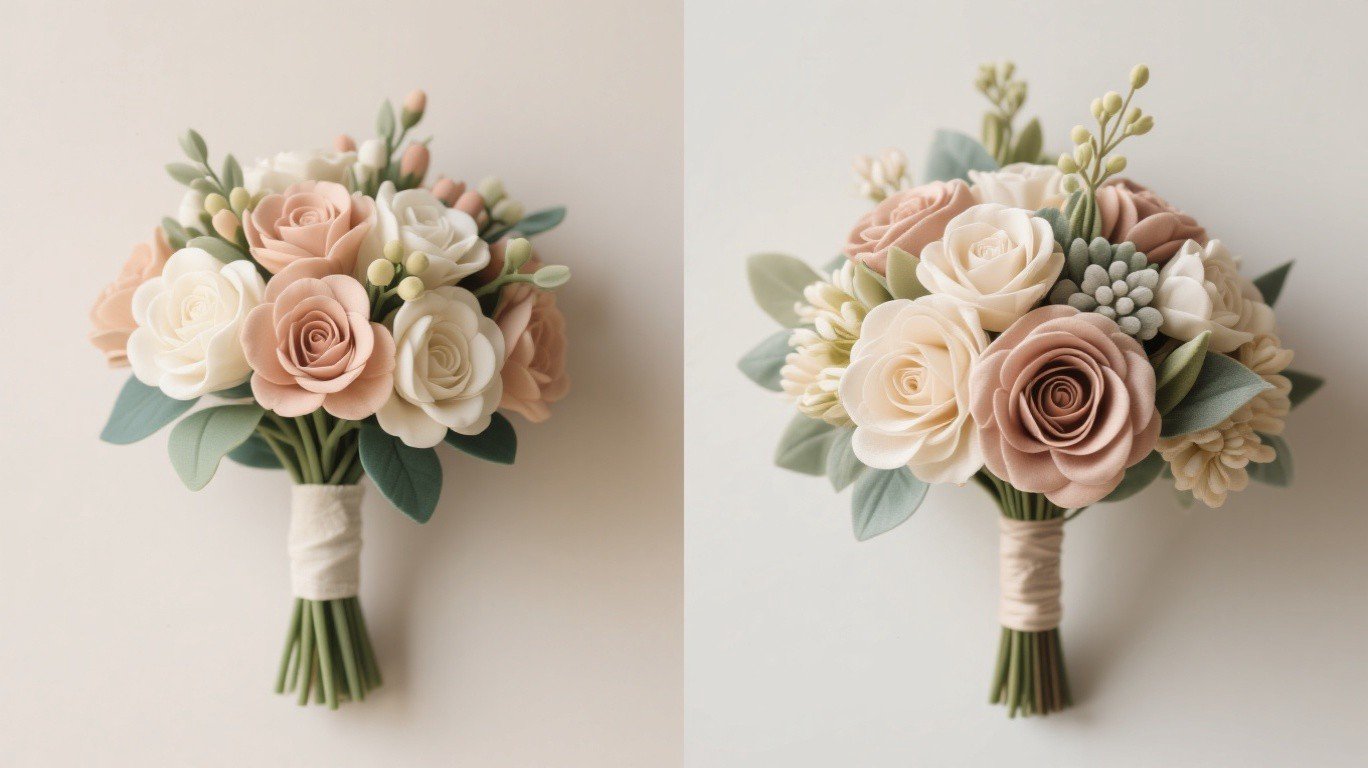
- Guests will hold or touch the flowers (bridal bouquets, corsages)
- Close-up photography is the main purpose
- You need roses, tulips, peonies or calla lilies
- The arrangement sits on a dining table or bedside where people lean in
- Budget allows $12–$30 per stem
Choose Silk when…
- You are filling large volumes (urns, arches, aisle runners)
- The arrangement is viewed from across a room
- You need hydrangeas, orchids, lilac or lavender
- Cost per stem matters more than tactile realism
- The display is permanent commercial decor with minimal handling
A common high-end strategy is to blend both in a single arrangement: real touch roses and peonies at the front where they will be seen and touched, silk hydrangeas and greenery behind to add volume economically.[3]
How to Spot a Real “Real Touch” Flower: 4 Quick Checks
“Real touch” is one of the most overused labels in artificial florals — some low-end factories stamp it on cheap latex that feels like a rubber glove. These four checks take about a minute and tell you whether a stem is genuine PU or marketing fluff.[6]
- The rebound test. Pinch a petal between your fingers for five seconds, then release. Genuine PU springs back within 2–3 seconds and leaves no crease; cheap latex stays dented and sticky.
- The edge gradient. Run a fingertip along the petal edge. Quality petals are thicker at the base and taper to a paper-thin edge, the way real petals do. Uniform thickness and rough plastic burrs point to a cheap mold.
- The smell test. Hold the bloom to your nose. Quality PU is nearly odorless, with at most a faint added floral scent. A strong rubber or chemical smell means recycled plastics and low-grade solvents — worth avoiding in enclosed rooms.
- The warmth test. Cup a petal in your palm for a few seconds. Genuine real touch warms with your hand and cools back slowly, like a fresh bloom; plastic simply stays at room temperature.
These are the same checks we run before a stem leaves our workshop. For a fuller checklist of what to compare before you buy, see our artificial flower buying guide.
Real-World Cost: Weddings & Events
For context, the average total cost of fresh wedding flowers runs $2,740–$6,200, while artificial wedding flowers (silk or real touch) come in at $860–$1,900 — and they last forever rather than 1–2 days.[5]
When evaluating value, think of it as longevity divided by cost. A $12 real touch stem lasting five years offers better ROI than a $3 stem replaced annually — so the “expensive” option is often the cheaper one over time, especially for recurring commercial installations.[8]
Cleaning & Maintenance
Both materials are low-maintenance, but the real touch vs silk flowers difference shows up in how they handle water and UV. For the full routine, step by step, see our how to clean artificial flowers guide.
- Weekly dusting — a microfiber cloth or hairdryer on a cool setting works for both types.[10]
- Deeper cleaning — wipe petals with a barely damp cloth and mild soap, then dry immediately. Twist the cloth to remove excess water first; never soak either type.[10]
- UV and sunlight — UV is the main enemy of colour, especially for dyed silk. Avoid prolonged direct sun, or look for outdoor-grade, UV-treated materials.[11] Curious how quickly fading actually shows up? We timed it in do faux flowers fade in sunlight.
- Fire safety — keep both away from open flames and heating vents; most synthetic fabrics are flammable and some jurisdictions require fire-rated decor in commercial settings.[9]
Top Pick: Real Touch Blooms That Feel Worth the Upgrade
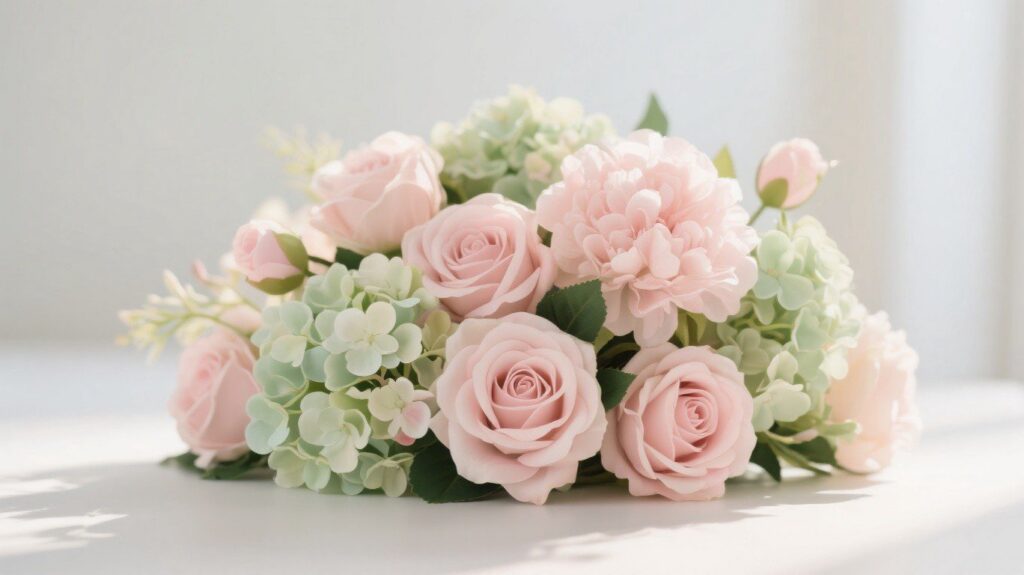
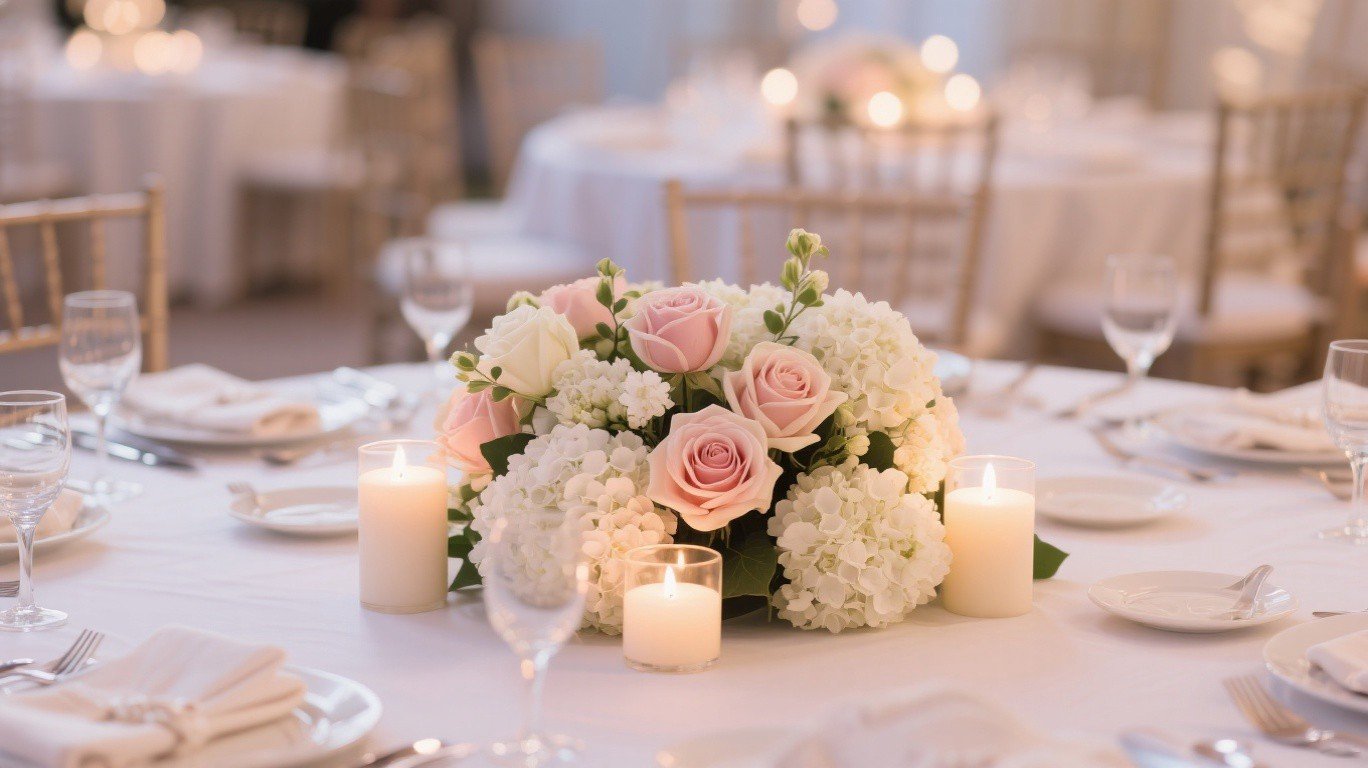
If the comparison above has you leaning real touch, this is the bouquet that makes the material difference obvious: petals that compress and spring back, exactly as the “delayed recovery” described above.
- Product: 6 Stems Real Touch Hydrangea Bouquet — lifelike faux silk blooms
- Price: $35.99 with free shipping
- Why it fits this article: the clearest hands-on demonstration of the real touch difference at a non-wedding price
Frequently Asked Questions
What is the difference between silk and real touch flowers?
Real touch flowers use specialized polyurethane or latex polymer that compresses and springs back like real petal tissue, creating a 2–3 second delayed recovery that mimics fresh petals. Silk flowers are polyester fabric treated with stiffeners that remain smooth and fabric-like to the touch.[1]
Are real touch flowers worth the extra cost?
Yes, for close-contact settings such as wedding bouquets, bridal photography and high-end home decor. Real touch flowers cost roughly 30–50% more per stem than silk equivalents, but their superior tactile realism and 5–7 year lifespan often deliver better long-term value.[4][8]
How long do real touch and silk flowers last?
Both materials are indefinite with proper care. Real touch flowers typically last 5–7 years indoors, while premium silk flowers last 3–7 years. UV exposure and humidity are the main factors that shorten lifespan for both types.[8]
Can you use real touch flowers outdoors?
Real touch flowers perform better outdoors than silk in light rain, drying in 2–4 hours without damage, but prolonged UV exposure will still degrade the polymer over time. For permanent outdoor installations, look for UV-treated outdoor-grade materials regardless of type.
How do you clean real touch vs silk flowers?
Both can be dusted weekly with a microfiber cloth or a hairdryer on a cool setting. For deeper cleaning, wipe petals with a barely damp cloth and mild soap, then dry immediately. Never soak either type, and keep both away from open flames and heating vents.[10]
Are real touch flowers toxic or smelly?
Quality PU real touch flowers are nearly odorless and safe to handle. A strong rubber or chemical smell is the signature of low-end recycled polymer blends — a reasonable reason to keep those particular stems out of enclosed rooms or away from small children and pets. For the full picture, see our note on whether artificial flowers are toxic to pets.
The Bottom Line
The real touch vs silk flowers difference comes down to feel versus fill. If your flowers will be touched, held or photographed up close — especially roses, tulips and peonies — real touch’s polymer science is worth the premium. If you are dressing a large space at a distance, filling urns and arches, or working with hydrangeas and orchids, silk delivers the volume and colour range you need at a fraction of the cost.
The best arrangements often use both. Explore BloomWitness’s collection of real touch hydrangeas, silk roses and handcrafted peony bouquets to build a blend that fits your space and budget.