
Artificial flowers are not chemically toxic to pets — the polyester, silk, latex, and foam materials used in their construction will not cause poisoning if touched or smelled. However, artificial flowers do pose physical risks including gastrointestinal obstruction from ingested parts, internal injury from wire stems, and choking hazards from small decorative components. Compared to real flowers, artificial arrangements are significantly safer: many common fresh flowers like lilies, tulips, and daffodils contain natural toxins that can cause severe illness or death in cats and dogs.[1]
Key Takeaways
- →Artificial flowers are non-toxic — they contain no plant poisons that cause chemical toxicity
- →Physical risks include GI obstruction, wire stem puncture, and choking on small parts
- →Real lilies are deadly to cats — even pollen exposure can cause kidney failure within 12 hours[2]
- →Always place artificial flowers on high shelves or in wall-mounted vases out of pets’ reach
- →Call ASPCA Animal Poison Control at (888) 426-4435 if your pet ingests any non-food item[1]
Are Artificial Flowers Chemically Toxic to Pets?
No. The materials used to manufacture artificial flowers — polyester silk, latex polymers, EVA foam, and plastic — are chemically inert and non-toxic to both cats and dogs. These synthetic materials do not contain the alkaloids, glycosides, or other natural toxins found in real plants that cause poisoning.
This means that simply being near artificial flowers, touching them, or even licking the surface will not cause chemical toxicity in your pet. The risk from artificial flowers is purely mechanical — what happens if your pet chews or swallows parts of them.
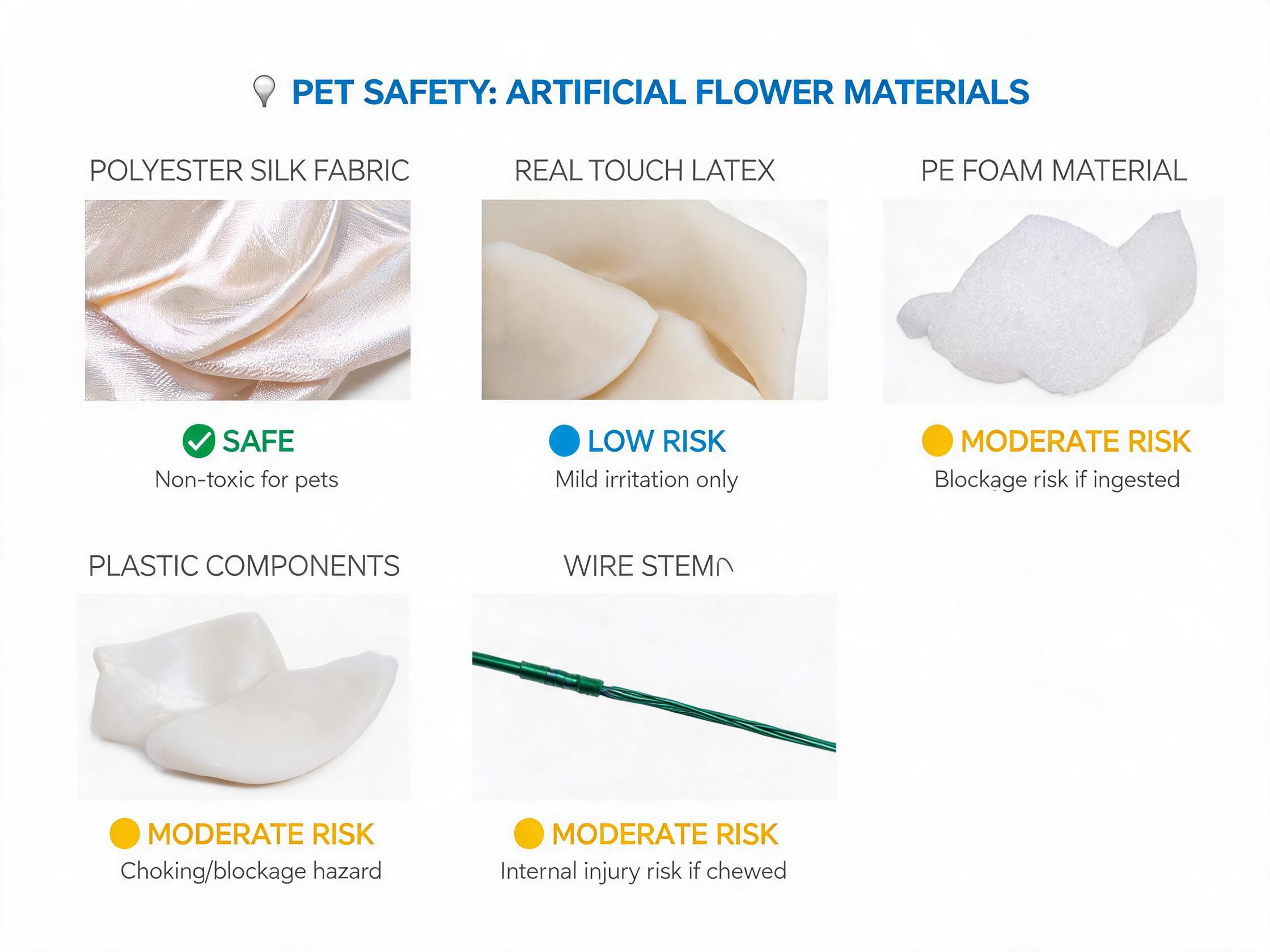
Different artificial flower materials have varying levels of physical risk if ingested by pets. For a closer look at those materials, see our guide to what artificial flowers are made of.
Artificial Flower Materials and Pet Safety
| Material | Chemical Toxicity | Physical Risk Level | Main Concern |
|---|---|---|---|
| Polyester Silk | Non-toxic | Low | Fabric can tangle in digestive tract |
| Real Touch Latex | Non-toxic | Low-Moderate | Soft texture may encourage chewing |
| PE Foam | Non-toxic | Moderate | Crumbles into small ingestible pieces |
| Plastic | Non-toxic | Moderate | Sharp edges when broken |
| Wire Stems | Non-toxic (metal) | High | Can puncture digestive tract or mouth |
Chemical Treatments and Dyes: Are They Dangerous?
The dyes used in quality artificial flowers are generally non-toxic and safety-tested for consumer use. Reputable manufacturers comply with consumer product safety standards that limit harmful chemicals in decorative items.
However, low-quality or imported artificial flowers may use industrial dyes or chemical treatments that could cause mild gastrointestinal upset if ingested in large quantities. Symptoms of dye-related irritation include drooling, mild vomiting, or temporary loss of appetite.
To minimize any chemical risk, choose artificial flowers from reputable brands and avoid products with strong chemical odors, which may indicate residual solvents or treatments.
Good news: Premium silk and real touch flowers from established brands like BloomWitness use safety-tested dyes and materials that are non-toxic to pets and humans alike.
Physical Risks: How Artificial Flowers Can Harm Pets
While artificial flowers won’t poison your pet, they can still cause serious injury through physical means. The three primary physical risks are gastrointestinal obstruction, wire stem injury, and choking.
Gastrointestinal Obstruction
The most common and serious risk of artificial flowers is gastrointestinal (GI) obstruction. When a pet swallows pieces of artificial flowers — particularly fabric petals, foam components, or plastic parts — these materials cannot be digested and may block the digestive tract.
Symptoms of GI obstruction include:
- Vomiting (especially repeated or projectile)
- Loss of appetite and refusal to eat
- Lethargy and decreased activity
- Abdominal pain or swelling
- Constipation or diarrhea
- Drooling or lip smacking
GI obstruction is a medical emergency that may require surgery to resolve. Cats are particularly prone to swallowing non-food items, a behavior known as pica.[3]
Wire Stem Injuries
Most artificial flowers contain internal wire stems that allow them to be shaped and arranged. These wires pose a significant physical danger if chewed or swallowed. A wire stem can puncture the mouth, throat, stomach, or intestines, leading to internal bleeding and life-threatening infections.
To reduce wire-related injuries:
- Choose artificial flowers with fully wrapped stems
- Avoid arrangements with exposed wire at the base
- Trim excess wire when arranging flowers
- Dispose of damaged flowers immediately
Choking Hazards
Small decorative components — such as individual petals, foam berries, plastic leaves, and glue-on embellishments — can detach from artificial flower arrangements and become choking hazards. This is especially dangerous for small dogs and cats, as well as curious puppies and kittens.
Inspect artificial flower arrangements regularly for loose parts and remove any damaged components immediately. Premium silk flowers with hand-wrapped petals are less likely to shed small pieces compared to budget options with glued-on elements.
Artificial vs Real Flowers: Which Is Safer for Pets?
Artificial flowers are dramatically safer than many real flowers for pets. While artificial flowers pose only physical risks, real flowers contain natural toxins that can cause severe chemical poisoning — and in some cases, death.
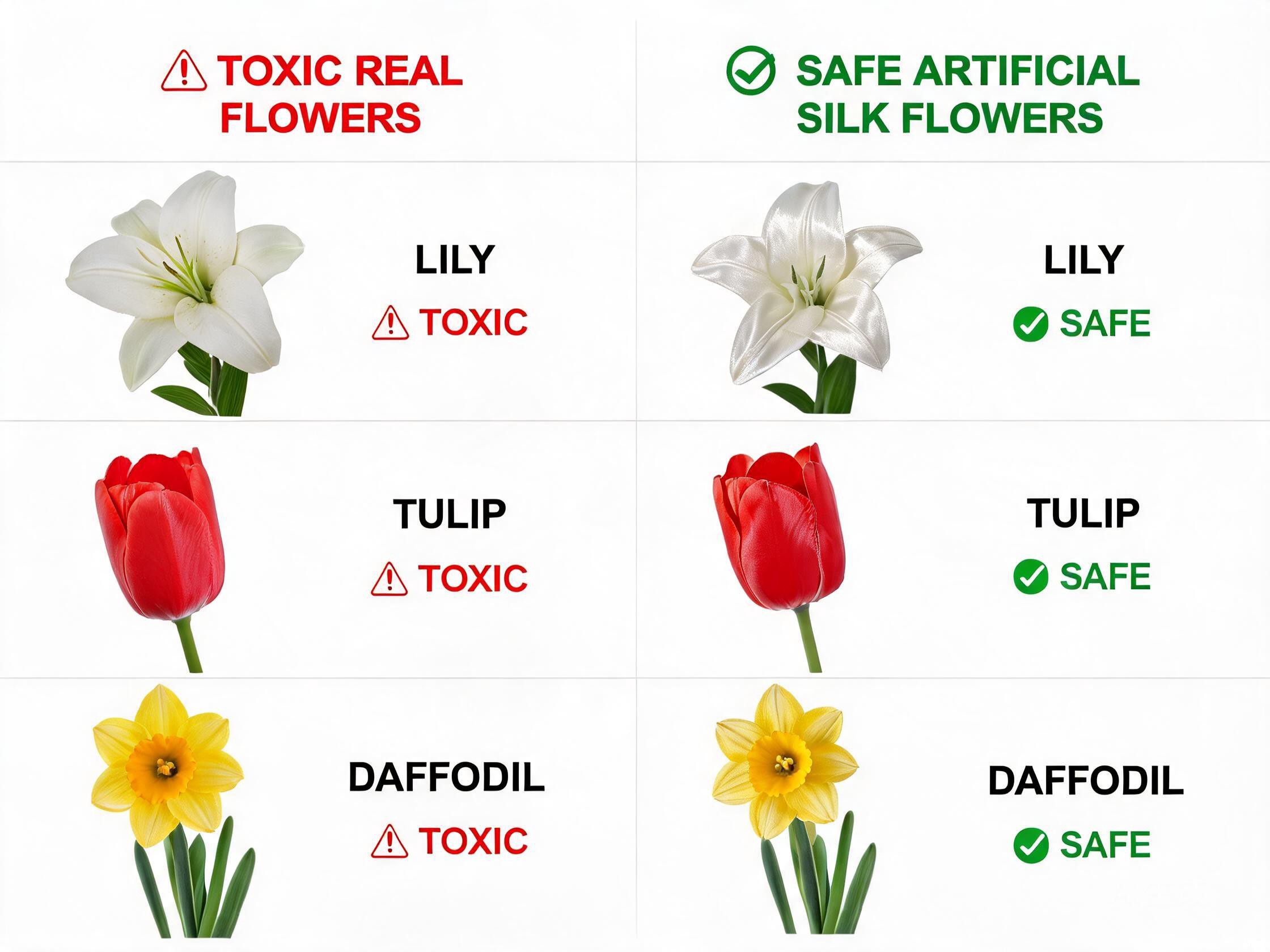
Real flowers like lilies, tulips, and daffodils contain natural toxins. Artificial versions eliminate chemical toxicity entirely.
Top 5 Deadly Real Flowers for Pets
The following real flowers are among the most dangerous to cats and dogs. Replacing them with artificial alternatives eliminates the chemical toxicity risk entirely.[1][2]
| Real Flower | Toxic Component | Danger Level | Symptoms in Pets |
|---|---|---|---|
| Lilies (all varieties) | Unknown toxin throughout plant | Fatal to cats | Kidney failure within 12-24 hrs |
| Tulips | Tulipalin A and B (concentrated in bulb) | Severe | Vomiting, drooling, difficulty breathing |
| Daffodils | Lycorine and other alkaloids | Severe | Vomiting, diarrhea, tremors, seizures |
| Oleander | Cardiac glycosides | Fatal | Heart arrhythmia, death |
| Sago Palm | Cycasin | Fatal | Liver failure, vomiting, jaundice |
Critical warning: Lilies are so toxic to cats that even brushing against the pollen and then grooming can cause fatal kidney failure. All parts of the lily — petals, leaves, stem, pollen, and even the water in the vase — are deadly to cats. If you have cats, never bring real lilies into your home. Artificial lily arrangements provide the same beauty with zero toxicity risk.[2]
Why Pet Owners Are Switching to Artificial Flowers
Many pet owners choose artificial flowers specifically to eliminate the risk of plant poisoning. With artificial flowers, there is no need to memorize toxic plant lists, no risk of pollen exposure, and no danger from vase water that has absorbed plant toxins.
Additional benefits for pet owners include:
- No falling leaves or petals that pets might eat off the floor
- No toxic pollen that can transfer to fur during grooming
- No contaminated vase water that curious pets might drink
- No seasonal replacement needed — flowers stay beautiful year-round
- Zero risk of pesticide or fertilizer residue on flowers
What to Do If Your Pet Eats Artificial Flowers
If your pet chews on or swallows parts of an artificial flower, stay calm and take immediate action. The severity of the situation depends on how much was ingested and what type of material was consumed.
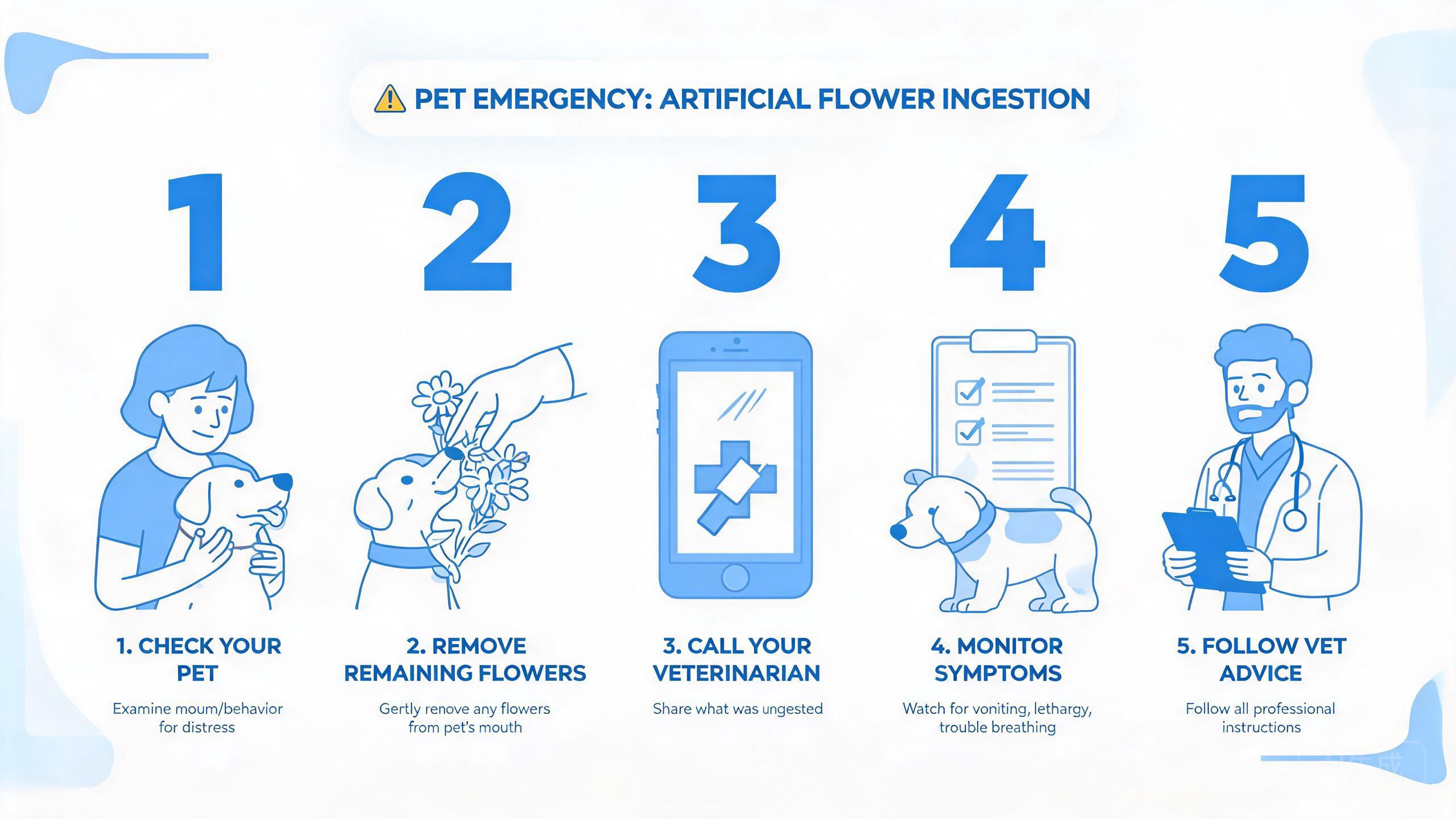
Follow these five steps if your pet ingests any part of an artificial flower arrangement.
Step-by-Step Emergency Guide
- Remove remaining flowers — Take all artificial flowers away from your pet immediately to prevent further ingestion.
- Check your pet’s mouth — Gently look for any remaining pieces of flower material. Do not reach deep into the throat as this may push material further down.
- Assess what was eaten — Determine the type and amount of material ingested (silk petals, wire stems, foam, plastic). This information is critical for your veterinarian.
- Contact your veterinarian — Call your vet or the ASPCA Animal Poison Control Center at (888) 426-4435. A consultation fee applies, but expert guidance is available 24/7.[1]
- Monitor for symptoms — Watch for vomiting, drooling, lethargy, loss of appetite, abdominal pain, or changes in behavior. Take notes with timestamps to share with your vet.
Do NOT induce vomiting unless specifically directed by a veterinarian. If wire stems or sharp plastic parts were swallowed, vomiting can cause additional damage to the esophagus and throat. Always follow professional veterinary guidance.
When to Rush to the Emergency Vet
Take your pet to an emergency veterinary clinic immediately if you observe any of the following:
- Repeated vomiting or dry heaving
- Difficulty breathing or swallowing
- Excessive drooling or pawing at the mouth
- Visible distress or extreme lethargy
- Blood in vomit or stool
- Swollen or painful abdomen
Time is critical in cases of GI obstruction. The sooner your pet receives treatment, the better the outcome.
How to Choose Pet-Safe Artificial Flowers
Not all artificial flowers carry the same level of risk for pets. By choosing the right materials and construction type, you can minimize potential hazards while still enjoying beautiful floral arrangements in your home.
Buying Checklist for Pet Owners
- Choose silk or real touch flowers — These materials are less likely to crumble into small ingestible pieces compared to foam or plastic.
- Avoid exposed wire stems — Look for arrangements where all wire is fully wrapped in floral tape or fabric.
- Skip small decorative add-ons — Avoid arrangements with glue-on berries, beads, or glitter that can detach and become choking hazards.
- Check for strong chemical odors — Quality artificial flowers should have minimal smell. Strong odors may indicate residual solvents or treatments.
- Opt for single-piece constructions — Flowers where petals and leaves are integrated into the stem are safer than those with detachable components.
- Buy from reputable brands — Established manufacturers test their products for safety and use non-toxic dyes and materials.
Premium silk and real touch flowers from trusted brands like BloomWitness meet consumer safety standards and use non-toxic, pet-safe materials throughout their construction. Explore the Hydrangea Real Touch as an example of a pet-safe, real-touch bloom.
Pet-Safe Placement Tips for Artificial Flowers
Even with pet-safe artificial flowers, proper placement is the single most effective way to prevent accidents. The goal is simple: keep flowers out of your pet’s reach at all times.

Place artificial flowers on high shelves, wall-mounted vases, or in rooms your pets cannot access.
Best Placement Strategies
- Use high shelves and mantels — Place arrangements at least 4 feet off the ground, beyond jumping height for most dogs.
- Wall-mounted vases — Install wall-mounted vases that are completely inaccessible to pets. For help matching a high or wall-mounted vase to the right stem height, see our artificial flower vase sizing guide.
- Hanging arrangements — Use hanging baskets or ceiling-mounted hooks for trailing artificial flowers.
- Closed rooms — Display elaborate arrangements in rooms that pets cannot access, such as formal dining rooms.
- Stable bases — Use heavy, stable vases that cannot be knocked over by curious pets.
- Avoid floor-level displays — Never place artificial flowers at ground level where pets can easily reach them.
Cat owners take note: Cats are excellent jumpers and climbers. For cats, the safest placement is on wall-mounted shelves at least 5-6 feet high, with no nearby furniture that could serve as a stepping stone. Alternatively, display artificial flowers behind glass in display cabinets.
Signs Your Pet Is Targeting Your Flowers
Watch for these behavioral signs that your pet may be planning to investigate your artificial flowers:
- Frequent staring or fixating on the arrangement
- Pawing at the vase or nearby surfaces
- Attempting to climb furniture near the flowers
- Chewing on other non-food items (pica behavior)
- Previously knocked over or disturbed the arrangement
If you notice any of these behaviors, relocate the flowers to a more secure location immediately.
Top Pick: Large-Bloom Hydrangeas for Pet Households
No artificial flower is a toy, and placement rules still apply. But if you want stems that minimize small, detachable parts, choose large single-bloom flowers like hydrangea over dense multi-part bouquets — fewer bits to break off and supervise.
- Product: Artificial Hydrangeas Bouquet — real-touch faux silk blooms with large, stable petals
- Price: $16 with free shipping
- Why it fits this article: a pet-conscious display choice that pairs with the secure-placement tips above
Shop the Artificial Hydrangeas Bouquet →
FAQ: Artificial Flowers and Pet Safety
Are artificial flowers toxic to cats and dogs?
No, artificial flowers are not chemically toxic to cats and dogs. The materials used — polyester silk, latex, PE foam, and plastic — are non-toxic and will not cause poisoning. However, artificial flowers pose physical risks including gastrointestinal obstruction from ingested parts, injury from wire stems, and choking hazards. Compared to real flowers like lilies, which are deadly to cats, artificial flowers are significantly safer.
Can artificial flowers kill cats?
Artificial flowers cannot kill cats through chemical toxicity. However, if a cat ingests large pieces of artificial flowers, wire stems, or small decorative parts, it can cause life-threatening gastrointestinal obstruction that may require emergency surgery. Always place artificial flowers out of your cat’s reach and contact your veterinarian immediately if your cat eats any non-food item.
What should I do if my pet eats an artificial flower?
If your pet eats an artificial flower, stay calm and follow these steps: 1) Remove remaining flowers from your pet’s reach, 2) Check your pet’s mouth for any remaining pieces, 3) Call your veterinarian or ASPCA Animal Poison Control at (888) 426-4435, 4) Monitor for symptoms like vomiting, drooling, lethargy, or loss of appetite, 5) Follow your veterinarian’s instructions. Do not induce vomiting unless directed by a professional.
Are silk flowers safer than real flowers for pets?
Yes, silk flowers are safer than many real flowers for pets. Real flowers like lilies, tulips, daffodils, and oleander contain natural toxins that can cause severe poisoning or death in cats and dogs. Silk flowers do not contain these toxins. However, silk flowers still pose physical risks if ingested, so they should be kept out of pets’ reach.
Which real flowers are most toxic to cats?
The most toxic real flowers to cats include lilies (all parts are deadly and can cause kidney failure within 12-24 hours), tulips (concentrated in the bulb), daffodils (contain lycorine alkaloids), oleander (contains cardiac glycosides), and autumn crocus (contains colchicine). Even small amounts of these flowers can be fatal. Artificial versions of these flowers eliminate the chemical toxicity risk entirely.
How do I keep my pets safe around artificial flowers?
To keep pets safe around artificial flowers: place arrangements on high shelves or in wall-mounted vases out of reach, choose artificial flowers without exposed wire stems, avoid arrangements with small detachable parts, opt for premium silk or real touch flowers without strong chemical odors, and monitor your pet’s behavior around new decorations. If your pet is a persistent chewer, consider using pet-safe real plants like spider plants or cat grass instead.
Are the dyes used in artificial flowers toxic to pets?
The dyes used in quality artificial flowers are generally non-toxic and safety-tested for consumer use. However, low-quality artificial flowers may use industrial dyes that could cause mild gastrointestinal upset if ingested in large quantities. Choose artificial flowers from reputable brands that comply with consumer safety standards to minimize any dye-related risk.
smallletters
Floral Design Specialist at BloomWitness
Sources
-
ASPCA, Toxic and Non-Toxic Plants List. The ASPCA Animal Poison Control Center (APCC) provides a comprehensive database of toxic and non-toxic plants for dogs, cats, and horses. 24-hour poison hotline: (888) 426-4435.
https://www.aspca.org/pet-care/animal-poison-control/toxic-and-non-toxic-plants -
ASPCA, Lily Toxicity in Cats. All parts of the lily plant — including petals, leaves, stem, pollen, and vase water — are deadly to cats and can cause acute kidney failure within 12-24 hours of exposure.
https://www.aspca.org/pet-care/animal-poison-control/toxic-and-non-toxic-plants/lily -
Pet Poison Helpline, Foreign Body Obstruction in Pets. Information on gastrointestinal obstruction caused by ingestion of non-food items, including symptoms and emergency treatment. 24-hour helpline: (855) 764-7661.
https://www.petpoisonhelpline.com/ -
BloomWitness, What Are Artificial Flowers Made Of? Comprehensive guide to artificial flower materials including polyester silk, real touch latex, PE foam, and their safety properties.
https://www.bloomwitness.com/what-are-artificial-flowers-made-of/ -
BloomWitness, Do Silk Flowers Last Long? Lifespan and durability data for silk and real touch artificial flowers across material types.
https://www.bloomwitness.com/do-silk-flowers-last-long/
Style safely, even with curious pets
The Artificial Hydrangeas Bouquet — $16 with free shipping — pairs large stable blooms with the secure-placement rules above.