Key Takeaways
Real peonies bloom for five weeks a year; artificial ones last for years. Here is the honest comparison across cost, lifespan, scent, weddings, and quality — plus when each one wins.
Peonies are the flower people dream about — full, romantic, impossibly lush — and also the flower that makes list-makers everywhere reach for silk. Real peonies are expensive and available for a few weeks a year. Artificial ones are available forever. The question isn’t whether one is “better.” It’s which one fits the job.
This guide compares artificial and real peonies across six real-world dimensions — availability, cost, lifespan, scent, realism, and where each one belongs — so you can choose deliberately instead of by habit.
Peonies at a Glance
| Factor | Real Peonies | Artificial Peonies |
|---|---|---|
| Availability | Peak 5–6 weeks in late spring (May–June) | Year-round |
| Per-stem cost | ~$3–$6 at peak, more off-season | $2–$6 per stem; $12–$47 for a full arrangement |
| Lifespan in the vase | 5–7 days | 1–3 years with basic care |
| Scent | Yes, especially garden peonies | None (some are lightly scented) |
| Care | Water changes, stems, temperature, wilting | Occasional dusting only |
| Best for | Fragrance and short-lived event moments | Long-term decor, weddings, gifting |
Real Peonies: Beautiful, Brief, and Pricey
Real peonies are giants of the flower world, prized for their scale and soft texture. But loving them means accepting three realities.
They’re seasonal. Peonies bloom for roughly five to six weeks from late spring into early summer. Outside that window, whatever shop still has them is charging a premium — and what you get has often been shipped halfway around the world.
They’re short-lived in a vase. A cut peony generally lasts about five to seven days. Some open beautifully, but by midweek the petals are loose, the heads are heavy, and the look you planned has turned. That’s not a flaw in the flower; it’s the nature of the thing.
The fragrance is real — and only when fresh. Garden (herbaceous) peonies carry a sweet, floral scent. The scent is one of the strongest arguments for buying real, and it can’t be replicated by silk — a point we’ll come back to.
If fresh peonies are your sensory thing, skip the comparison and buy them seasonally — just know that the math and the calendar are both against you the rest of the year.
Artificial Peonies: The Case That Begins After Week One
Artificial peonies excel at everything a fresh stem can’t offer: permanence, predictability, and price that stops accruing.
- Always in season. The same lush pink bouquet is there in January, April, or October. You never wait for a bloom window.
- Predictable cost. A one-time $12–$47 arrangement replaces a recurring $30–$60 fresh purchase whenever peonies feel called for. Over a year, the artificial flower pays for itself several times over — the full arithmetic is worked out in our real vs. artificial flower cost breakdown.
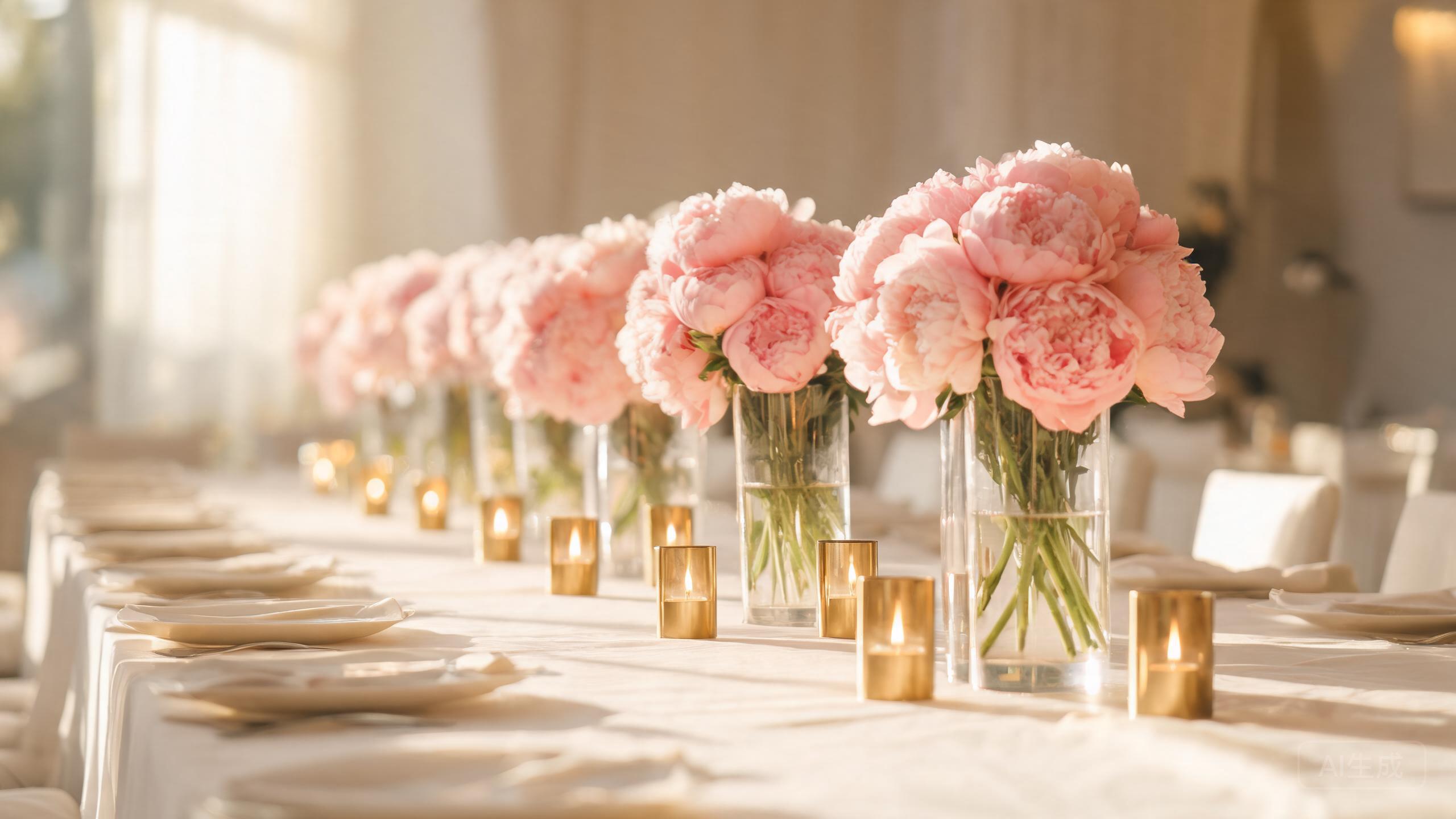
- Wedding-proof. Peonies are a wedding flower cliché for a reason — they photograph gorgeously. But fresh peonies for a wedding mean ordering months ahead, risking the season, and paying event pricing. Artificial peonies deliver the exact same look for every table, every time, on your schedule.
- Decorative certainty. Real peony heads today vs. scattered petals on day six is not a question for a silk bloom. It holds its shape from January to December.
The honest trade-off: no scent, and realism depends entirely on quality. That last point matters more with peonies than with any other flower, because peonies are noticed up close.
The Quality Trap: Why Cheap Artificial Peonies Look Fake
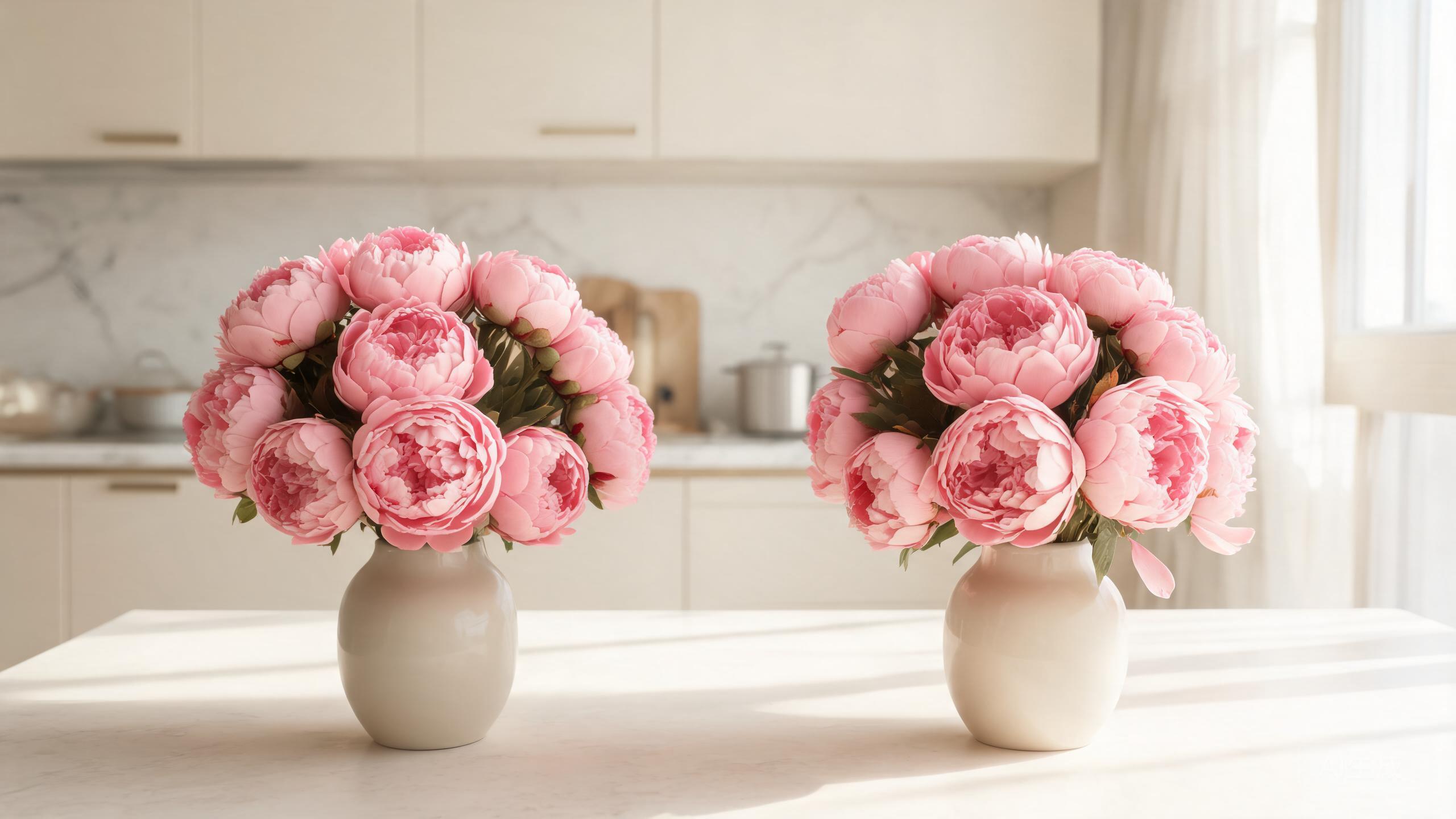
Peonies are large, layered, and viewed from inches away — as centerpieces, in bouquets, on shelves. An artificial peony that’s stiff, shiny, or button-molded will be spotted immediately, in a way a silk rose might get away with.
This is why material quality dominates the buying decision for this specific flower. Our guide to what makes faux flowers look fake under indoor lights explains the visual tells in detail; the short version is:
- Petals that catch light flatly — real peony petals are soft, matte, and have subtle tonal variation.
- Uniform, button-like blooms — real peonies are irregular; every head opens differently.
- Rigid, unshapable stems — you need to bend and arrange, not have it dictated to you.
Buying cheap here isn’t a saving; it’s a purchase you’ll see every day. For the same reason, our how to make artificial peonies look real guide is worth reading before you buy a single stem.
Which Should You Choose? Match the Flower to the Job
Choose real peonies if…
- Fragrance is a non-negotiable part of the experience.
- You’re buying for a single short-lived occasion and don’t mind the cost of one moment.
- It’s May or June, you have budget, and you want the seasonal pleasure while it exists.
Choose artificial peonies if…
- You want peonies “on” for more than a week — desk, shelf, entryway, bedroom.
- You’re planning a wedding or event and want the same look for every table without seasonal risk or event markup.
- You have a recurring decorating budget and want the flower that stops costing money.
- Anyone in the space has pollen sensitivities — silk peonies carry none.
The hybrid play most people miss
Keep a pair of quality artificial peony arrangements for everyday decor, and spring for fresh garden peonies once a year purely for scent and the seasonal ritual. You get the peony “look” you planned — plus the particular joy only the real thing can give, without paying a weekly ransom.
Top Pick: The BloomWitness Peony for the “Match the Job” Case
For the quality-artificial side of this decision, the hand-finished peony bouquet covers the lasting-decor and wedding cases the guide recommends.
- Product: Artificial Peonies Bouquet — realistic faux peony decor
- Price: $12.49 with free shipping
- Why it fits this guide: passes the quality-trap checks above with layered, hand-painted petals
Frequently Asked Questions
Do artificial peonies look real?
High-quality silk and polyester-mix artificial peonies can look convincingly real, especially in arrangements where petals are softly layered and tonally varied. Budget plastic versions rarely do — peonies are inspected closely, so material quality is the deciding factor.
How long do artificial peonies last?
A well-made artificial peony arrangement typically lasts 1–3 years with basic care — occasional dusting, reshaping stems, and keeping it out of prolonged direct sunlight, which can fade colors.
Are artificial peonies good for weddings?
Yes — for weddings they’re often the better choice. Same look on every table, no season risk, no event markup, and the arrangements can be reused or resold afterward. Read our silk vs. real wedding flowers guide for the full scenario math.
What is the cheapest time to buy real peonies?
Peak season — late spring, typically May to June — is both when they’re cheapest and most plentiful. Outside that window, availability drops and prices rise sharply, which pushes many shoppers toward artificial options for the rest of the year.
Do peonies have a strong scent?
Garden peonies generally do — a sweet, floral scent that intensifies as the bloom opens. Tree peonies tend to be less fragrant. The scent is the single hardest thing for an artificial peony to replicate, which is why fragrance lovers often keep at least some fresh stems around.
The Bottom Line
Peonies are a special case in the artificial flower world — the flower that’s so good fresh, for so short a time, at such a price, that the artificial version has unusually clear reasons to win. Match them the right way:
- Always-finished decor or weddings → quality artificial peonies, no hesitation.
- Fragrance, ritual, and seasonal joy → real garden peonies, once or twice a year, on purpose.
- Most of us → a little of both, deliberately.
Start with the BloomWitness peony bouquet — a lasting pink arrangement that pays for itself within the first few months of daily use.
Related: See the full artificial flower buying guide to compare peonies against the rest of the collection.
Ready for peonies that pay for themselves?
The Peony Bouquet starts paying for itself within the first months — $12.49 with free shipping and 30-day returns.