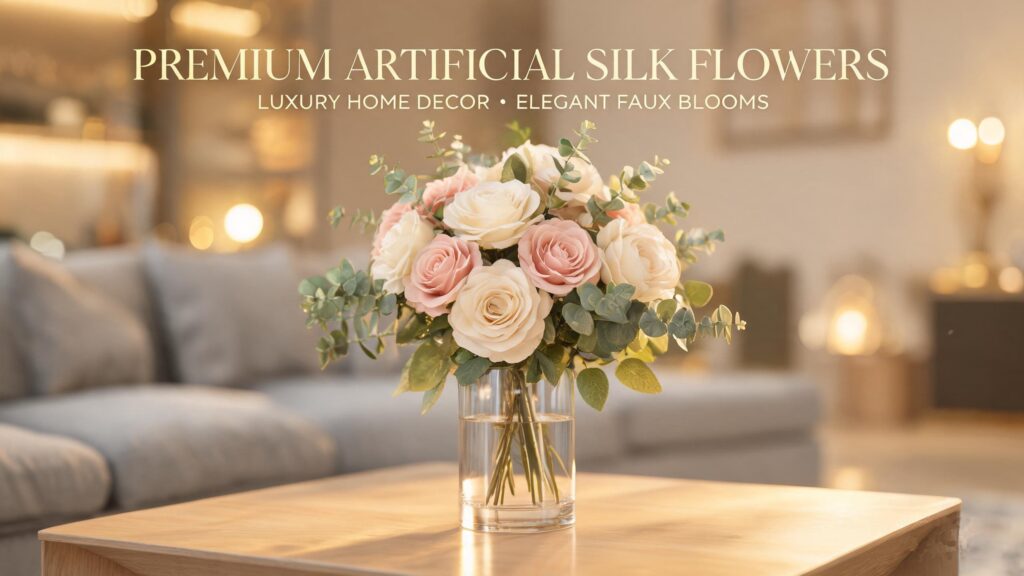
No, quality artificial flowers do not look cheap under indoor lights — but cheap ones absolutely do. The difference comes down to three factors: material quality (matte vs. glossy), lighting color temperature (warm vs. cool), and placement (direct vs. indirect). Premium real touch and silk flowers with matte finishes look indistinguishable from real blooms under warm 2700K–3000K LED lighting, while budget plastic flowers reveal their artificiality the moment light hits their shiny surfaces.
Interior designers, home stagers, and hospitality decorators now routinely use high-end faux florals in indoor spaces lit by artificial light. The key is knowing which materials to buy and how to light them. This guide breaks down exactly what makes artificial flowers look cheap under indoor lights — and how to guarantee yours don’t.
Quick Answer: It’s About Quality, Not the Light
The “cheap look” under indoor lights is caused by glossy petal surfaces reflecting light unnaturally — not by the flowers being artificial. Real flower petals have a natural matte finish that absorbs light. When cheap plastic or polyester petals with glossy coatings catch indoor lighting, they reflect it like oiled plastic, instantly revealing their artificiality.
The fix is simple: choose matte-finish real touch or premium silk flowers, use warm LED lighting (2700K–3000K), and place arrangements in bright indirect light rather than harsh direct spotlight. Do these three things and your artificial flowers will look stunning indoors — day or night.
Key Takeaway: The gloss test is the single most important factor. If petals reflect light like plastic under your indoor lights, they’ll look cheap. If they absorb light like real petals, they won’t — regardless of the lighting type.
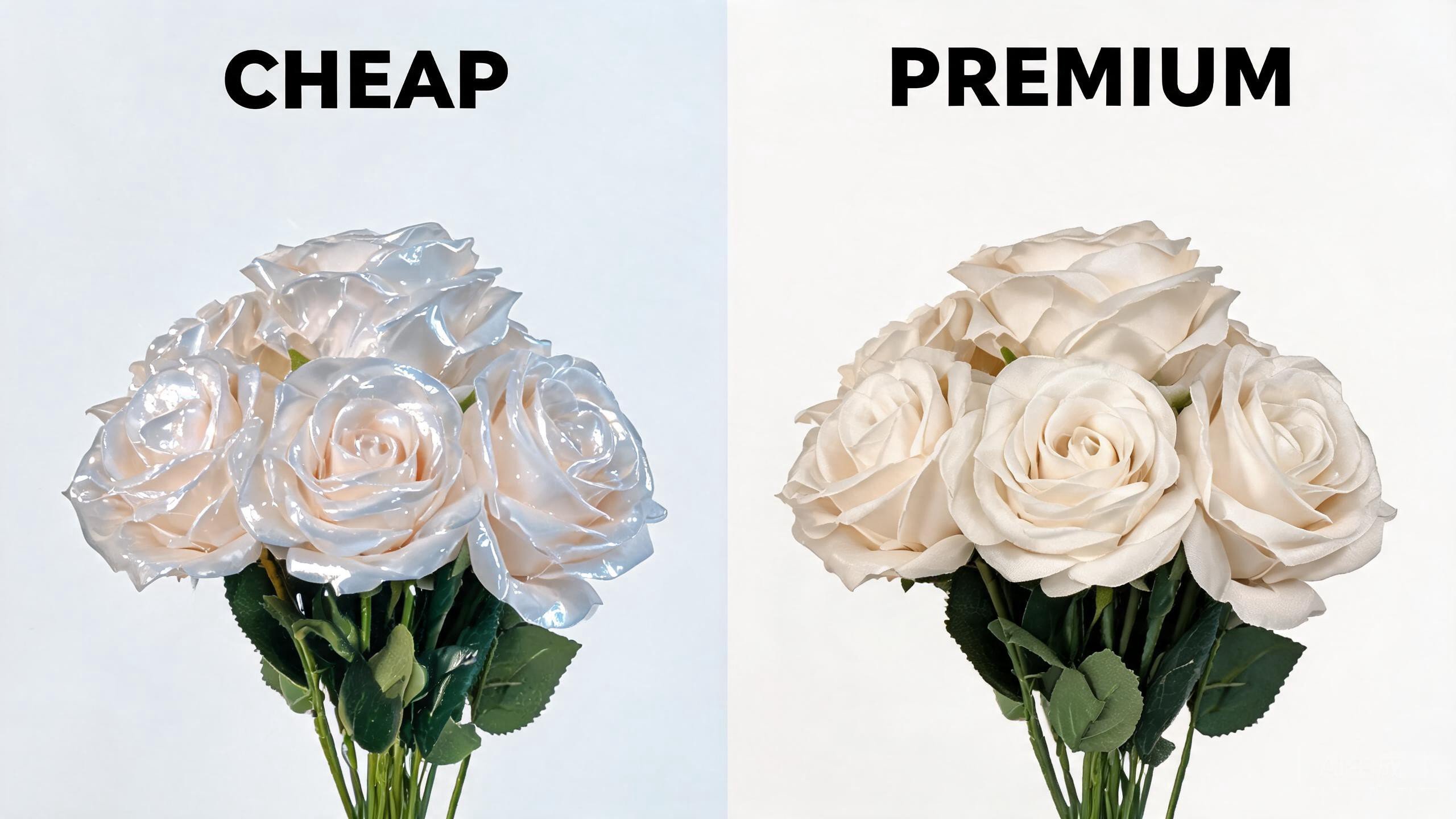
Left: Cheap plastic flowers with unnatural shine under overhead light. Right: Premium real touch flowers with matte finish under the same lighting.
Why Cheap Artificial Flowers Look Fake Under Lights
1. The Gloss Problem
Real plant foliage and petals are typically matte or slightly velvety, absorbing light rather than reflecting it. Cheap artificial flowers made from glossy PVC plastic or untreated polyester have surfaces that catch and reflect indoor light unnaturally. This creates a “oiled” appearance that immediately signals “fake” to the human eye.
The problem worsens under direct overhead spotlights, where every leaf and petal reflects light like a mirror. This is why interior design experts recommend a “High-Intensity Light Test” during selection — only flowers that remain matte under strong lighting are considered qualified for indoor use.
2. Color Temperature Mismatch
Indoor lighting comes in different color temperatures, and each affects how artificial flower colors appear. The wrong color temperature can make even quality flowers look off. Here’s how different light types interact with faux florals:
- Warm LED (2700K–3000K): Enhances reds, oranges, yellows, and warm pinks. Gives flowers a rich, natural glow. Best for most artificial arrangements.
- Cool LED / Fluorescent (4000K–6500K): Accentuates blues, greens, and purples but can make warm-colored flowers look washed out or grayish.
- Incandescent: Very warm light that flatters most flower colors but generates heat — keep away from polyester petals to prevent warping.
- Harsh direct spotlight: The worst option. Reveals every imperfection, seam, and glossy surface on lower-quality flowers.
3. Dim Lighting Paradox
Counterintuitively, very dim lighting can also make artificial flowers look cheap. When visitors can’t see detail clearly, they assume the flowers are fake — and plastic sheen becomes more apparent in low light because the matte texture details disappear. Bright indirect light is the sweet spot that shows off realistic details without revealing plastic sheen.
How to Choose Artificial Flowers That Look Real Under Any Light
Material Quality Hierarchy
Not all artificial flowers perform equally under indoor lighting. The material determines how light interacts with the petals. Here’s the hierarchy from best to worst for indoor use:
- Real touch flowers — Polymer-coated petals with matte finish. Soft, velvety texture absorbs light naturally. The gold standard for indoor-lit spaces.
- Premium hand-painted silk — Multi-layer petals (5–15 layers) with color gradients. Fabric surface diffuses light evenly. Highly realistic under warm lighting.
- Standard polyester — Acceptable from a distance but may show slight sheen up close under direct light. Budget-friendly option.
- Plastic / PVC — Glossy, reflective surfaces that look cheap under any indoor light. Avoid for indoor decor.
The High-Intensity Light Test
Before buying, perform the “High-Intensity Light Test.” Hold the flower under a strong direct light source (like a phone flashlight or desk lamp). If the petals remain matte and the colors look natural, the flowers will look great under any indoor lighting. If they reflect light with a plastic-like shine, they’ll look cheap in your home.
Pro Tip: If you already own slightly shiny artificial flowers, lightly dust the petals with cornstarch using a soft brush. This temporary matte coating reduces gloss and makes them look more natural under indoor lights.
Best Indoor Lighting Setup for Artificial Flowers
Even the best artificial flowers can look cheap under the wrong lighting. Here’s how to light your faux floral arrangements for maximum realism:
Ideal: Warm Indirect LED (2700K–3000K)
Warm white LED lighting in the 2700K–3000K range is the ideal choice for artificial flowers. This color temperature mimics golden-hour sunlight, enhances warm flower colors (blush, peach, coral, cream), and creates natural-looking shadows through the petals. Use indirect lighting — bounce light off walls or use lamp shades — rather than direct spotlight.
For warm-toned flowers (blush, peach, coral, cream), lighting in the 2700K–3200K range makes colors pop and feel romantic. For bold saturated colors (hot pink, deep purple, royal blue), slightly cooler lighting around 3000K–3500K can enhance vibrancy without washing out warmth.
Good: Natural Indirect Daylight
Place arrangements near windows where they receive bright but indirect daylight. This “sweet spot” shows off realistic details without revealing the plastic sheen that betrays artificiality. Avoid south-facing windows with direct sun, which can both fade colors and highlight reflective surfaces — our do faux flowers fade in sunlight? guide explains how quickly that damage appears.
Avoid: Harsh Direct Overhead Lighting
Harsh, direct overhead light is the enemy of artificial flowers. It casts hard shadows, reveals every seam and imperfection, and makes any glossy surface reflective. If your space has overhead spotlights, position flowers slightly off-center or use a diffuser to soften the light.
| Lighting Type | Color Temp | Effect on Faux Flowers | Rating |
|---|---|---|---|
| Warm LED (indirect) | 2700K–3000K | Enhances warm colors; natural glow | ★★★★★ |
| Natural indirect daylight | 5000K–6500K | Shows detail well; sweet spot | ★★★★☆ |
| Cool LED / Fluorescent | 4000K–6500K | Can wash out warm colors | ★★★☆☆ |
| Incandescent | 2700K | Warm but generates heat | ★★★☆☆ |
| Harsh direct spotlight | Varies | Reveals gloss; exposes seams | ★☆☆☆☆ |
5 Styling Tips to Prevent the “Cheap Look” Indoors
Even premium artificial flowers can look cheap if styled poorly. Follow these professional techniques to ensure your arrangements look stunning under any indoor lighting:
- Use the 1.5x height rule: Flower stems should be 1.5–2x the height of your vase. For a 6-inch vase, use 9–12 inch stems. Correct proportions create visual harmony.
- Add real water to the vase: Fill the vase with real water to add weight, create a visual water line, and make the arrangement feel authentic. Ensure your flowers are water-safe first.
- Bend stems at natural angles: Real flowers don’t stand at attention. Use wired stems to create gentle curves, let some flowers droop, and vary angles for a natural look.
- Mix in fresh greenery: Even a few real leaves or fern fronds mixed into an artificial arrangement tricks the eye completely. Fresh greenery provides authenticity.
- Position away from direct light sources: Place arrangements where light hits indirectly — bounced off walls or filtered through curtains. This prevents glossy reflections on petals.
Designer Secret: The single most effective trick is adding real water to the vase. It creates depth, adds weight so the arrangement doesn’t tip, and makes visitors assume the flowers must be real — because who puts water in a vase of fake flowers?
Best Artificial Flower Types for Indoor Lighting
Some flower types translate better to artificial versions and look more convincing under indoor lights. Here are the most reliable choices:
- Artificial hydrangeas — Full, rounded blooms with dense petal clusters. Forgiving of slight imperfections. The best choice for indoor-lit spaces.
- Silk peonies — Ruffled, multi-layer petals (15+ layers) that diffuse light beautifully. Stunning under warm LED.
- Real touch roses — Matte polymer-coated petals with visible layers. Look indistinguishable from real under any lighting.
- Artificial tulips — Simple, elegant form with cup-shaped petals. Choose polymer-coated versions with slightly bent stems.
Top Pick: Blooms That Pass the Warm-Light Test
Real-touch polymer coating scatters light the way fabric does, which is exactly what keeps it from reading “plastic” under the 2700K–3000K lamps recommended above.
- Product: 6 Stems Real Touch Hydrangea Bouquet — lifelike faux silk blooms
- Price: $35.99 with free shipping
- Why it fits this guide: soft-touch coating and matte petals hold up under direct indoor lighting
Shop the Real Touch Hydrangea Bouquet →
Frequently Asked Questions
Do artificial flowers look cheap under indoor lights?
Quality artificial flowers do not look cheap under indoor lights. The appearance depends entirely on material quality, lighting color temperature, and placement. Premium real touch and silk flowers with matte finishes look indistinguishable from real flowers under warm LED lighting (2700K–3000K). Only cheap plastic flowers with glossy surfaces look fake under indoor lights.
What type of lighting is best for artificial flowers?
Warm LED lighting in the 2700K–3000K color temperature range is best for artificial flowers. It enhances warm colors like blush, peach, and cream while creating natural-looking shadows. Avoid harsh direct overhead lighting, which reveals plastic sheens on lower-quality flowers. Bright indirect light is the sweet spot.
Why do my fake flowers look shiny under lights?
Fake flowers look shiny under lights because they are made from glossy plastic or polyester with no matte coating. Real flower petals have a natural matte finish that absorbs light. Upgrade to real touch flowers with polymer-coated matte petals, or dust budget flowers with cornstarch to temporarily reduce shine.
Can artificial flowers look real in a dimly lit room?
Yes, high-quality artificial flowers can look real in dimly lit rooms. In low light, details are harder to see, which can actually help disguise artificiality. However, very dim lighting can make plastic sheen more apparent. Use warm accent lighting — like a nearby table lamp with a soft shade — for the most flattering results.
How do I make my artificial flowers look more expensive?
Choose matte-finish real touch or premium silk flowers, use warm indirect lighting, add real water to the vase, bend wired stems at natural angles, and mix in a few fresh greenery stems. Avoid symmetrical arrangements, dusty petals, and direct overhead lighting. These small adjustments transform the look from cheap to designer-quality.
The Bottom Line
Artificial flowers do not inherently look cheap under indoor lights. The “cheap look” is caused by three fixable factors: glossy materials, wrong color temperature, and poor placement. By choosing matte-finish real touch or silk flowers, using warm 2700K–3000K LED lighting, and placing arrangements in bright indirect light, your faux florals will look indistinguishable from real blooms — in any room, under any light, at any time of day.
The stigma against artificial flowers under indoor lighting belongs to cheap plastic blooms from past decades. Today’s premium faux florals are specifically engineered to look real under artificial light — as long as you choose the right materials and light them correctly.
Related Reading:
Are Fake Flowers Tacky? | What Are Artificial Flowers Made Of? | Do Faux Flowers Fade in Sunlight? | Do Silk Flowers Last Long?
Choose blooms that pass the light test.
The Real Touch Hydrangea Bouquet keeps its matte texture under warm indoor lighting — $35.99 with free shipping and 30-day returns.
Sources: BloomWitness internal product testing; interior design lighting standards; artificial flower material research from industry manufacturers. Lighting color temperature recommendations based on standard interior design practices for 2700K–3000K warm LED lighting.