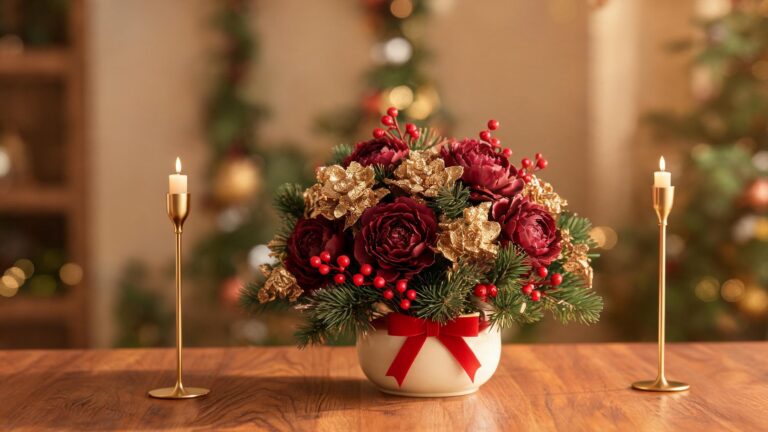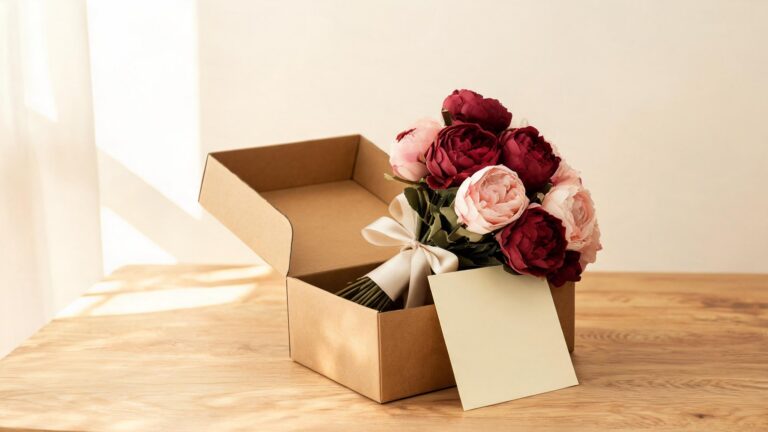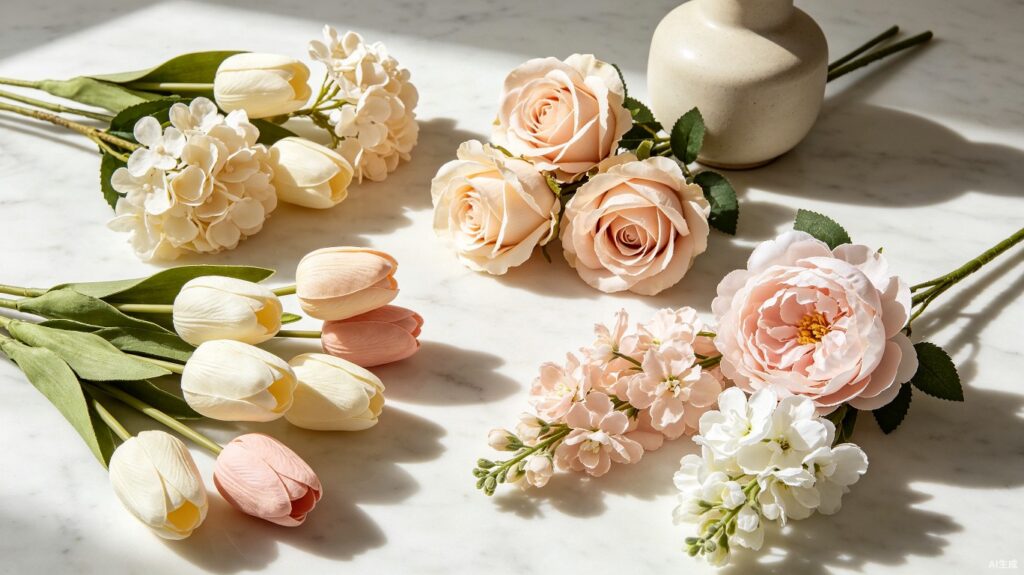
Choose high-quality artificial flowers by evaluating three core factors: material (Real Touch latex and silk offer the most realistic look and feel), construction details (multi-layer petals with hand-painted color gradients), and scale compatibility (match flower size to your room and vase proportions). Budget $13-25 per stem for premium realism, $5-12 for mid-range quality, and avoid sub-$3 plastic stems for visible display areas.
What Makes Artificial Flowers Look Real?
Not all artificial flowers are created equal. The gap between a $2 plastic stem and a $25 Real Touch bloom is immediately visible. Understanding what separates realistic faux flowers from obvious fakes helps you shop with confidence. For the engineering behind the most realistic options, see our deep dive on how real touch flowers work.
Material Technology
The material determines both the visual appearance and tactile experience of artificial flowers. Premium materials replicate the subtle surface textures of living petals.
- Real Touch latex: A soft, slightly waxy coating over foam that mimics the cool, supple feel of fresh petals. Holds shape while allowing gentle flex.
- High-grade silk: Fine polyester fabric with a natural luminous sheen. Petals drape and catch light like real flower tissue.
- PE foam: Molded polyethylene with a matte, velvety surface. Less tactile realism but excellent shape retention at a lower price.
- Standard plastic: Rigid, overly shiny, and prone to visible seams. Best avoided for primary display areas.
Petal Construction and Color Gradients
Realistic artificial flowers feature multi-layered petals with varying sizes, not identical stacked shapes. Hand-painted color gradients at the petal base and edges create depth.
- ✓ Look for petals that are thinner at the edges and slightly thicker at the base
- ✓ Check for subtle color variation within a single petal (darker at the center, lighter at the tip)
- ✓ Avoid flowers with perfectly uniform color or visible dye lines
- ✓ Quality stems have wire-reinforced petals you can gently reposition
Stem and Leaf Details
The stem is often the giveaway. Premium artificial flowers feature wrapped stems with textured surfaces, realistic thorns on roses, and leaves with visible veining printed on both sides.
Artificial Flower Materials Compared
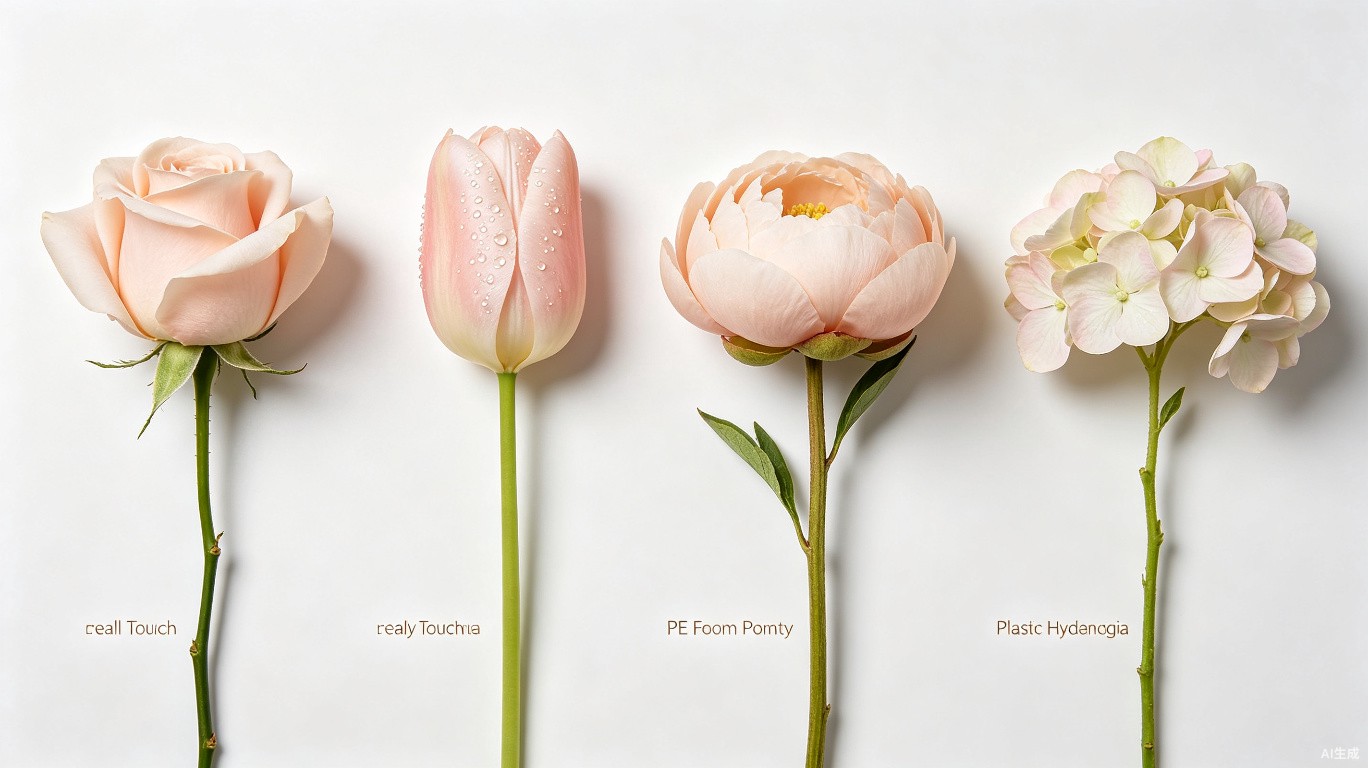
Figure 1: Material comparison — Real Touch latex, silk, PE foam, and standard plastic
Use this comparison table to select the right material for your specific needs and budget. For a straight comparison of the two most popular materials, see our real touch vs silk flowers rundown.
| Material | Realism | Price per Stem | Best For | Lifespan |
|---|---|---|---|---|
| Real Touch Latex | Excellent | $12 – $30 | Bridal bouquets, centerpieces, close-up display | 5+ years |
| High-Grade Silk | Excellent | $10 – $25 | Living rooms, entryways, tall arrangements | 5+ years |
| PE Foam | Good | $4 – $10 | Background filler, secondary arrangements, outdoor use | 3-5 years |
| Latex Coated | Very Good | $8 – $18 | Hand-tied bouquets, photography props | 5-7 years |
| Standard Plastic | Poor | $1 – $4 | Crafts, hidden filler, temporary events only | 1-3 years |
Best Artificial Flowers by Room Type
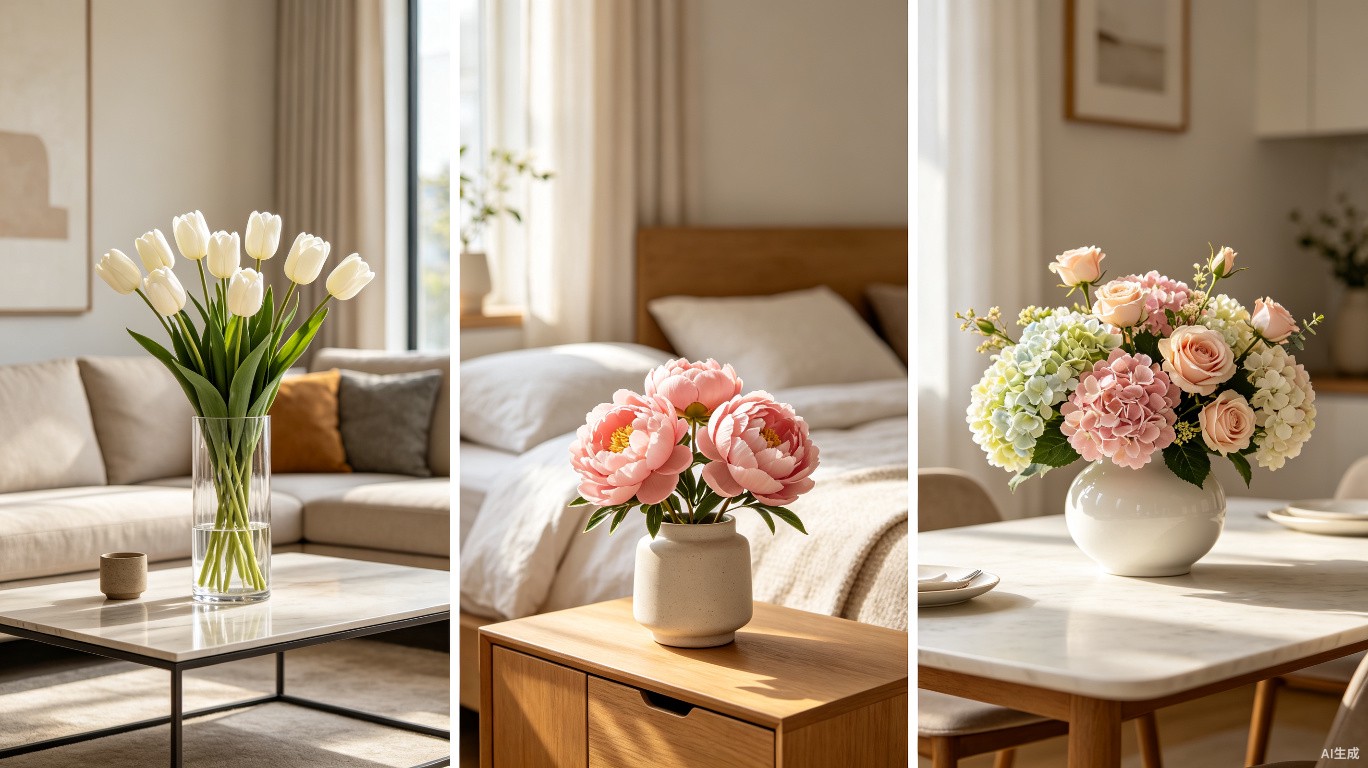
Figure 2: Room-by-room artificial flower styling — living room, bedroom, and dining room
Different spaces call for different flower types, sizes, and arrangements. Match your artificial flowers to the room’s function and visual weight.
Living Room
The living room is your primary display space. Choose statement flowers in medium to large arrangements that draw the eye without overwhelming the furniture.
- Best flowers: Hydrangeas, peonies, large roses, amaryllis
- Recommended height: 18-26 inches for coffee tables; 28-36 inches for floor vases
- Color approach: Match your sofa accent pillows or choose neutral creams and whites for versatility
- Vase style: Ceramic, glass, or textured stone vessels complement most living room aesthetics
Bedroom
Bedroom flowers should create a calming atmosphere. Opt for softer colors and smaller-scale arrangements that feel intimate rather than dramatic.
- Best flowers: Tulips, ranunculus, small roses, cherry blossoms
- Recommended height: 10-16 inches for nightstands; avoid anything taller than your bedside lamp
- Color approach: Pastel pinks, lavenders, soft whites, and muted blushes promote relaxation
- Vase style: Small ceramic bud vases, frosted glass, or matte concrete containers
Dining Room
Dining table centerpieces must balance visual impact with practicality. Guests should be able to see over or through the arrangement.
- Best flowers: Low-profile roses, tulips, anemones, or horizontal hydrangea arrangements
- Recommended height: Under 14 inches for everyday use; under 12 inches if placed in the table center
- Color approach: Coordinate with table linens or choose seasonal palettes
- Arrangement tip: Use an oval or linear container rather than a round vase for rectangular tables
Size and Quantity Guide
Getting the proportions right makes the difference between an arrangement that looks professionally styled and one that looks haphazard.
Vase-to-Flower Height Ratio
Follow the 1.5x rule: your flower arrangement should be approximately 1.5 to 2 times the height of the vase. This creates visual balance.
| Vase Height | Arrangement Height | Best Flower Types |
|---|---|---|
| 4-6 inches | 8-12 inches | Tulips, small roses, ranunculus |
| 7-10 inches | 14-20 inches | Standard roses, peonies, hydrangeas |
| 11-14 inches | 20-28 inches | Large hydrangeas, delphiniums, lilies |
| 15+ inches (floor) | 30-42 inches | Branches, tall delphiniums, pampas grass mixed with flowers |
How Many Stems to Use
The number of stems depends on flower size and desired fullness. Large blooms like peonies need fewer stems than small flowers like baby’s breath.
- Small bud vase (1-2 inch opening): 1-3 stems
- Medium vase (3-5 inch opening): 5-7 large blooms or 7-10 medium blooms
- Large vase (6-8 inch opening): 9-12 large blooms or 12-18 medium blooms
- Full centerpiece: Add 30-50% more stems than a standard arrangement for a lush, overflowing look
Price vs. Quality: What to Expect at Each Level
Artificial flower prices vary widely. Understanding what each price tier delivers helps you allocate your budget strategically.
- Budget ($1-4 per stem): Basic plastic or thin fabric. Visible seams, uniform color, rigid petals. Suitable only for distant background use or crafts.
- Mid-Range ($5-12 per stem): PE foam or lower-grade silk. Decent appearance from 3+ feet away. Good for secondary spaces and background filler.
- Premium ($13-25 per stem): Real Touch latex or high-grade silk. Hand-painted details, multi-layer petals, realistic stems. Ideal for primary display areas and events.
- Luxury ($26-50 per stem): Designer-quality with custom color matching, hand-assembly, and botanical accuracy. Used for weddings, hospitality, and luxury interiors.
7 Mistakes That Make Fake Flowers Look Fake (and How to Fix Them)
A beautiful stem can still look wrong in the wrong setting. These are the seven placement and styling mistakes we see most often — and the fix for each.
- 1. Placing delicate blooms in dim corners. Soft flowers need light to read as real. Bright, indirect daylight flatters faux petals; deep shadows flatten them. Move the arrangement somewhere it catches morning or window light.
- 2. Pairing faux flowers with fresh ones at eye level. Side by side, the differences in texture, light, and even scent tolerance become obvious. If you mix the two, keep a few feet of separation rather than placing them head to head.
- 3. Leaving stems unnaturally straight. Real stems arc and bend. Gently curve wire stems into a relaxed S-shape before arranging — it takes thirty seconds and changes the whole silhouette.
- 4. Mixing glossy and matte finishes. A glaringly shiny PET petal next to a soft matte silk one breaks the illusion. Keep finishes consistent within a single arrangement.
- 5. Ignoring the scale rule. A tiny bunch lost in a tall floor vase, or an oversized centerpiece on a small side table — both scream “faux.” Revisit the 1.5x vase-to-flower ratio above.
- 6. Letting dust dull the color. A month of settled dust greys out even premium petals. A quick cool hairdryer blast or soft duster restores them — our how to clean artificial flowers guide covers stubborn buildup.
- 7. Displaying in harsh direct sun. Dyed petals fade fastest in continuous, direct sunlight. We timed the damage — see do faux flowers fade in sunlight for how quickly it happens.
Artificial Flower Buying Checklist
Before adding to cart, verify these key points to ensure you receive flowers that meet your expectations.
- ✓ Check product photos showing flowers in real room settings, not only on white backgrounds
- ✓ Read reviews mentioning “realistic,” “lifelike,” or “convincing from a distance”
- ✓ Confirm stem length matches your vase height using the 1.5x ratio rule
- ✓ Verify the material type in the product description (silk, Real Touch, PE, or latex)
- ✓ Look for wire-reinforced petals and stems for adjustability
- ✓ Check return policy — quality artificial flowers should be returnable if unsatisfied
- ✓ For events, order samples 2-3 months ahead to evaluate quality in person
Top Pick: A Mixed Bouquet That Covers Every Room Check
For most homes, a mixed-stem bouquet is the fastest route to the realistic look this buying guide describes — one product, several flower types, zero guesswork.
- Product: 11 Stems Original Artificial Flowers Bouquet — mixed silk blooms
- Price: $46.99 with free shipping
- Why it fits this guide: matches the realism, size, and quantity guidance in the checklist sections above
Frequently Asked Questions
What is the most realistic material for artificial flowers?
Real Touch latex and high-grade silk are the most realistic materials. Real Touch flowers mimic the soft, slightly waxy feel of real petals and often feature hand-painted color gradients. Silk flowers offer a natural sheen and graceful drape that closely resembles fresh blooms.
How do I know if artificial flowers will look good in my home?
Match the flower size to your room scale and the color to your existing decor palette. For living rooms, choose medium to large arrangements (16-24 inches) in neutral or complementary tones. For bedrooms, smaller arrangements (10-14 inches) in soft pastels work best.
Are expensive artificial flowers worth the price?
Premium artificial flowers ($13-25 per stem) are worth the investment for high-visibility areas like entryways, dining tables, and event centerpieces. For secondary spaces or background decor, mid-range options ($5-12 per stem) offer good value.
How many artificial flower stems do I need for a vase?
For a standard 8-10 inch vase, use 5-7 stems of large flowers or 7-10 stems of medium flowers. For a full, lush arrangement, increase by 30-50%. The arrangement height should be 1.5 to 2 times the vase height.
Can artificial flowers be used for weddings?
Yes, high-quality artificial flowers are increasingly popular for weddings. They offer significant cost savings (40-60% less than fresh flowers), eliminate wilting concerns, and allow preparation weeks in advance. Real Touch roses, silk peonies, and latex hydrangeas are the top choices.
How long do artificial flowers last?
Quality artificial flowers typically last 3-5 years indoors, and premium blooms can last 5 years or more with proper care. Keep them away from direct sunlight to prevent fading, dust them monthly, and avoid placing them near heat sources.
What is the difference between silk and real touch artificial flowers?
Silk flowers are made from polyester fabric with a soft sheen and flowing drape. Real Touch flowers use latex or polyurethane foam with a special finish that replicates the cool, slightly waxy texture of real petals. Silk excels in appearance from a distance; Real Touch feels more authentic up close.
How do I clean artificial flowers without damaging them?
For regular dusting, use a soft makeup brush or a hair dryer on the coolest, lowest setting. For deeper cleaning, gently wipe petals with a soft cloth dampened with mild soapy water, then air dry completely. Avoid submerging Real Touch latex flowers.
Shop Realistic Artificial Flowers
Explore BloomWitness’s curated collection of Real Touch and silk flowers, hand-selected for lifelike beauty and lasting quality.