Yes. Faux flowers can fade in sunlight, especially when untreated fabric, dye, paint, or plastic is exposed to strong direct light for long periods. UV-resistant flowers are designed to slow fading and material aging, but “UV-resistant” does not mean permanently fade-proof.
Key Takeaways
- → Direct sunlight can fade artificial flower colors and age some synthetic materials.
- → Damage depends on material, pigments, UV stabilizers, light intensity, exposure time, heat, and moisture.
- → Sunlight through a window is usually less intense than outdoor exposure, but a sunny window can still fade untreated faux flowers.
- → For patios, balconies, and window boxes, choose flowers explicitly labeled UV-resistant or outdoor-rated.
- → Move arrangements into indirect light, use curtains or UV-filtering film, and rotate displays to reduce uneven exposure.
- → Existing sun fading is generally irreversible; prevention is more effective than restoration.
Why Sunlight Fades Faux Flowers
Sunlight carries ultraviolet radiation and visible light, both of which can affect colorants. The Canadian Conservation Institute explains that light damage is cumulative, while the photochemistry responsible for colorant fading can occur in the visible-light range as well as under UV exposure.[1]
In a faux flower, the vulnerable parts may include the dye or pigment that creates the bloom’s color, the fabric or polymer that forms the petal, and coatings or adhesives used during assembly. The exact response varies by formulation, so one flower may pale while another becomes yellow, brittle, or cracked.
Color fading is cumulative
Light damage builds with exposure rather than resetting when a flower is moved into shade. This is why the side of an arrangement facing a window may change faster than the side turned away from it.
Once a dye or pigment has been altered by light, ordinary cleaning cannot return it to its original color. A new location can prevent further damage, but it cannot undo the fading that has already happened.
Some plastics can become brittle
UV exposure can also trigger photooxidative degradation in synthetic polymers. A peer-reviewed review describes polymer-chain breaking, yellowing, loss of mechanical properties, and gradual embrittlement under UV exposure, with the timing described as unpredictable because materials and conditions differ.[2]
Indoor Versus Outdoor Sunlight
Where you place faux flowers matters as much as what they are made from. A covered shelf with filtered daylight is a very different environment from an unshaded porch, even if both are described as “sunny.”
| Location | Light exposure | Best approach |
|---|---|---|
| Interior wall away from windows | Low to moderate indirect light | Most standard faux flowers are suitable; dust regularly. |
| Bright room near a window | Repeated daylight, sometimes direct beams | Use a sheer curtain, rotate the arrangement, or select UV-protected flowers. |
| Sunroom or south-facing window | High light and possible heat buildup | Keep flowers out of the beam or add UV-filtering window protection. |
| Covered porch | Outdoor daylight with partial shade | Use products labeled for outdoor and UV exposure; protect from rain as directed. |
| Unshaded patio or window box | Strong direct sunlight and weather | Choose outdoor-rated UV-resistant construction rather than indoor silk flowers. |
The National Park Service notes that window glass filters some ultraviolet radiation, but not necessarily the complete UV range; it also emphasizes that controlling light intensity and exposure duration remains important for long-term preservation.[3]
Do Faux Flowers Fade in a Sunny Window
They can. A window may reduce part of the UV exposure compared with open outdoor sun, yet a bright, repeatedly illuminated arrangement can still experience gradual color change.
- Keep flowers slightly back from the glass rather than in the direct beam.
- Use blinds or sheer curtains during the strongest part of the day.
- Rotate the vase so one side does not receive all the light.
- Choose lighter or naturally muted colors when the display must stay bright.
- Consider UV-filtering window film when a valuable arrangement must remain near the window.
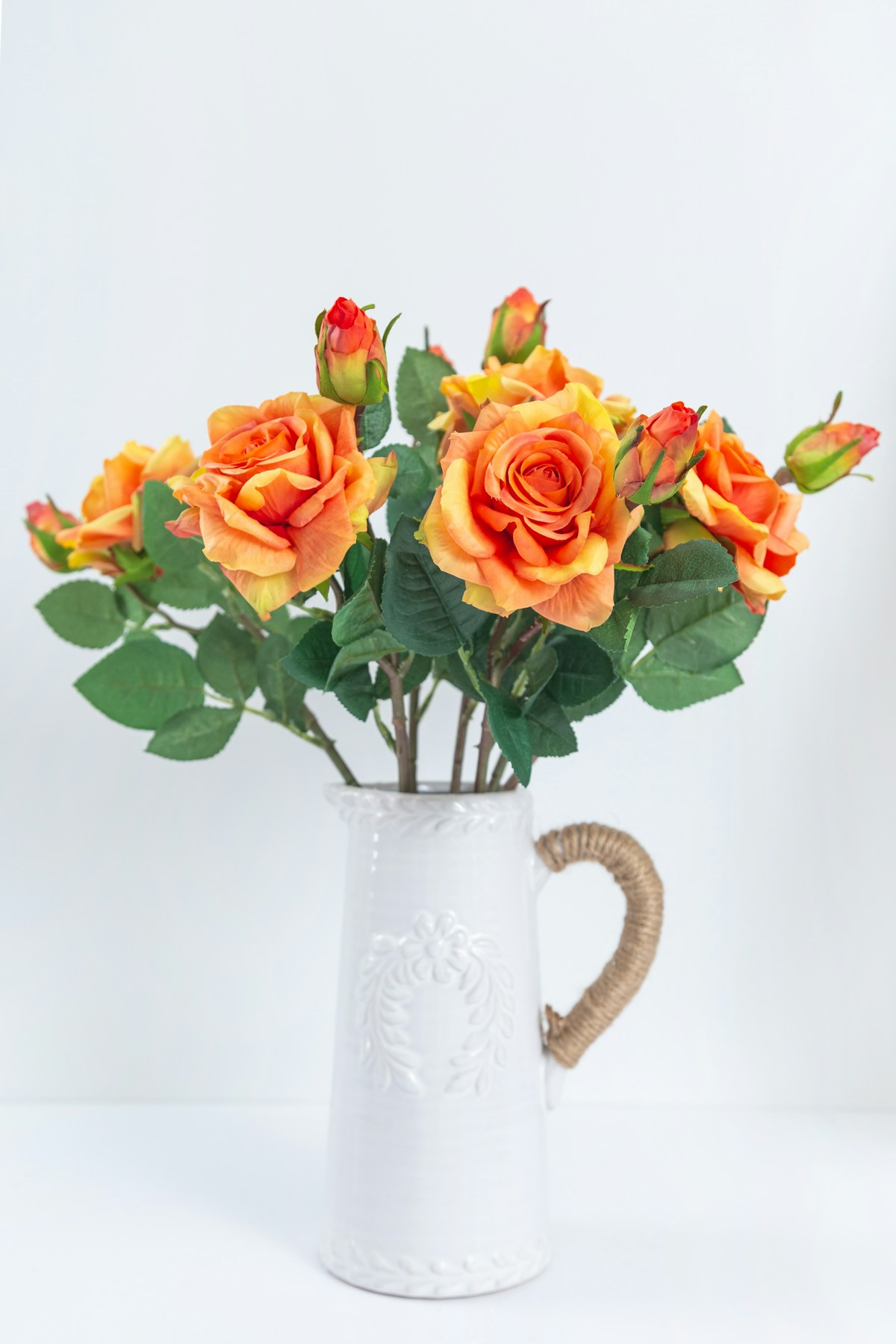
Are Silk Flowers Suitable for Outdoor Sun
Standard silk or fabric flowers are not automatically outdoor-safe. If a product is intended for an uncovered porch, balcony, garden, or window box, look for an explicit outdoor rating and UV-resistance statement from the manufacturer.
Material labels alone are not enough to predict performance. Construction, pigment, stabilizer package, coating, climate, direct-light hours, and the maker’s testing or warranty all affect the result.
How common materials compare
| Material or construction | Typical strength | Sunlight decision |
|---|---|---|
| Untreated fabric or silk-style petals | Soft appearance and drape | Best for indoor displays away from direct sun. |
| Polymer-coated or “real touch” petals | Natural-looking surface and tactile realism | Follow the specific product’s indoor or outdoor rating. |
| UV-treated synthetic materials | Designed to slow UV-related fading and aging | Prefer for outdoor use, while treating the claim as resistance rather than immunity. |
| Outdoor-rated molded plastic or polymer | Shape retention and weather-oriented construction | Often a practical choice for exposed locations when the product is explicitly rated. |
What UV-Resistant Really Means
“UV-resistant” generally means a product has been designed or treated to slow the effects of ultraviolet exposure. That protection may involve pigments, UV absorbers, stabilizers, a protective surface treatment, or a combination of material and construction choices.
It is not a universal duration promise. Ask whether the product has an outdoor-use recommendation, a test method, a geographic or climate limitation, and a warranty that describes fading or material failure.
Buying rule: For a flower arrangement that will receive direct sun, prioritize “UV-resistant” and “outdoor-rated” language together. If the listing only says “fade-resistant” without describing the intended environment, treat the claim cautiously.
How to Protect Faux Flowers from Sunlight
The most reliable protection is to reduce the light dose. The Canadian Conservation Institute describes total exposure as the combination of light intensity and time, which translates into a simple home-decor rule: less direct light for fewer hours means less cumulative damage.[1]
- Choose the right product. Use indoor flowers indoors and outdoor-rated UV-resistant flowers outdoors.
- Move the arrangement out of the beam. A nearby shaded surface is safer than a windowsill receiving direct rays.
- Filter the window. Curtains, blinds, exterior shade, or a tested UV-filtering film can reduce exposure.
- Rotate the display. Turn the vase periodically to prevent one-sided fading.
- Control heat and moisture. Avoid hot glass, radiators, fireplaces, sprinklers, and persistent dampness.
- Keep petals clean. Dust with a soft brush or cool air, following the material maker’s cleaning instructions.
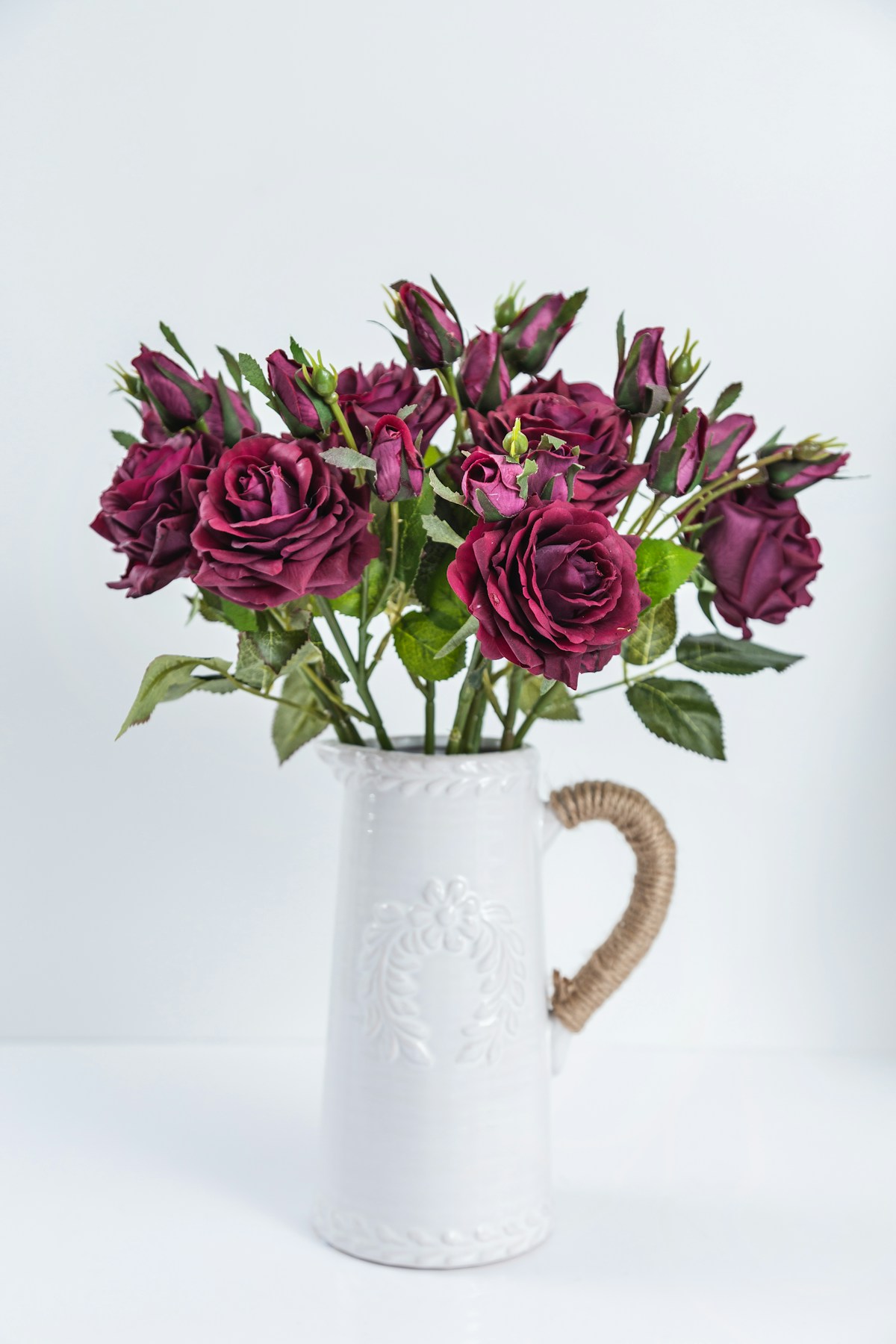
Does UV Spray Work on Artificial Flowers
A compatible UV protectant spray may provide an additional layer of protection, especially for products already intended for outdoor use. It cannot reverse existing fading, and it should not be treated as a way to turn an indoor-only flower into a weatherproof product.
- Read the label to confirm that the product is made for artificial plants, fabric, plastic, or the relevant surface.
- Test a small hidden area first because sprays can change sheen, color, or texture.
- Clean and fully dry the flower before application.
- Spray in a well-ventilated area and follow the manufacturer’s reapplication instructions.
- Keep treated flowers away from flame, children, and pets until the product is fully dry.
Industry guidance commonly recommends UV spray as a supplement rather than a substitute for UV-rated construction. Product instructions and test evidence should take priority over a generic reapplication schedule.
Signs of Sun Damage
Sun damage may appear gradually, and the first sign is not always simple fading. Inspect the front and back of petals, leaves, stems, and any surface coating.
- One side of the arrangement is lighter than the shaded side.
- Red, pink, purple, or blue tones look washed out or shift in hue.
- Petals feel less flexible, crack at the edges, or break when gently adjusted.
- Plastic or polymer parts turn yellow, chalky, sticky, or unusually brittle.
- Adhesive joins loosen after repeated heat and light exposure.
Move the arrangement as soon as you notice a change. If the color has already shifted, replacement of the most exposed stems is usually more predictable than trying to recolor the entire arrangement.
Related BloomWitness Guides
- Do Silk Flowers Last Long? explains lifespan, storage, and general care.
- What Are Artificial Flowers Made Of? compares silk, Real Touch, PE foam, PVC, and structural materials.
- How to Choose Artificial Flowers covers realism, construction, and room-by-room selection.
- Artificial Flowers Complete Guide brings together arranging, styling, sizing, and maintenance advice.
Top Pick: UV-Resistant Blooms for Bright Rooms
If fading is your main worry, skip the DIY fixes and start with blooms that are built for sunlight — this outdoor-rated hydrangea set is treated for exactly the UV exposure described above.
- Product: 4 Pack Artificial Hydrangeas — UV-resistant faux silk flowers for outdoor use
- Price: $33.99 with free shipping
- Why it fits this article: designed to slow the UV fading this guide explains, so the color stays put in bright windows
Shop the 4 Pack UV-Resistant Hydrangeas →
Frequently Asked Questions
Do faux flowers fade in sunlight?
Yes. Prolonged direct sunlight can fade dyes or pigments and can age some synthetic materials. The rate depends on the material, colorants, UV stabilizers, light intensity, exposure time, heat, and moisture.
Do artificial flowers fade in a sunny window?
They can. Window glass filters some UV, but a bright window can still deliver enough light over time to fade untreated faux flowers. Use indirect light, a curtain, UV-filtering film, or a UV-rated arrangement.
Are silk flowers safe outside in the sun?
Standard silk or fabric flowers are not automatically suitable for outdoor sun. Choose flowers specifically labeled UV-resistant or outdoor-rated, and follow the maker’s instructions.
What does UV-resistant mean on artificial flowers?
It means the materials, pigments, additives, or surface treatment are designed to slow ultraviolet damage. It is a resistance claim, not a promise that the color will never change.
Can UV spray stop faux flowers from fading?
A compatible spray may add protection, but it cannot reverse existing fading or guarantee permanent color retention. Test it on a hidden area and follow the product label.
Can faded artificial flowers be restored?
Sun fading is generally irreversible because light changes dyes and pigments. Replace exposed stems or recolor only with a material-compatible product; moving the arrangement prevents additional damage.
Which faux flower materials are best for sunny outdoor spaces?
Choose products explicitly rated for outdoor use and UV exposure. UV-treated polymer or plastic components may be suitable, but construction, pigment, climate, and warranty also matter.
About the author
BloomWitness Editorial Team combines floral styling knowledge with care guidance for lifelike artificial flowers and home decor.
Image Credits and License Notes
The downloaded images below are used under the Unsplash License. Verify the license and image page again before publishing commercially, especially if a platform changes its terms or the image is replaced.
- Hero image: M K., “pink and green flowers on vase,” original image page. Free to use under the Unsplash License.
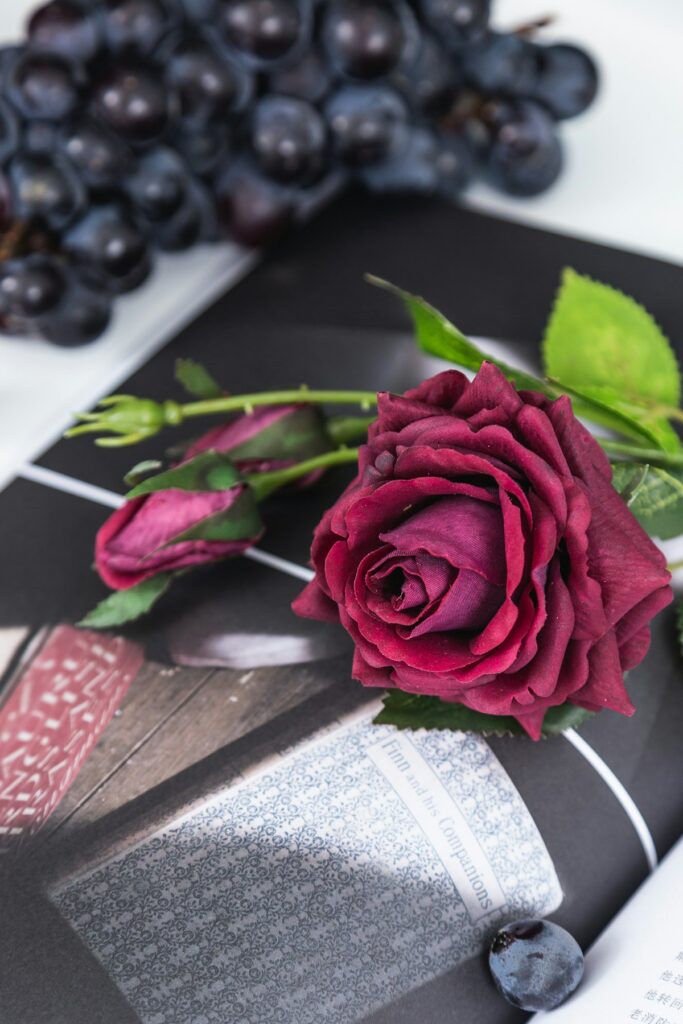
- Material detail: Artificialmerch, “a red rose sitting on top of a book,” original image page. Free to use under the Unsplash License.
- Bright-room display: Artificialmerch, “a bouquet of orange roses in a white vase,” original image page. Free to use under the Unsplash License.
- Care arrangement: Artificialmerch, “a white vase filled with purple flowers on top of a table,” original image page. Free to use under the Unsplash License.
Sources
- Canadian Conservation Institute, “Agent of Deterioration: Light, Ultraviolet and Infrared.” Explains cumulative light damage, light dose, and fading mechanisms.https://www.canada.ca/en/conservation-institute/services/agents-deterioration/light.html
- Yousif and Haddad, “Photodegradation and photostabilization of polymers, especially polystyrene: review.” Peer-reviewed review of UV photooxidation, polymer-chain breaking, yellowing, and embrittlement.https://pmc.ncbi.nlm.nih.gov/articles/PMC4320144/
- National Park Service, “Choosing UV-Filtering Window Films.” Technical guidance on window glass, UV filtering, and the need to control light intensity and exposure duration.https://www.nps.gov/subjects/museums/upload/03-10_508.pdf
- Afloral, “UV-Protected Artificial Plants: The Best Way to Prevent Fading Indoors & Out.” Industry guidance on UV-protected faux plants and supplemental spray use.https://www.afloral.com/blogs/home-styling/prevent-uv-fading
- Nearly Natural, “The Truth About UV-Resistant Faux Plants: Are They Worth It?” Industry explanation of UV inhibitors, outdoor ratings, and the limits of untreated flowers.https://www.nearlynatural.com/blogs/artificial-plants-and-trees-news/the-truth-about-uv-resistant-faux-plants-are-they-worth-it
Keep your blooms bright for years
The 4 Pack UV-Resistant Hydrangeas — $33.99 with free shipping — is the simplest answer to the fading problem in this guide.