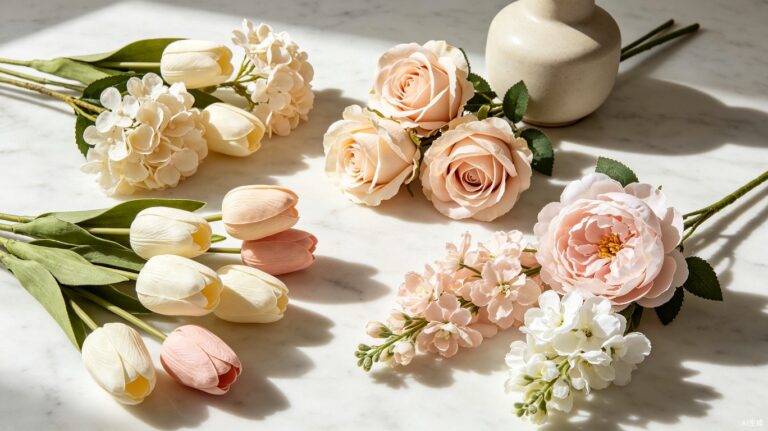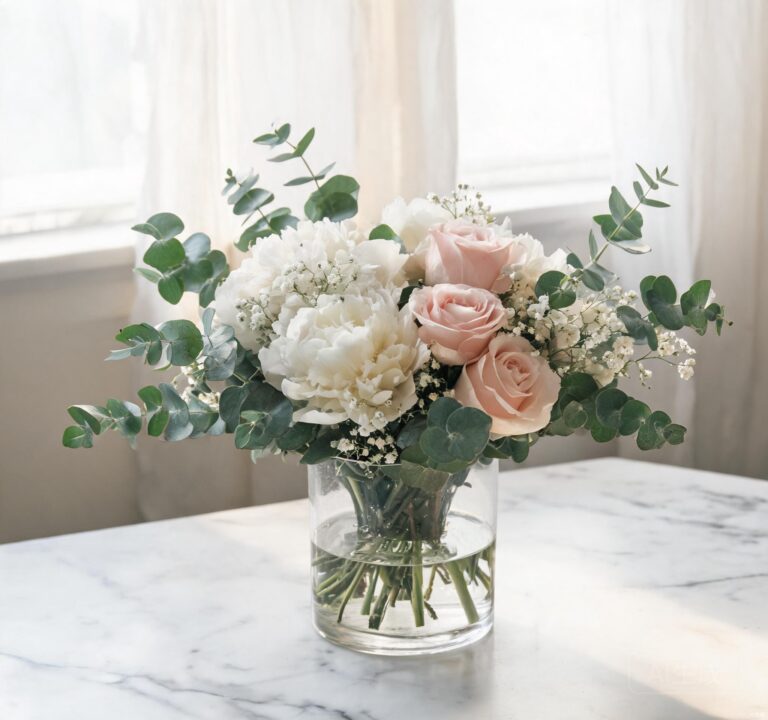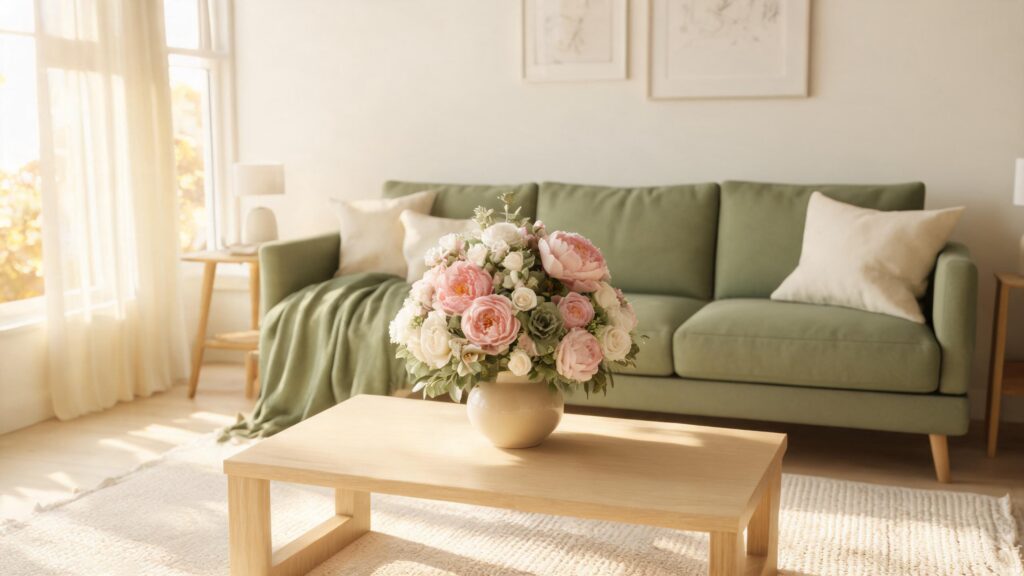
No, fake flowers are not tacky — cheap ones are. Modern silk and real touch artificial flowers have evolved so dramatically that interior designers, home stagers, and wedding planners now use them routinely. The stigma belongs to dusty plastic blooms from the 1990s, not today’s hand-painted, polymer-coated faux florals that fool even professional florists on touch and sight.
The question “are fake flowers tacky?” gets searched thousands of times every month — and the answer has fundamentally changed in the last five years. Advances in real touch technology, hand-painted silk construction, and sustainable materials have created a new category of artificial flowers that bear no resemblance to the stiff, shiny plastic blooms that earned fake flowers their bad name.
This guide breaks down exactly when fake flowers look tacky (and how to avoid it), when they’re the smarter choice than fresh flowers, and how to select arrangements that look indistinguishable from the real thing.
The Short Answer: Quality Is Everything
The tackiness of fake flowers is 100% determined by quality, not by the fact that they’re artificial. A $8 plastic bouquet from a dollar store will look tacky. A $40 hand-painted silk arrangement from a reputable brand will look stunning — and most guests won’t know the difference unless you tell them.
Here’s the simple quality hierarchy:
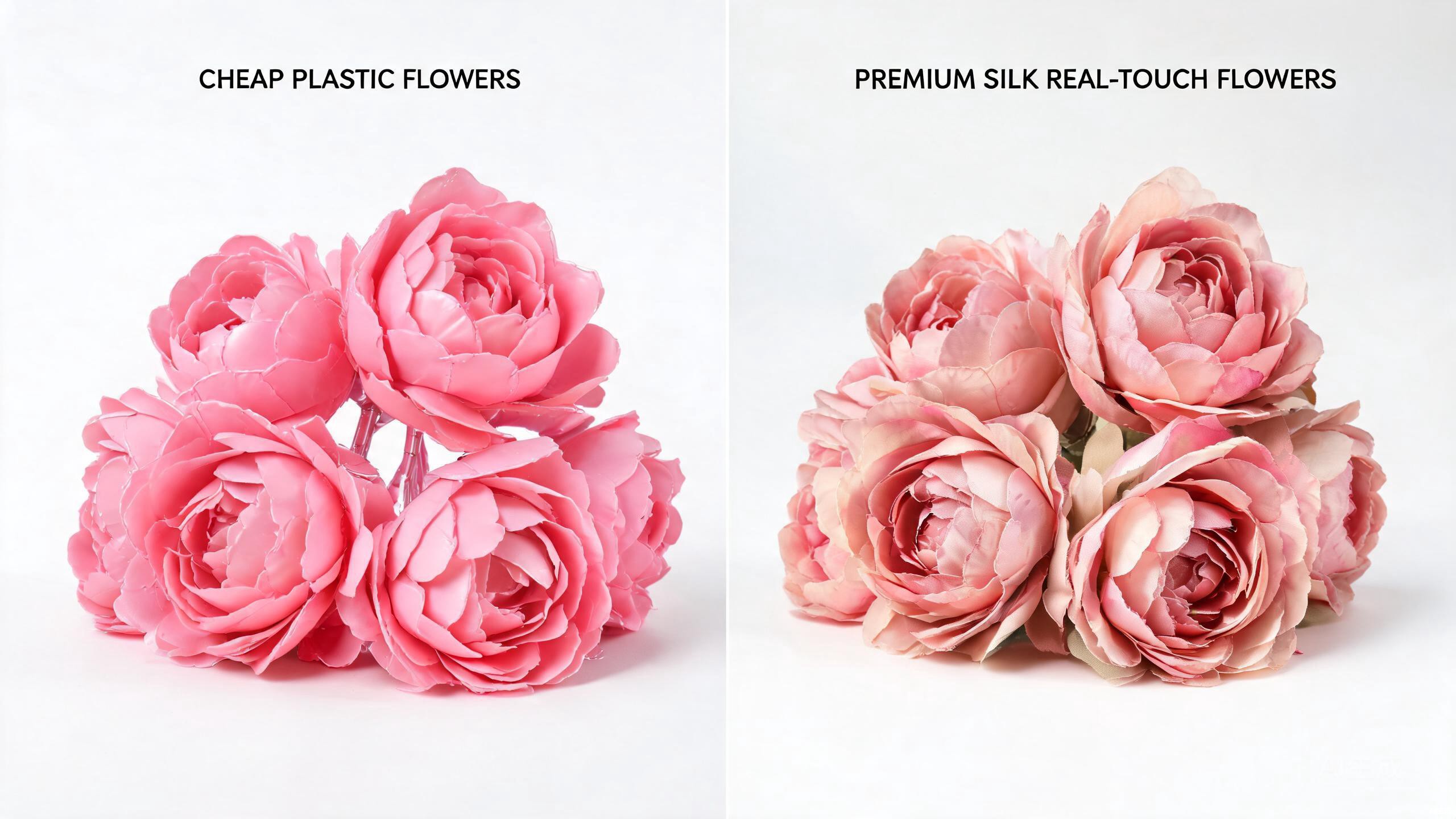
- Real touch flowers — Polymer-coated petals that feel soft and velvety. The gold standard. Indistinguishable from real flowers by touch.
- Premium silk flowers — Multi-layer petals with hand-painted color gradients. Look highly realistic from any distance.
- Standard polyester flowers — Acceptable from a distance but reveal artificiality up close. Budget-friendly.
- Cheap plastic flowers — Shiny, stiff, uniform colors. These are the ones that look tacky. Avoid.
Why Fake Flowers Got a Bad Reputation (And Why It’s Outdated)
The “tacky fake flowers” stereotype comes from a very specific era and material. In the 1980s and 1990s, artificial flowers were mass-produced from cheap PVC plastic with single-layer petals, uniform factory dye jobs, and glossy surfaces that screamed “fake” from across the room.
These flowers faded in sunlight, gathered visible dust, and had seams where the plastic was molded together. They were stiff, lightweight, and obviously artificial. This is the image most people picture when they hear “fake flowers” — and it’s completely outdated.
The Technology Shift That Changed Everything
Three innovations killed the tacky stigma:
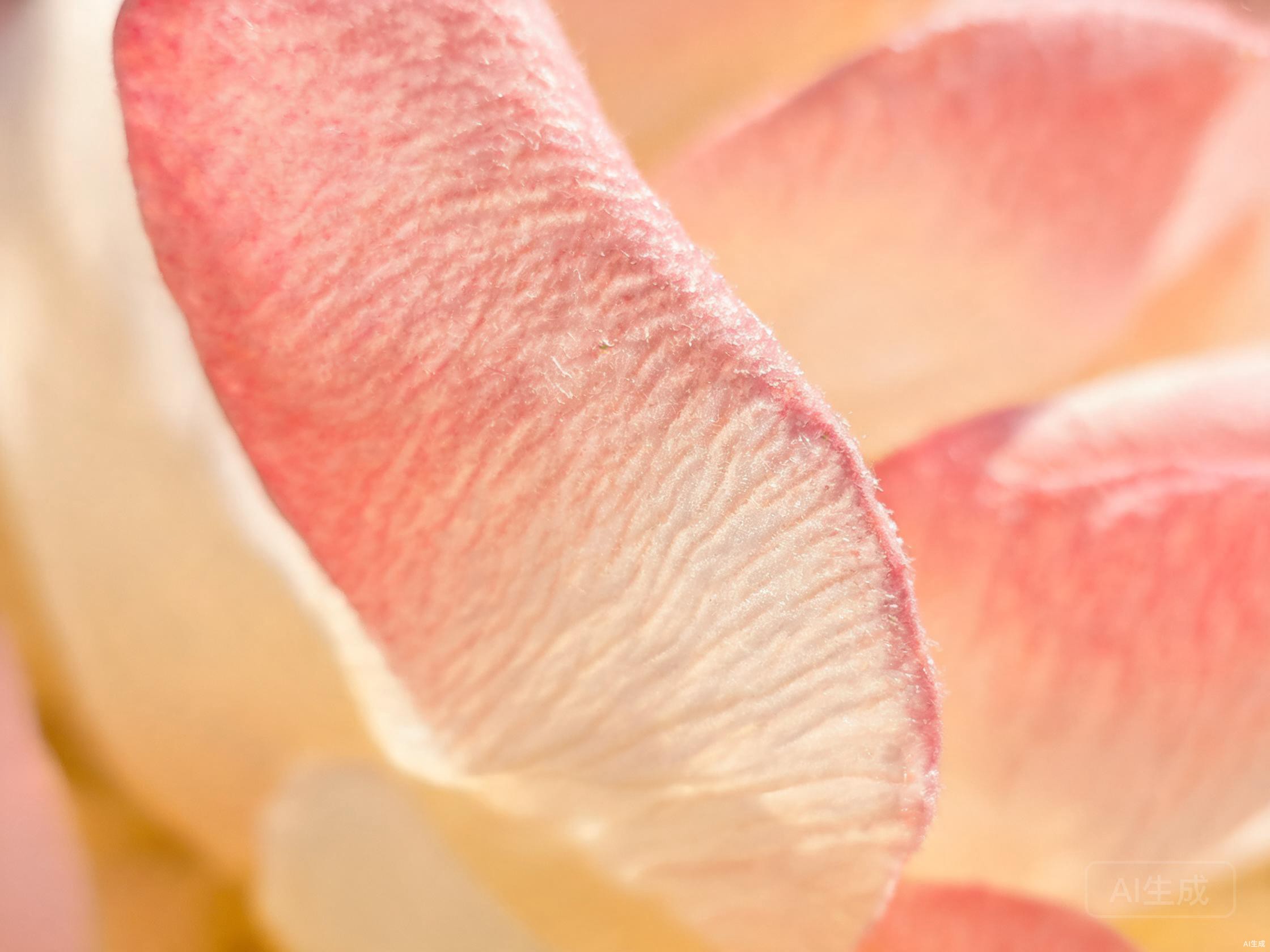
- Real touch polymer coating — A specialized polymer applied to petals that replicates the soft, velvety texture of living flowers. When you touch them, your brain says “real.”
- Hand-painted coloring — Artisans individually paint petals with natural color gradients, replicating the subtle variations found in real blooms. No two petals are exactly alike.
- Multi-layer construction with wired stems — Modern faux flowers have 5-15 petal layers and flexible wired stems that can be shaped into natural curves and angles.
By 2024, these technologies reached a tipping point where premium artificial flowers became indistinguishable from fresh flowers in photographs, on video calls, and even at arm’s length. Interior designers began incorporating them into high-end projects, and the stigma started dissolving.
Key Insight
The pandemic accelerated the shift. With people spending more time at home and wanting low-maintenance beauty, artificial flower sales surged. Google Trends data shows sustained interest in “fake flowers” and “artificial flowers” searches year-round, with no seasonal dip — proving they’ve moved from special-occasion purchases to everyday home decor.
5 Signs Your Fake Flowers Look Tacky (And How to Fix Each)
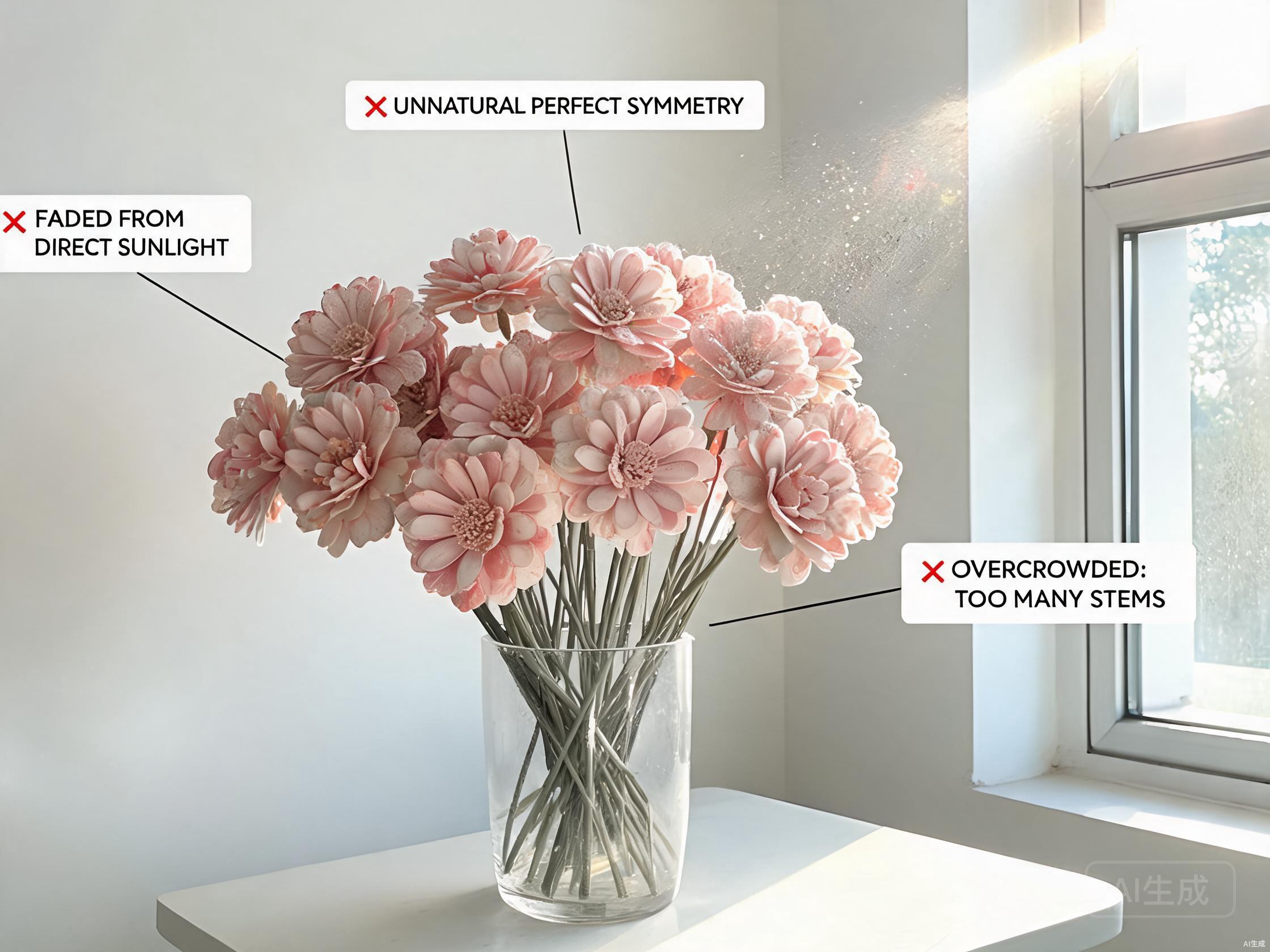
If you already own artificial flowers and worry they look tacky, check these five common problems. Each one has a simple fix.
1. Shiny or Glossy Petal Surfaces
Real flower petals have a natural matte finish. If your fake flowers catch light like plastic, they’ll look artificial immediately. The fix: Replace with matte-finish silk or real touch flowers. You can also lightly dust petals with cornstarch to reduce shine on budget flowers.
2. Uniform, Flat Colors
Nature doesn’t produce uniformly colored flowers — every real bloom has gradients, slight color variations, and natural imperfections. If all your petals are the exact same shade, it looks factory-made. The fix: Choose hand-painted artificial flowers with visible color transitions, or mix two slightly different shades of the same flower type.
3. Stiff, Symmetrical Arrangements
Real flowers grow at random angles and have natural irregularity. A perfectly symmetrical, stiffly upright arrangement looks artificial. The fix: Bend wired stems at varied angles, let some flowers droop naturally, and avoid perfect spacing. Loosen the arrangement.
4. Visible Dust Accumulation
Dusty flowers look neglected — and nothing says “tacky fake flowers” faster than a grey film on plastic petals. The fix: Dust weekly with a soft brush or use a hairdryer on the cool setting. For deeper cleaning, rinse silk flowers in cool water with mild soap and air dry.
5. Wrong Scale or Proportion
Tiny flowers in a giant vase, or oversized blooms in a small jar, both look “off” to the eye — even if the flowers themselves are high quality. The fix: Follow the 1.5x rule: your flower stems should be 1.5 to 2 times the height of your vase. For a 6-inch vase, use 9-12 inch stems.
When Artificial Flowers Are the Smarter Choice
There are clear scenarios where fake flowers aren’t just acceptable — they’re objectively better than fresh flowers. Here’s when to choose artificial:
Home Decor and Everyday Living
For year-round home decor, artificial flowers eliminate the weekly maintenance cycle of fresh flowers. No watering, no trimming, no wilting, no replacing. A quality arrangement typically provides beauty for 3-5 years indoors, and premium blooms can last 5 years or more with minimal care.
- ✓ Living room centerpieces that always look fresh
- ✓ Bedroom nightstand arrangements for a calming touch
- ✓ Entryway console tables that welcome guests year-round
- ✓ Bathroom decor where humidity kills fresh flowers quickly
- ✓ Office spaces where sunlight and watering aren’t reliable
Weddings and Events
Artificial wedding flowers cost 50-70% less than fresh florals while eliminating wilting, seasonal shortages, and last-minute delivery stress. Modern silk and real touch bridal bouquets look indistinguishable from real flowers in photos — and they become keepsakes that last forever.
- ✓ Bridal bouquets that won’t wilt in heat or humidity
- ✓ Centerpieces that can be arranged weeks in advance
- ✓ Consistent color matching regardless of season
- ✓ No pollen allergies for sensitive guests
- ✓ Reusable for rehearsal dinners, receptions, and home decor after
Commercial and Hospitality Spaces
Hotels, restaurants, cafes, and retail stores benefit enormously from artificial flowers. They provide consistent, maintenance-free ambiance that looks identical every single day — no wilted petals turning off customers.
One-time cost of a quality artificial arrangement
Annual cost of weekly fresh flower replacements
Years a quality arrangement can last
Fake Flowers vs Real Flowers: An Honest Comparison
Both have their place. Here’s a transparent comparison to help you decide:
| Factor | Quality Artificial Flowers | Fresh Flowers |
|---|---|---|
| Visual realism | Indistinguishable from real at arm’s length | Obviously real |
| Tactile feel | Real touch: soft and velvety; silk: fabric-like | Naturally soft and cool |
| Fragrance | None (can add essential oils) | Natural fragrance |
| Lifespan | 3-5 years (5+ premium) | 5-7 days |
| Annual cost | $36-$60 one-time | $750-$1,300 per year |
| Maintenance | Dust weekly, reshape occasionally | Daily water change, trimming, disposal |
| Seasonal availability | Any flower, any time of year | Limited by growing season |
| Allergy-friendly | Yes — zero pollen | No — pollen and scent can trigger allergies |
| Environmental impact | One-time production; eliminates refrigerated transport | Recurring pesticide use, water, refrigerated shipping |
| Best for | Home decor, weddings, commercial spaces, keepsakes | Gifting, special occasions, when fragrance matters |
The smartest approach many designers recommend is hybrid: use quality artificial flowers for everyday decor and structural arrangements, and supplement with a few fresh stems when you want fragrance or a special touch.
How to Choose Artificial Flowers That Don’t Look Fake
Follow this checklist when shopping for artificial flowers to guarantee they look realistic and elegant:
Material Checklist
- ✓ Choose real touch flowers with polymer-coated petals for maximum realism
- ✓ Or select premium silk with multi-layer petal construction (5+ layers)
- ✓ Avoid plastic, foam, or single-layer polyester flowers
- ✓ Check that stems are wired and bendable for natural shaping
Visual Checklist
- ✓ Petals have matte finish, not glossy or shiny
- ✓ Colors show natural gradients and hand-painted variation
- ✓ Petals have texture and slight imperfections, not perfectly smooth
- ✓ Leaves have realistic veining and color variation
- ✓ Blooms vary slightly in size and openness, not uniform
What to Avoid
- ✗ Shiny or glossy petal surfaces
- ✗ Uniform, flat, machine-dyed colors
- ✗ Visible glue or seams on petals
- ✗ Stiff, unbendable plastic stems
- ✗ Flowers that are suspiciously lightweight
- ✗ Overly perfect, symmetrical bloom shapes
- ✗ Strong chemical plastic smell
Designer Tips for Styling Faux Flowers Like a Pro
Even the best artificial flowers can look fake if styled poorly. Follow these professional techniques:
1. Use the 1.5x Height Rule
Your flower stems should be 1.5 to 2 times the height of your vase. For a 6-inch vase, use 9-12 inch stems. For a 10-inch vase, use 15-20 inch stems. This proportion creates a balanced, natural-looking arrangement.
2. Build in Three Layers
Start with greenery stems as the base (eucalyptus, ivy, or fern). Add focal flowers (roses, peonies, hydrangeas) in the center at varying heights. Finish with filler flowers (baby’s breath, small tulips) around the edges to fill gaps.
3. Bend Stems at Natural Angles
Real flowers don’t stand at attention. Use the wired stems to create gentle curves, let some flowers droop slightly, and vary the angles. A loose, slightly asymmetrical arrangement always looks more natural than a tight, symmetrical one.
4. Add Real Water to the Vase
This is a designer secret: fill the vase with real water. It adds weight, creates the visual depth of a real water line, and makes the arrangement feel authentic. Just ensure your artificial flowers are water-safe.
5. Mix in Fresh Greenery
Even a few real leaves or fern fronds mixed into an artificial arrangement can trick the eye completely. The fresh greenery provides authenticity while the faux flowers provide longevity.
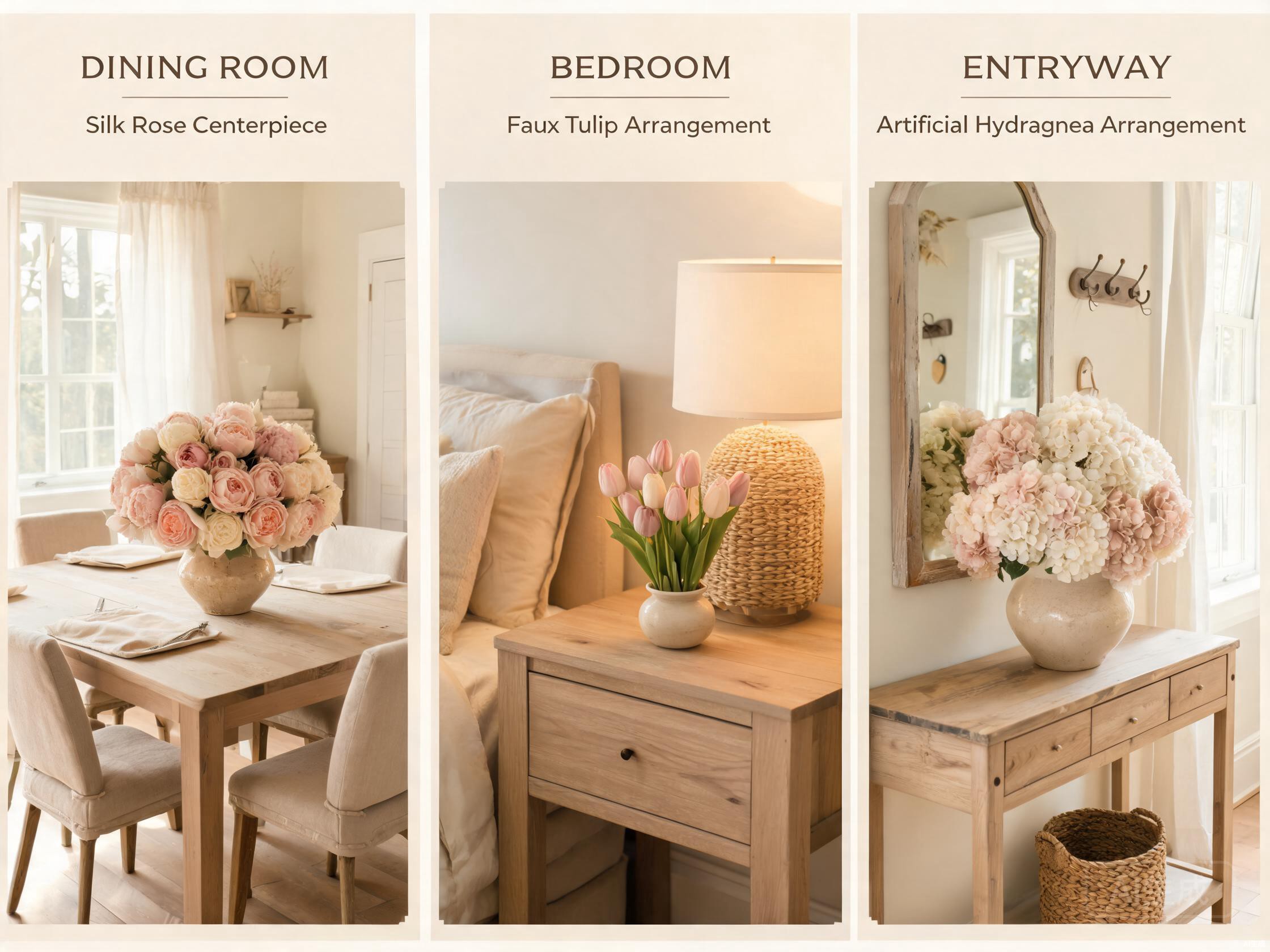
6. Choose the Right Flowers for Each Room
- Living room: Roses, peonies, and hydrangeas for full, lush arrangements
- Dining table: Low arrangements of hydrangeas or garden roses
- Bedroom: Tulips or lavender for a calm, simple aesthetic
- Entryway: Tall, dramatic arrangements of branches or large blooms
- Kitchen: Herbs, small daisies, or sunflowers for a casual, cheerful look
- Bathroom: Orchids or small succulents that thrive in humid conditions
Best Artificial Flowers by Type: What to Buy
Not all flower types translate equally well to artificial versions. Here’s which fake flowers look most realistic:
Artificial Hydrangeas
Hydrangeas are the best artificial flower for home decor. Their full, rounded blooms and dense petal clusters translate beautifully to silk and real touch materials. They’re forgiving of slight imperfections because real hydrangeas have natural texture variation.
Silk Peonies
Peonies’ ruffled, multi-layer petals are perfect for artificial reproduction. Quality silk peonies with 15+ petal layers look stunningly real. Choose ones with hand-painted color gradients for maximum authenticity.
Artificial Tulips
Tulips have a simple, elegant form that’s easy to replicate in silk. Look for polymer-coated petals with natural cup shapes and slightly bent stems — real tulips curve toward light, and your artificial ones should too.
Faux Roses
Roses are the most popular artificial flower. Choose real touch roses with matte petals and visible petal layers. Avoid the “closed bud” look — slightly open roses with visible centers look most natural.
Experience the Difference Quality Makes
BloomWitness artisan-crafted real touch flowers are hand-painted by skilled artisans and coated with a specialized polymer that feels indistinguishable from real petals.
Top Pick: The Realism Standard Behind “Not Tacky”
The “quality is everything” verdict comes down to texture — and real-touch polymer coating is the closest modern equivalent to how a real petal behaves under light and touch.
- Product: 6 Stems Real Touch Hydrangea Bouquet — lifelike faux silk blooms
- Price: $35.99 with free shipping
- Why it fits this guide: passes the 5 tacky-sign checks with matte, soft-touch petals
Shop the Real Touch Hydrangea Bouquet →
Frequently Asked Questions
Are fake flowers tacky?
No, fake flowers are not inherently tacky. The tackiness stigma comes from cheap plastic flowers with shiny surfaces, uniform colors, and visible seams. Modern high-quality silk and real touch artificial flowers look indistinguishable from real blooms and are widely used by interior designers, home stagers, and wedding planners. The difference is entirely in the quality of materials and construction.
When did fake flowers stop being tacky?
Fake flowers began shedding their tacky reputation around 2018-2020 when real touch technology and hand-painted silk flowers reached a level of realism that fools even florists. The pandemic accelerated adoption as people sought low-maintenance home decor. By 2024, premium faux florals became a mainstream interior design staple embraced by designers and homeowners alike.
How can you tell if artificial flowers are good quality?
Good quality artificial flowers have matte finishes (not shiny), hand-painted color gradients, multi-layer petal construction, flexible wired stems, and natural weight. Real touch flowers should feel soft and velvety to the touch, not stiff or plasticky. Avoid flowers with uniform machine-dyed colors or visible glue. When in doubt, touch the petals — if they feel like real petals, you’ve found quality.
Do interior designers use fake flowers?
Yes, many interior designers and home stagers use high-quality artificial flowers. They provide consistent beauty without maintenance, won’t wilt during showings or photo shoots, and allow for seasonal changes without recurring costs. Designers typically use silk or real touch flowers from premium suppliers and style them with the same techniques used for fresh flowers.
Are fake flowers cheaper than real flowers?
Yes, fake flowers are significantly cheaper long-term. A quality artificial arrangement is a one-time purchase that typically lasts 3-5 years indoors, with premium blooms lasting 5 years or more. Fresh flowers cost more per bouquet and last only 5-7 days. Quality artificial flowers can pay for themselves over time and continue saving money for years.
Can you mix fake and real flowers?
Yes, mixing fake and real flowers is a popular and practical technique. Use real flowers as the focal point and supplement with high-quality artificial filler flowers and greenery. This approach saves money while maintaining the fragrance and authenticity of fresh blooms. Many wedding florists use this hybrid method to create lavish arrangements within budget.
What are the best fake flowers for home decor?
The best fake flowers for home decor are real touch hydrangeas, silk peonies, artificial tulips, and faux roses from reputable brands. Look for flowers with hand-painted petals, wired stems for custom shaping, and natural-looking color variations. BloomWitness offers artisan-crafted real touch flowers that are indistinguishable from fresh blooms and last for years with minimal care.
How do you make fake flowers look real?
To make fake flowers look real: bend stems at natural angles, vary bloom heights, add real water to the vase, mix in fresh greenery, dust regularly, keep them out of direct sunlight to prevent fading, and choose flowers with color variation rather than uniform tones. Arranging them loosely rather than symmetrically also helps. The key is imperfection — real flowers are never perfectly arranged.
The Verdict: Are Fake Flowers Tacky in 2026?
Fake flowers are not tacky in 2026 — if you choose quality. The stigma is dead, killed by real touch technology, hand-painted silk construction, and a cultural shift toward practical, sustainable home decor. Interior designers use them. Home stagers rely on them. Wedding planners recommend them.
The only fake flowers that are still tacky are the cheap ones: shiny plastic, uniform colors, visible seams, and dusty neglected arrangements. Avoid those, and you’ll have beautiful, maintenance-free floral decor that looks stunning for years.
The question isn’t whether to use artificial flowers — it’s whether to invest in quality ones. A $40 hand-painted silk arrangement is not an expense. It’s a multi-year investment in beauty that costs less than a single month of fresh flower replacements.
About this guide: This article is part of the BloomWitness Inspiration Center, a resource hub for lifelike floral decor and modern living. For more guides on choosing, arranging, and caring for artificial flowers, visit our Inspiration Center.
Sources & References
- BloomWitness, Real Touch Flowers vs Fake Flowers: What’s the Difference?
- BloomWitness, How to Choose Artificial Flowers: The Complete Buying Guide
- BloomWitness, Wedding Flowers on a Budget: Why Choose Artificial
- BloomWitness, The Complete Guide to Artificial Hydrangeas
- BloomWitness, Silk vs Real Flowers: Which is Better for Weddings?
- BloomWitness, How to Arrange Artificial Flowers in a Vase: 6 Steps
- BloomWitness, How to Make Artificial Peonies Look Real
Aim for quality that never looks cheap.
The Real Touch Hydrangea Bouquet uses the soft-touch texture this guide points to — $35.99 with free shipping and 30-day returns.