Yes, fake flowers can be eco-friendly — but only when they are high-quality, durable, and reused for 3 or more years. The environmental break-even point occurs after approximately 3-4 uses compared to single-use fresh bouquets[1]. A single artificial arrangement reused over 5 years eliminates roughly 260 fresh flower stems, their refrigerated air freight, pesticide exposure, and plastic packaging waste[2][3]. The key factor is not the material itself, but longevity and reuse.
The Short Answer
The question “are fake flowers eco-friendly” does not have a simple yes or no answer. It depends on how long you use them and what they replace. Here are the key takeaways:
- Fake flowers become greener after 3-4 reuses — LCA studies show silk bouquets break even with fresh flower carbon footprints after approximately 3-4 uses[1]
- Fresh flowers have a massive hidden carbon cost — air freight accounts for ~90% of imported flowers’ greenhouse gas emissions[2]
- 80% of US flowers are imported — mostly from Colombia and Ecuador via refrigerated air transport[2]
- A single imported rose carries 2.5-3 kg CO₂ — from farming, refrigeration, and air freight combined[3]
- Quality artificial flowers typically last 3-5 years indoors, with premium blooms lasting 5 years or more — eliminating the weekly replacement cycle entirely[4]
- Eco-friendly materials are emerging — recycled polyester, plant-based fibers, and non-toxic dyes are now available[5]
The Hidden Environmental Cost of Fresh Cut Flowers
Fresh flowers are often perceived as the “natural” and “green” choice. However, the cut flower industry has a surprisingly large environmental footprint that most consumers never see. The beauty of a fresh bouquet masks a carbon-intensive supply chain[2].
of imported flowers’ emissions come from air freight
of US flowers are imported internationally
types of pesticides flower workers can be exposed to
Carbon Footprint of Air-Freighted Blooms
The cut flower industry relies heavily on air freight to deliver fresh blooms before they wilt. Flowers are 80-90% water by weight, making them one of the least carbon-efficient products in global trade[6]. Aviation generates approximately 0.8-1.0 kg of CO₂ per ton-kilometer[3].
A ton of flowers flown 2,500 km from Bogotá to Miami produces roughly 2,000-2,500 kg of CO₂ equivalent[3]. A single red rose arriving in a British vase from Kenya carries a carbon footprint of approximately 2.5-3 kg CO₂[3]. Multiply that by the millions of stems sold annually, and the impact becomes staggering.
— Dr. Michael Williams, Environmental Scientist, Imperial College London[6]
Pesticides and Water Usage
The floriculture industry uses significant volumes of pesticides and water. Workers in the flower industry can be exposed to up to 127 different types of pesticides[2]. These chemicals affect not only worker health but also local water systems and biodiversity in growing regions.
While 40% of Colombian floriculture farms now use integrated pest management, the majority still rely on conventional chemical practices[7]. The growing phase contributes the most to environmental impact — accounting for 64.62% of total emissions in hydrangea production alone[8].
The 5-Day Waste Cycle
Fresh cut flowers last approximately 5-7 days before wilting and being discarded. This creates a continuous cycle of production, transport, and waste. Every week, millions of stems end up in landfills — along with their plastic sleeves, rubber bands, and floral foam.
For a household that buys fresh flowers weekly, that adds up to 52 bouquets per year — each with its own carbon footprint, pesticide load, and packaging waste. Over 5 years, that’s 260 bouquets discarded.
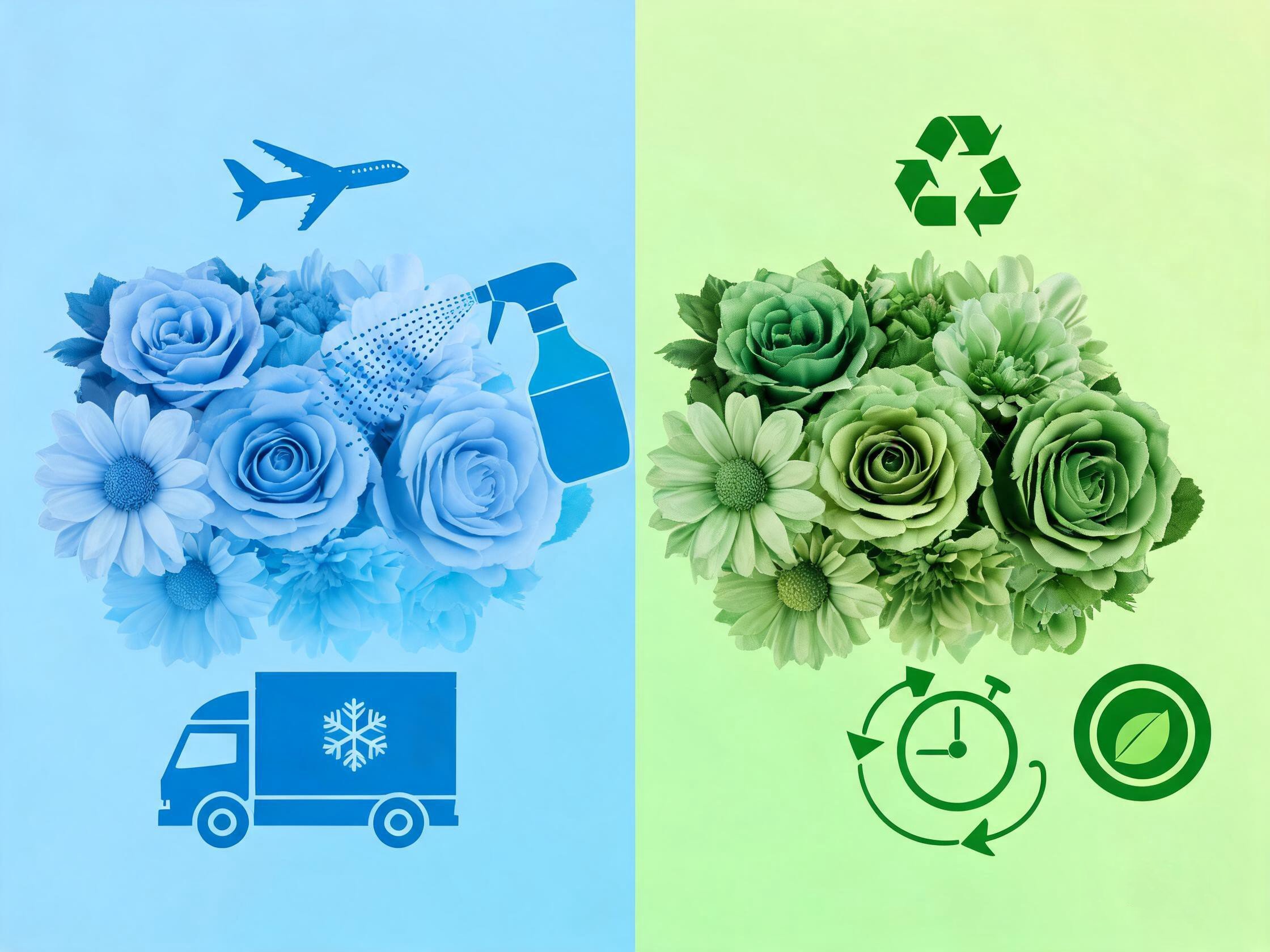
Are Artificial Flowers Better for the Environment?
When evaluated through a full lifecycle assessment (LCA), artificial flowers can be the greener choice — but only under specific conditions. The critical variable is how many times they are reused.
The Lifecycle Break-Even Point
LCA studies suggest that a silk flower bouquet needs to be reused approximately 3-4 times to break even with the carbon footprint of a single-use fresh bouquet[1]. This accounts for the farming, cooling, and flying of fresh flowers versus the one-time production of artificial ones.
After that 4th use, the artificial flower becomes officially the greener option. Since quality artificial flowers typically last 3-5 years indoors, with premium blooms lasting 5 years or more, a single arrangement might replace dozens of fresh flower stems over its lifetime[4].
If you buy one quality artificial arrangement and use it for 5 years, you eliminate the carbon emissions of approximately 260 refrigerated flower shipments, 260 plastic sleeves, and the pesticide exposure from 260 stems of cut flowers.
Zero Refrigerated Transport
Unlike fresh flowers, artificial flowers do not require refrigerated transport. They can be shipped via standard sea freight or ground transport, which dramatically reduces their transportation carbon footprint. They also don’t require cold chain infrastructure at any point in their lifecycle.
This eliminates the single biggest source of emissions in the fresh flower supply chain — the refrigerated air freight that accounts for 90% of imported flowers’ greenhouse gas emissions[2].
Multi-Year Reuse vs. Weekly Replacement
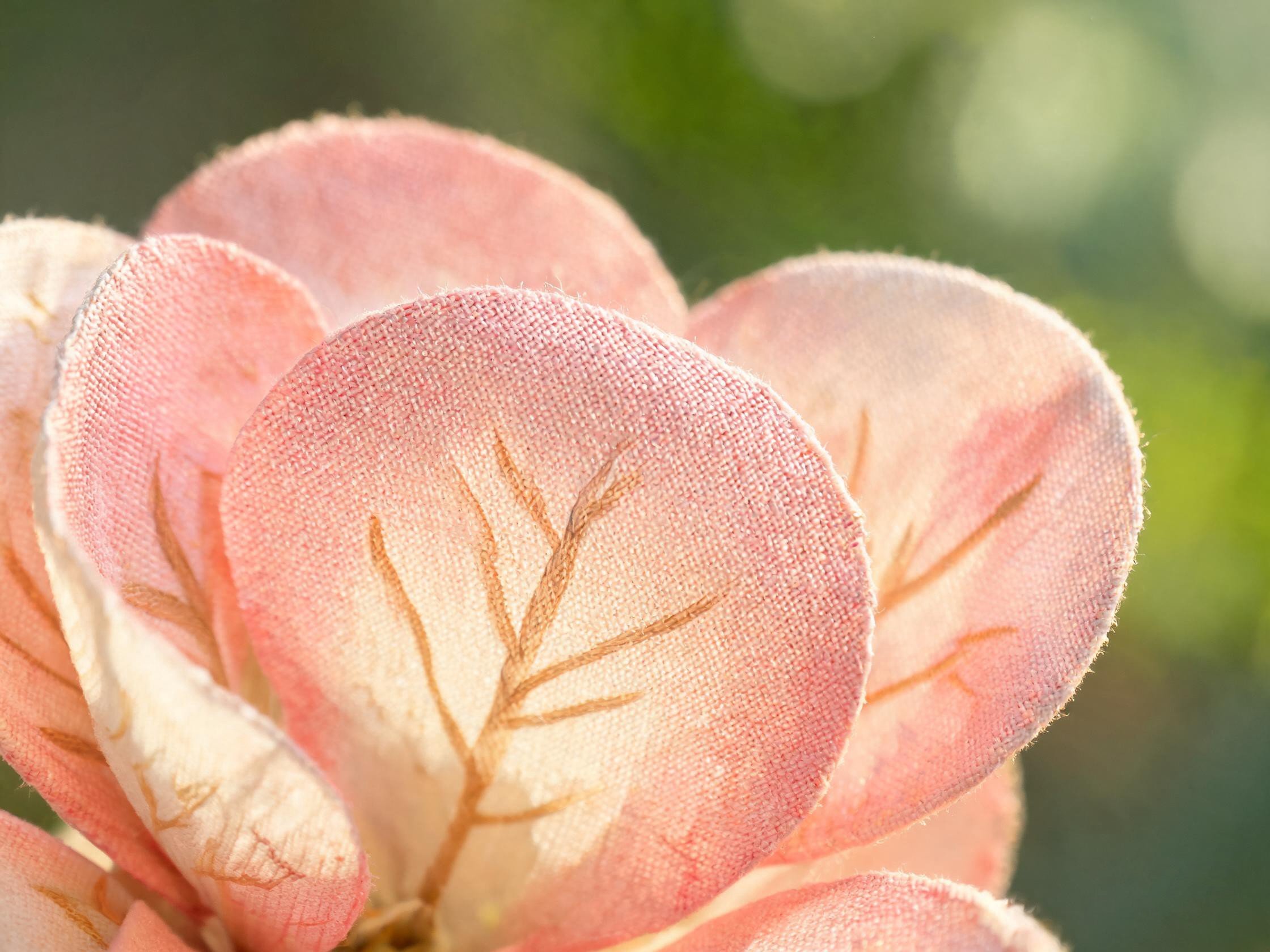
The strongest environmental argument for artificial flowers is their longevity. A quality silk or real-touch arrangement typically lasts 3-5 years indoors, and premium blooms can last 5 years or more with minimal care[4]. This transforms the consumption model from disposable to durable.
- Real touch flowers — 5+ years lifespan with polymer-coated petals
- Premium silk flowers — 5+ years with proper care and dusting
- Standard polyester — 3-5 years before visible wear
- Fresh cut flowers — 5-7 days before disposal
The Environmental Drawbacks of Fake Flowers
Artificial flowers are not a perfect environmental solution. Their materials and end-of-life disposal present genuine challenges that consumers should understand before purchasing.
Non-Biodegradable Materials
Most artificial flowers are made from polyester, silk, latex, and EVA polymer — all fossil-fuel derived materials[9]. These materials are non-biodegradable and take hundreds of years to decompose in landfills[9]. This is the primary environmental criticism of fake flowers.
However, this drawback is mitigated when the flowers are used for years rather than discarded prematurely. The problem is not the material — it’s premature disposal. To tell real-touch polymer from plain plastic before you buy, read our guide to what artificial flowers are made of — a plain-language look inside petal construction.
Microplastic Pollution
As artificial flowers degrade, they break down into microplastics that can end up in oceans and food chains[9][10]. This is a legitimate concern, particularly for low-quality flowers that degrade quickly. Denmark has noted that it lacks proper recycling systems for the plastic content in artificial flowers, meaning most end up in landfills or incineration plants[10].
End-of-Life Recycling Challenges
Most artificial flowers are difficult to recycle through standard municipal programs because they combine multiple materials — fabric, wire, plastic, and glue. However, solutions are emerging:
- Some manufacturers now offer take-back programs for recycling
- Single-material polyester flowers can be processed through textile recycling facilities
- Donating or reselling extends the useful life beyond the original owner
- Upcycling into craft projects prevents immediate landfill disposal
How to Choose Eco-Friendly Artificial Flowers
Not all artificial flowers are equally eco-friendly. Making the right choices can significantly reduce your environmental impact while still enjoying beautiful, long-lasting floral decor.
Look for Recycled and Plant-Based Materials
Modern manufacturers are introducing alternatives crafted from 100% recycled fabric and 100% recycled plastic[11]. These give new life to materials that might otherwise end up in landfills. Leading producers are developing new lines using recycled polyester, plant-based fibers, and non-toxic dyes[5].
- Choose recycled polyester flowers over virgin polyester
- Look for OEKO-TEX certified fabrics — ensures no harmful chemicals[12]
- Consider FSC-labeled paper flowers for biodegradable options[12]
- Select flowers with non-toxic dyes and water-based paints
- Avoid PVC plastic flowers — the least eco-friendly option
Invest in Durability
The most eco-friendly artificial flower is the one you don’t have to replace. Premium real touch and silk flowers cost more upfront but can last 5 years or more with care — we break down real-world lifespans by material in our do silk flowers last long? guide[4]. This extended lifespan is what creates the environmental advantage over fresh flowers.
Cheap artificial flowers that fade, break, or look tacky after one season are the worst environmental choice — what actually triggers fading is covered in our do faux flowers fade in sunlight? guide — they have all the drawbacks of plastic waste with none of the reuse benefits. Quality is sustainability.
Avoid Single-Use Applications
Using artificial flowers for a single event and then discarding them eliminates any environmental advantage. To maximize eco-friendliness:
- Choose arrangements you can reuse across seasons and rooms
- For weddings, select bouquets that become home decor keepsakes
- Consider rental services — a single centerpiece can be rented 20+ times[1]
- Donate unwanted arrangements to thrift stores or community spaces
Real Flowers vs. Fake Flowers: Environmental Comparison
Here is a transparent, science-based comparison of the environmental impacts across key sustainability metrics:
| Environmental Factor | Quality Artificial Flowers | Fresh Cut Flowers |
|---|---|---|
| Lifespan | 3-5 years (5+ premium) | 5-7 days |
| Carbon footprint (per use) | Low after 3-4 reuses | 2.5-3 kg CO₂ per imported rose |
| Transport method | Standard ground/sea freight | Refrigerated air freight |
| Pesticide use | None | Up to 127 pesticide types |
| Water consumption | None (no growing phase) | Significant irrigation required |
| Biodegradability | Non-biodegradable (drawback) | Biodegradable |
| Packaging waste | One-time cardboard packaging | Weekly plastic sleeves, foam, rubber bands |
| End-of-life | Recyclable (limited); donatable | Compostable but often landfilled |
| Best environmental use case | Long-term home decor, events, commercial spaces | Special occasions, gifting, when fragrance matters |
The Future of Sustainable Faux Florals
The artificial flower industry is undergoing a sustainability transformation. As global environmental regulations tighten and consumer awareness grows, manufacturers are shifting from “visual realism” to “full lifecycle sustainability”[13].
Recycled Polyester and Plant-Based Innovation
2025 marks a turning point in material technology. Manufacturers are developing new lines using recycled polyester, plant-based fibers, and non-toxic dyes to minimize environmental impact[5]. Paper-based flowers with soft natural textures are also emerging as a fully biodegradable alternative[5].
Key innovations include:
- 100% recycled fabric and 100% recycled plastic flowers[11]
- Plant-based fibers as alternatives to petroleum-based polyester
- Eco-packaging using kraft paper or compostable wraps[5]
- Closed-loop recycling systems moving from concept to production[13]
Certification Standards
Environmental certifications are becoming increasingly important for B2B procurement in the artificial flower industry[14]. Look for these labels when shopping for eco-friendly faux florals:
- OEKO-TEX Standard 100 — certifies fabrics are free from harmful chemicals[12]
- FSC certification — for paper-based flowers from responsibly managed forests[12]
- EU Ecolabel — highly valued for B2B procurement decisions[14]
- Global Recycled Standard (GRS) — verifies recycled material content
Top Pick: A Bouquet Built to Last (the Greener Choice)
The most eco-friendly artificial flowers are the ones you never replace. This mixed bouquet’s multi-bloom stems are designed for years of indoor reuse — which is the exact condition this article found makes faux florals the greener option.
- Product: 11 Stems Original Artificial Flowers Bouquet — peony, hydrangea, rose, and dahlia
- Price: $46.99 with free shipping
- Why it fits this article: long-lived stems you reuse season after season, avoiding the fresh-flower churn that drives most of the footprint
Shop the 11-stem Original Bouquet →
Frequently Asked Questions
Are fake flowers eco-friendly?
Fake flowers can be eco-friendly when they are high-quality, long-lasting, and reused for 3 or more years. A single artificial bouquet reused over 5 years eliminates approximately 260 fresh flower stems, their refrigerated transport, pesticide use, and packaging waste. The key factor is durability and reuse, not the material alone.
Do artificial flowers have a lower carbon footprint than real flowers?
Yes, when reused 3-4 times. LCA studies show that a silk flower bouquet needs approximately 3-4 uses to break even with the carbon footprint of a single-use fresh bouquet. Since quality artificial flowers typically last 3-5 years indoors, with premium blooms lasting 5 years or more, they become the greener option after the break-even point.
What are artificial flowers made of?
Artificial flowers are primarily made from polyester silk, real touch latex and EVA polymer, PE foam, and latex-coated fabric. Modern eco-friendly options use recycled polyester, plant-based fibers, and non-toxic dyes to reduce environmental impact.
Can artificial flowers be recycled?
Most artificial flowers are difficult to recycle through standard municipal programs because they combine multiple materials. However, some manufacturers now offer take-back programs, and flowers made from single-material polyester can be recycled through textile recycling facilities.
How long do artificial flowers last?
Quality artificial flowers typically last 3-5 years indoors with proper care, and premium real-touch or silk blooms can last 5 years or more. Standard polyester flowers usually last about 3-5 years. This long lifespan is what makes them potentially more eco-friendly than weekly fresh flower replacements.
What is the environmental impact of fresh cut flowers?
Fresh cut flowers have significant environmental impacts: air freight accounts for approximately 90% of imported flowers’ greenhouse gas emissions, 80% of flowers sold in the US are imported internationally, and workers can be exposed to up to 127 different pesticides. A single imported rose can carry a carbon footprint of 2.5-3 kg CO₂.
Experience Eco-Friendly Faux Florals
Bloom Witness artificial flowers are crafted to last for years with proper care — making them the sustainable choice for your home.
Sources
-
Rinlong Flower, “Hybrid Wedding Flowers 101: How to Mix Silk and Fresh Blooms Like a Pro.” LCA break-even analysis for silk vs. fresh flower bouquets.
https://www.rinlongflower.com/blogs/news/hybrid-wedding-flowers-101-how-to-mix-silk-and-fresh-blooms-like-a-pro -
WiFi Talents, “Sustainability in the Floral Industry Statistics.” Data on air freight emissions, pesticide exposure, and import rates for cut flowers.
https://wifitalents.com/sustainability-in-the-floral-industry-statistics/ -
Petal and Poem, “The Environmental Cost of Romance: Valentine’s Day’s Hidden Ecological Footprint.” Carbon footprint data for imported roses and air freight calculations.
https://www.petalandpoem.com/locations/the-environmental-cost-of-romance-valentines-days-hidden-ecological-footprint -
Bloom Witness, “Do silk flowers last long?” Lifespan data for silk, real touch, and polyester artificial flowers.
https://www.bloomwitness.com/do-silk-flowers-last-long/ -
All-Artistic, “Top Trends in Artificial Flower Decoration for 2025.” Eco-friendly material innovations including recycled polyester and plant-based fibers.
https://www.all-artistic.com/news/top-trends-in-artificial-flower-decoration-for-85281516.html -
Plastic Pollution Coalition, “Pretty Toxic: The Fresh Flower Industry’s Plastic Pollution Problem.” Dr. Michael Williams on cut flower carbon inefficiency.
https://www.plasticpollutioncoalition.org/blog/2026/5/29/pretty-toxic-the-fresh-flower-industrys-plastic-pollution-problem -
Worldmetrics, “Floriculture Industry Statistics 2026.” Integrated pest management adoption rates and environmental impact data.
https://worldmetrics.org/floriculture-industry-statistics/ -
Semantic Scholar, “Social and Environmental Analysis Contributions to Floriculture in the Hydrangea Sector Through a Life Cycle Assessment Approach.” LCA of hydrangea production showing 0.969 kg CO₂e per kg.
https://pdfs.semanticscholar.org/fbf6/dd00811ef6ed91c08b9aa6176b0e71ea903d.pdf -
Brighter Kashmir, “The Growing Menace of Artificial Flowers.” Environmental impact of non-biodegradable artificial flower materials and microplastic pollution.
https://www.brighterkashmir.com/the-growing-menace-of-artificial-flowers -
The Danish Dream, “Denmark’s Plastic Flower Boom Swaps One Problem.” Recycling challenges and microplastic pollution from artificial flowers in Denmark.
https://thedanishdream.com/denmarks-plastic-flower-boom-swaps-one-problem/ -
Stems from Heaven, “5 Advances in Artificial Flower Design.” Recycled fabric and recycled plastic flower innovations.
https://stemsfromheaven.co.uk/artificial-flower-design/ -
Alibaba Plantin, “How to Choose Homemade Artificial Flowers: A Complete Buying Guide.” OEKO-TEX and FSC certification guidance for artificial flowers.
https://plantin.alibaba.com/buyingguides/homemade-artificial-flower -
惠州源圣鑫花艺, “仿真花行业2025年环保材料应用趋势与技术突破解析.” Industry analysis of biobased materials and closed-loop recycling systems.
http://www.ysxhy.com/news/219965.html -
Alibaba Plantin, “How to Choose Artificial Flowers Wholesale Green: Buying Guide.” EU Ecolabel certification and sustainable procurement guidance.
https://plantin.alibaba.com/buyingguides/artificial-flowers-wholesale-green