Key Takeaways
Comparing artificial tulips vs real tulips for your home? See the lifespan, cost, and maintenance differences — and when each one is the smarter choice.
When you are drawn to the elegant, iconic shape of tulips for your home, one question tends to come first: should you choose artificial tulips or real tulips?
Both have their place. The right choice depends on how long you want them to last, how much upkeep you are willing to do, and what you plan to use them for. This guide breaks down the key differences between artificial and real tulips so you can decide with confidence.
The Core Differences at a Glance
Here is how artificial and real tulips compare on the factors that matter most to most people:
| Factor | Artificial Tulips | Real Tulips |
|---|---|---|
| Lifespan | 1+ years with basic care | 3–7 days once cut |
| Upfront cost | Higher | Lower |
| Long-term value | Better | Lower |
| Maintenance | Minimal — occasional dusting | Water changes, stem trims, wilt management |
| Availability | Year-round | Seasonal, mainly spring |
| Fragrance | None | Light, natural scent |
The details below walk through each factor so you can see which side fits your situation.
1. Lifespan: How Long Do Tulips Last?
This is usually the deciding factor for people decorating their homes.
Real tulips are beautiful but short-lived. Fresh-cut real tulips from a florist or grocery store generally last 3–7 days in a vase. Even with fresh water, clean stems, and a cool spot, they fade within a week. Garden tulips return year after year, but they only bloom for a few weeks each spring — and they do not come indoors.
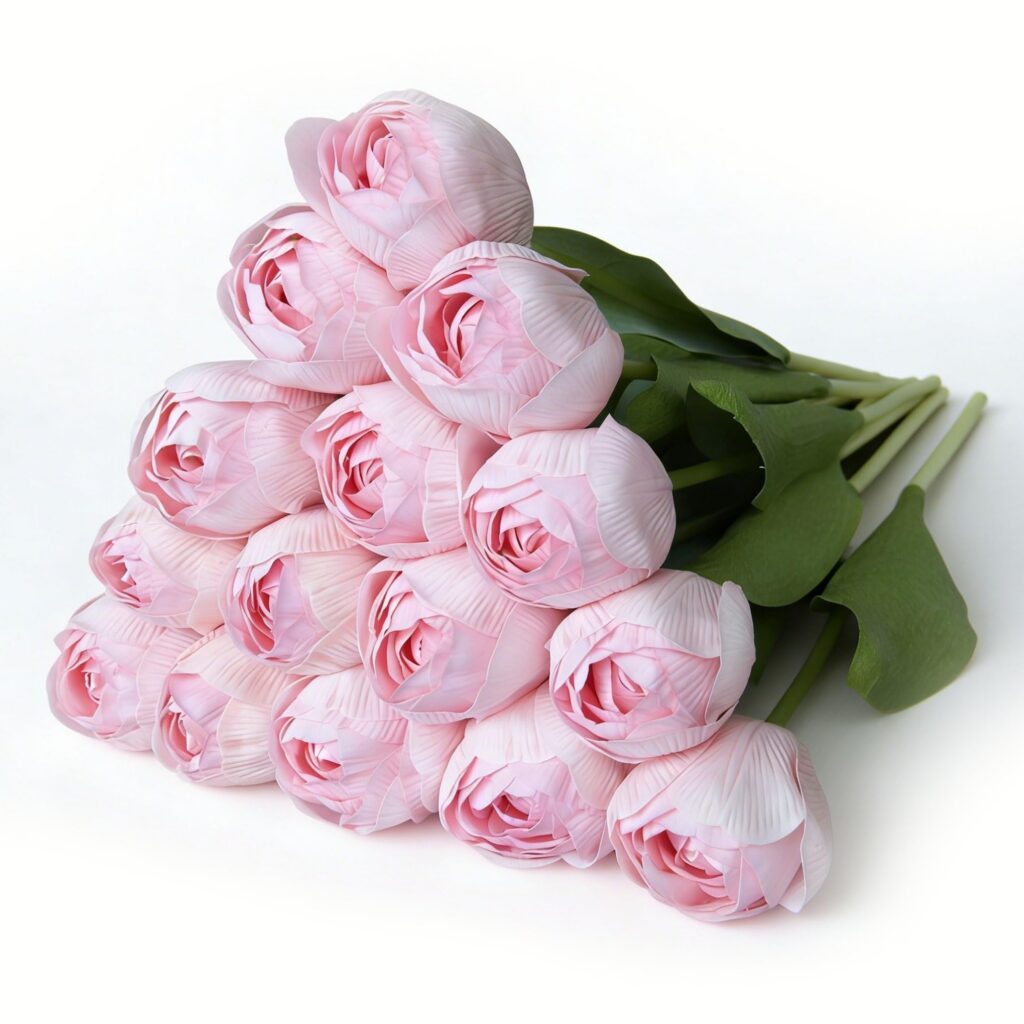
Artificial tulips are built to last. A well-made artificial tulip can look fresh for a year or longer, and many stay presentable for several years with minimal care. You can keep a vase on a mantel or entry table and enjoy it every single day without replacing it.
If you want a permanent or long-running display, artificial tulips win on lifespan.
2. Cost: Which One Is Easier on the Budget?
Cost depends on how you look at it — the purchase price, or the total over time.
Real tulips have a lower upfront cost. A bunch of 10–15 fresh tulips typically runs $10–$20 depending on the season and where you shop. For a single occasion, that is an easy expense.
The catch is frequency. Keep real tulips on display all year and you are replacing them weekly — roughly $40–$80 per month, or $480–$960 per year.
Artificial tulips cost more up front — a quality bouquet of 10–15 blooms is often $30–$80 depending on materials and craftsmanship. But it is a one-time purchase. After that, they cost nothing to keep, which makes them the more budget-friendly option for permanent home decor over time.
3. Maintenance: How Much Work Do They Need?
Real tulips ask for weekly attention:
- Change the water every 1–2 days
- Trim the stems every few days so they keep drinking
- Remove wilted petals before they rot
- Clean the vase and discard the spent blooms
If you enjoy the weekly ritual of caring for fresh flowers, that routine is part of the appeal. If you would rather not think about it, it becomes a chore.
Artificial tulips need almost nothing: an occasional dusting every few weeks to a few months, and keeping them out of prolonged direct sunlight so the color does not fade. That is it — our do faux flowers fade in sunlight? guide shows how quickly sun damage builds.

4. Availability: Can You Get Tulips When You Want Them?
Real tulips are a spring flower. Imported stems appear at other times of year, but you pay a premium and the quality is less predictable. In summer, fall, or winter, fresh tulips are harder to find and quick to fade.
Artificial tulips are available all year. They arrive looking the same in December as they do in April, with no seasonal price swings.
5. Fragrance: Do You Want the Scent of Fresh Blooms?
Tulips carry a light, fresh, natural scent — noticeable up close, though usually subtler than roses or lilacs. If that natural fragrance matters to you, real tulips are the only way to get it.
Artificial tulips have no scent. That is a plus if you are sensitive to floral smells or prefer your space fragrance-free; a few drops of essential oil on the fabric petals (kept away from the stems) can add a scent if you want one.
6. When to Choose Real Tulips
Even with the advantages of artificial tulips, some situations still favor the real thing:
- Special one-time events — a spring dinner party, wedding, or celebration where fresh flowers set the scene for a single day.
- You enjoy the weekly flower ritual — buying, trimming, changing water; if that is part of the pleasure, real flowers are worth it.
- Fragrance matters — no artificial bloom reproduces a true natural scent.
- Outdoor gardening — planting real tulip bulbs in a garden bed is the obvious choice.
7. When to Choose Artificial Tulips
For most people who want tulips as a lasting display, artificial tulips are usually the better pick:
- Permanent home decor — mantels, entry tables, dining rooms, and offices where the vase stays in place
- Year-round enjoyment — no waiting for spring
- Low-maintenance lifestyle — busy schedules or frequent travel mean flowers can’t count on weekly care
- Better long-term value — one purchase beats weekly replacements
- Allergies or scent sensitivities — enjoy the look without pollen or fragrance
If you are ready to choose artificial tulips, our guide on how to choose the best artificial tulips for home decor covers what to look for when shopping. Prefer a single statement piece? See how one artificial tulip can carry a whole room.
Top Pick: Tulips for the “Choose Artificial” Case Above
When you land on the artificial side of this comparison, hand-painted tulips give you the lasting, low-maintenance display the guide recommends.
- Product: Artificial Tulips — hand-painted faux silk stems
- Price: $16 with free shipping
- Why it fits this guide: matches the cost and maintenance case for choosing artificial tulips
Frequently Asked Questions
Are artificial tulips cheaper than real tulips in the long run?
Yes. Artificial tulips cost more up front, but you buy them once. Real tulips must be replaced weekly for a constant display, which adds up to hundreds of dollars a year.
Can artificial tulips look real?
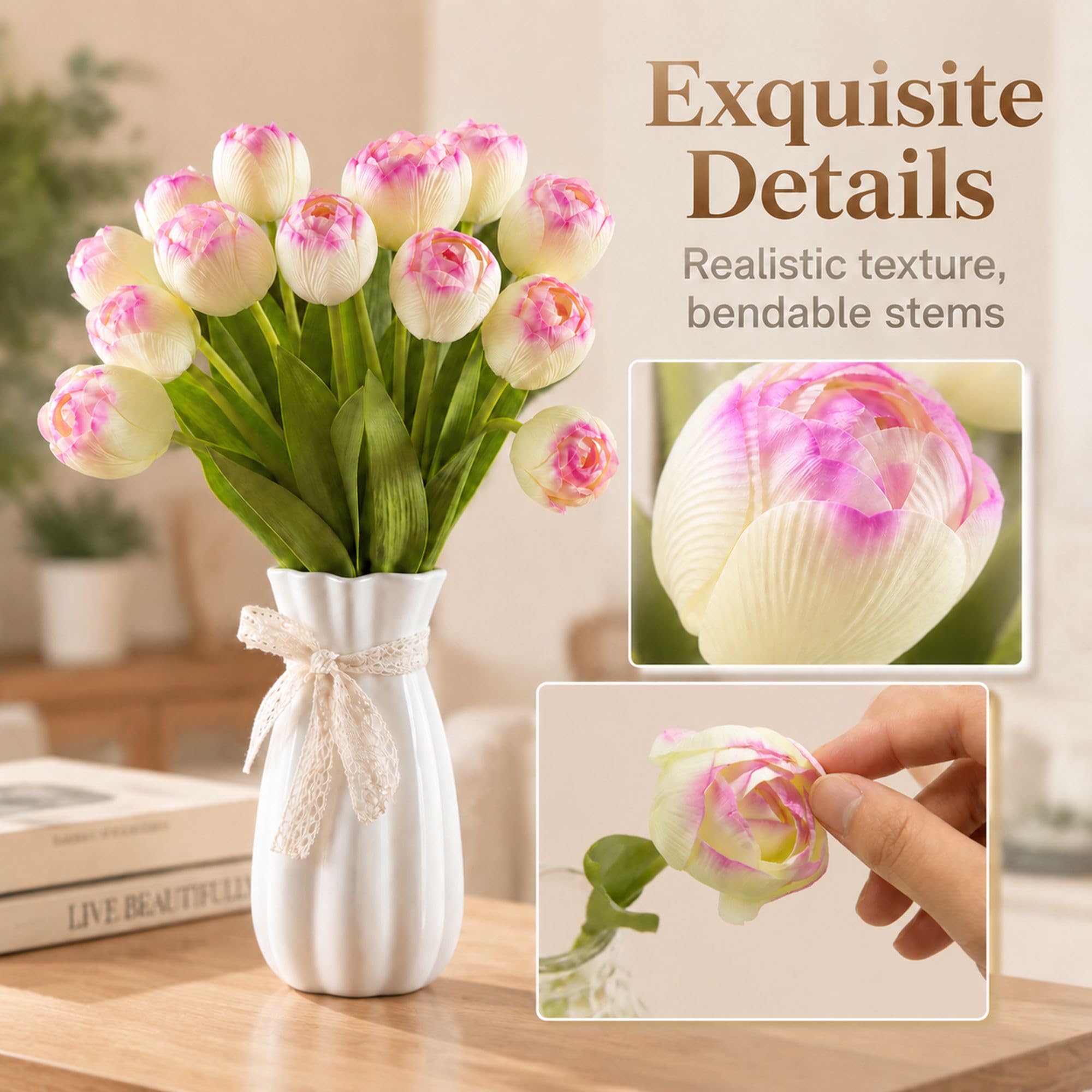
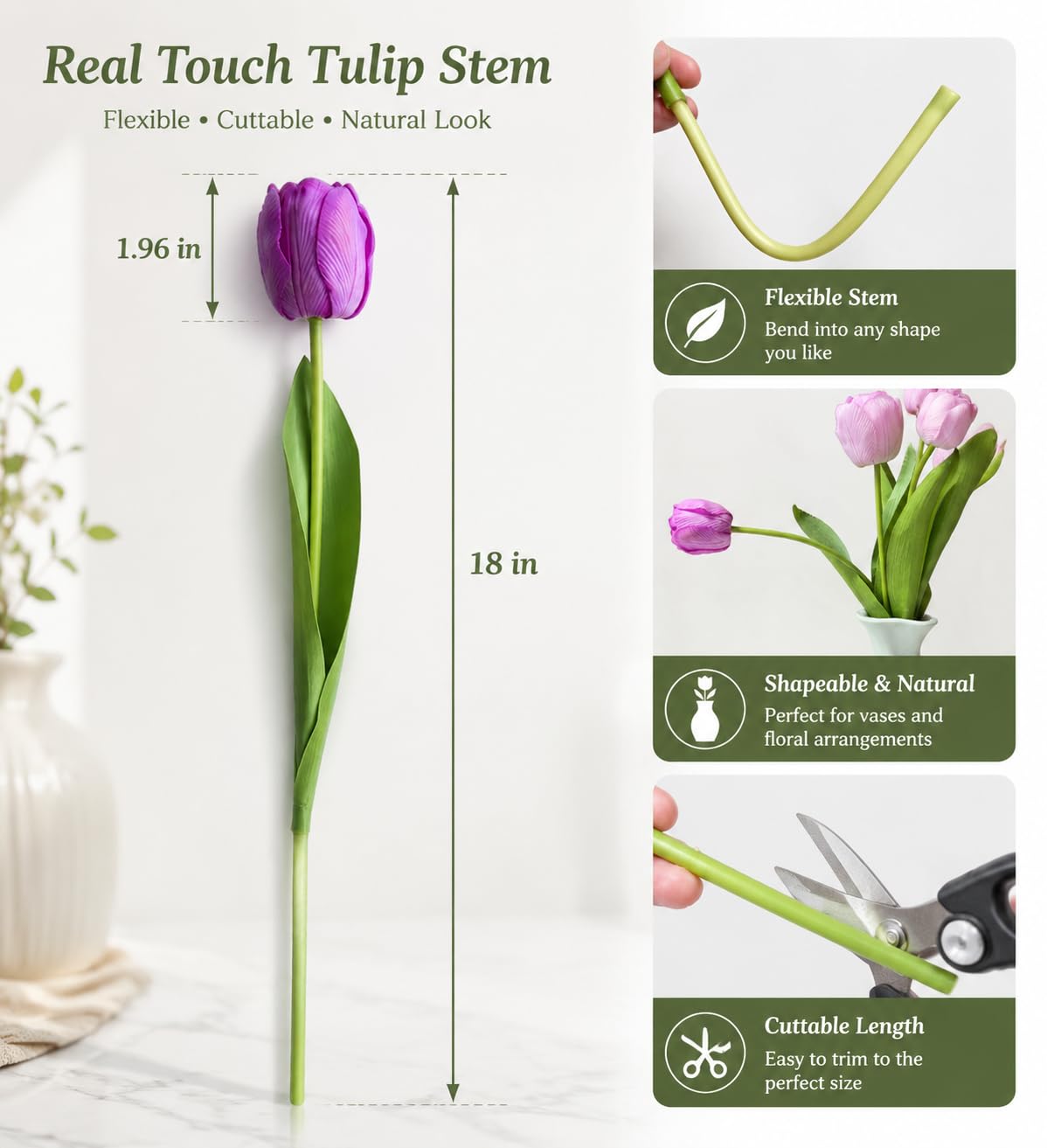
High-quality artificial tulips look very realistic, especially with natural color gradients, petal veining, and flexible stems. The BloomWitness tulips collection uses carefully shaped blooms with a natural-looking finish and is popular for that reason.
How long do artificial tulips last?
With basic care — out of prolonged direct sunlight and dusted occasionally — high-quality artificial tulips typically last 1–3 years or longer. For the material-level lifecycle details, see our do silk flowers last long? guide.
Do real tulips come back every year?
Planted in a garden, many tulip varieties return each spring, but they bloom for only a few weeks. Once cut, indoor arrangements last about a week.
Can you put artificial tulips in water?
They don’t need water, and standing water can damage the stems over time. Display them dry, or hold stems in place with decorative beads or vase filler.
The Bottom Line
There is no universal winner — the right choice depends on what you need. Choose real tulips for a special occasion, the weekly fresh-flower ritual, or a natural scent. Choose artificial tulips when you want a lasting, low-maintenance display you can enjoy every day, all year round, without the ongoing cost.
Ready to bring tulips home? Explore the premium artificial tulips collection to find the color and style that fits your decor.