Key Takeaways
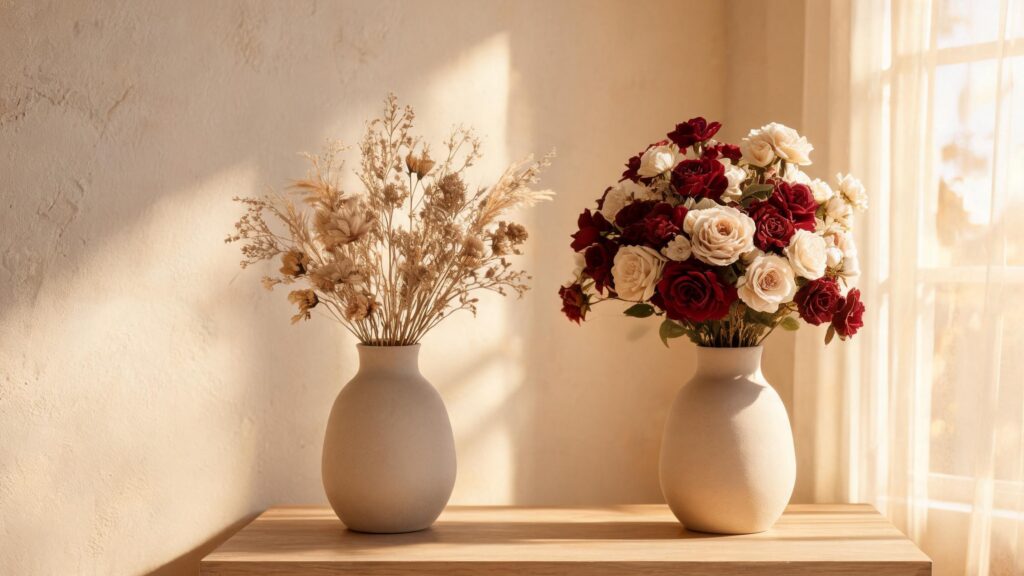
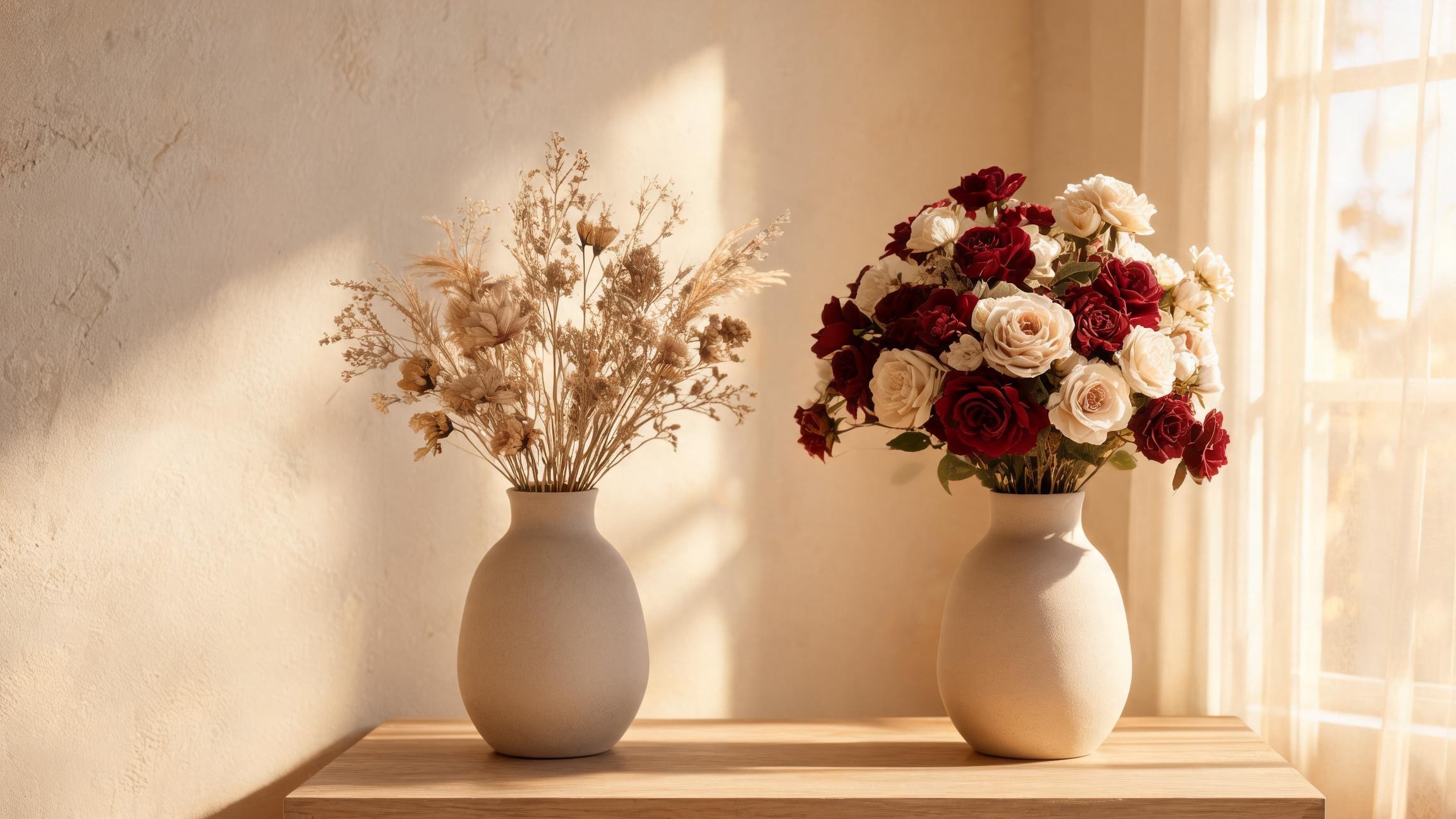
Dried flowers age beautifully but break, fade, and last 1–2 years. Artificial flowers stay frozen in time. Here is the honest comparison — and how to match each to your room.
“Dried flowers are natural, artificial flowers are fake.” That’s the way most comparisons frame it — and it’s the wrong frame. Both options are real decisions thousands of shoppers make every week, and “natural” tells you almost nothing about which one will actually work in your home.
The honest question is different: do you want a decoration that ages with you — brittle, fading, quietly shedding — or one that stays exactly as you chose it, for years? Dried flowers are the first. Artificial flowers are the second. Neither is objectively better; they serve different relationships with time. This guide helps you pick deliberately.
Dried vs. Artificial Flowers at a Glance
| Factor | Dried Flowers | Artificial Flowers |
|---|---|---|
| Origin | Real flowers, moisture removed | Manufactured (silk, polyester, real touch) |
| Lifespan | ~1–2 years before noticeable aging | 3+ years, often a decade with care |
| Feel | Brittle, organic, fragile | Ranges from fabric to real-touch softness |
| Humidity tolerance | Poor — molds and droops in damp rooms | Good to excellent (real touch is waterproof) |
| Reshaping | Not adjustable; breaks when handled | Wired stems bend and restyle |
| Maintenance | Delicate dusting; no water ever | Occasional dust; some rinse-clean |
| Cost pattern | Cheap per buy, recurring (a consumable) | Higher once, done for years |
Dried Flowers: The Beauty of a Flower That’s Allowed to Age
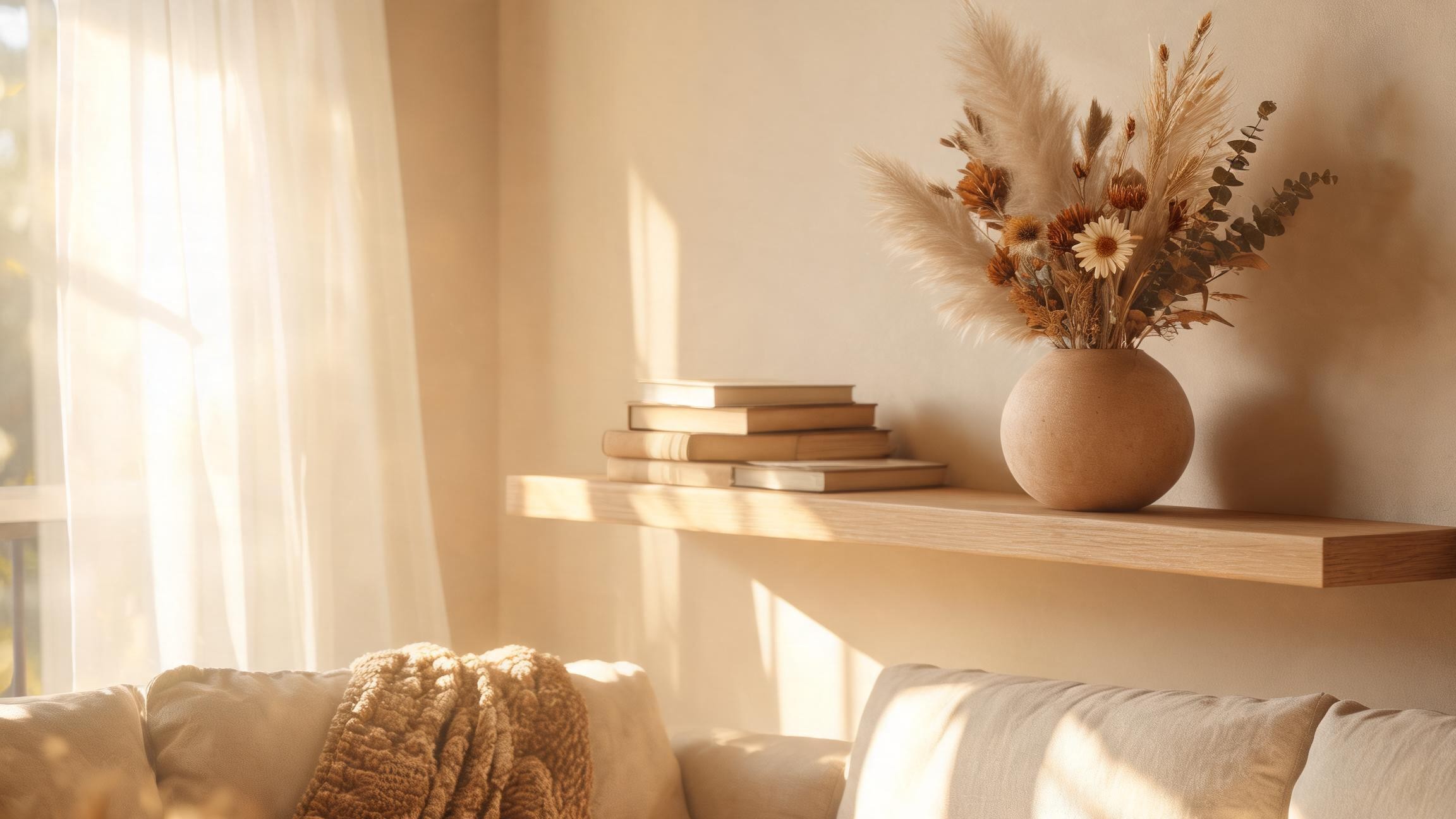
Dried flowers have a genuine aesthetic no manufactured bloom can copy — the muted, papery texture of a flower that has finished living. Pampas grass, statice, eucalyptus, dried roses: they bring warmth, earthy tones, and that lived-in boho calm.
But the same process that gives them their beauty is what you’ll fight for the next two years:
- They keep aging. A dried arrangement at month 6 looks different from month 1 — paler, dustier, more fragile. What you buy is a slowly decaying still life, which is exactly the charm for some people and exactly the disappointment for others.
- They’re fragile by construction. No water means no turgidity. Heads drop petals, stems snap, and moving an arrangement between rooms is an operation, not a lift.
- Humidity is a hard limit. Bathrooms, steamy kitchens, and humid climates invite mold onto dried flowers — the one thing that permanently ruins them. Afloral’s care guide states it plainly: dried flowers are very susceptible to humidity damage, while neither type should sit in consistent moisture.
- They’re a consumable. At $8–$20 a bunch and a 1–2 year lifespan, dried flowers are priced like fresh ones — you’ll repurchase them on a schedule, the same way you’d rebuy candles. That recurring cost is the quiet part no “natural vs fake” comparison mentions.
If you love watching a bouquet mellow into something quieter and don’t mind replacing it every year or two, dried flowers are a lovely, honest choice — used consciously, not as a default.
Artificial Flowers: Not “Fake” — Frozen in Time
Artificial flowers make one specific promise: this arrangement will look the way it looks today, next spring, and three autumns from now. That’s not a lesser version of nature. It’s a different kind of object.
- They hold their shape and color. A quality silk or real-touch bouquet doesn’t shed, fade in indoor light, or change character. What you style is what stays.
- They take real rooms seriously. Bathroom steam? A real touch arrangement shrugs it off — those polymer petals are essentially waterproof. Sun-facing shelves? Choose UV-treated options and the color holds. Dried flowers lose both battles.
- They’re a one-time cost. One $45 bouquet replaces a stream of $15 dried bunches — the full arithmetic lives in our real vs. artificial flower cost breakdown. Over three years, the artificial flower wins by a wide margin, and over a decade it’s not close.
- They’re shapable. Wired stems bend into the arrangement you want, restyle between rooms, and survive being packed away between seasons. Dried stems snap when you try.
The trade-off is material quality. A $9 plastic bouquet looks exactly like its price; a well-made silk or real-touch piece is a genuinely different product. Our guide to what makes faux flowers look fake is the cheat sheet for telling the two apart before you pay.
The Decision, Honestly: Match the Flower to the Room
Choose dried flowers when…
- You want the boho, earthy aesthetic and specifically value a texture that only real, dried plant material has.
- Your space is consistently dry — no steamy bathrooms, no humidity issues.
- You enjoy the ritual of refreshing a decor piece every year or two and budget for it.
- Eco-materials matter to you enough to accept shorter lifespan and fragility. (Real touch and silk are synthetic; dried blooms are biodegradable.)
Choose artificial flowers when…
- You want a permanent arrangement — entryway, living room, office, dining shelf — that you never think about again.
- Any part of the room is humid: bathroom, kitchen, near windows that steam.
- You’ve replaced wilted or crushed dried stems more than once and want the “set it and forget it” version.
- You’re decorating an event, rental, or space where consistency matters — every table must look identical.
One hybrid that works beautifully: use dried grass and pampas for the textural base, then anchor the arrangement with a quality artificial bloom in a saturated color. The natural texture reads as organic; the artificial flower provides the visual anchor dried stems can’t hold. For shaping guidance, see our complete artificial flower guide.
The Autumn Case: The Same Look, Two Philosophies
Fall is where this decision gets concrete, because autumn is the season of dried aesthetics — muted terracotta, oat, burgundy, dried hydrangea heads. You have two ways to get that look:
- The dried route: assemble dried grasses, hydrangea, and textural stems. Gorgeous for a month or two, then it dusts, droops, and needs rebuilding before Thanksgiving.
- The artificial route: a fall-toned artificial bouquet delivers the same terracotta-and-burgundy palette and stays crisp through the entire season — and the next. Reusable year after year, it quietly becomes the cheaper choice by every measure.
If the warm, harvest feel of autumn is the goal rather than the fleetingness of actual dying stems, the artificial fall bouquet does the job with better longevity and the same color story.
Top Pick: The Fall Bouquet for the “Look That Stays” Case
For the autumn-palette-without-the-autumn-decay side of this decision, a pre-mixed fall bouquet gets the same look as dried stems without the shed or the season limit.
- Product: Artificial Fall Flowers Bouquet — mixed hydrangea, rose, peony & dahlia
- Price: $46.99 with free shipping
- Why it fits this guide: the autumn palette above without the decay, shedding, or re-buy cycle of dried flowers
Shop the Fall Flowers Bouquet →
Frequently Asked Questions
Do dried flowers last as long as artificial flowers?
No. Dried flowers generally last one to two years before noticeably fading, shedding, or crumbling, and humidity can ruin them far sooner. Artificial flowers, particularly silk and real touch, routinely last three years and often far longer with basic dusting. The durability gap is the single most practical difference between the two.
Are dried flowers more eco-friendly than artificial?
Generally yes — dried flowers are real plant material and fully biodegradable, while most artificial flowers are polyester, silk blends, or polymer. The honest caveat: a dried arrangement you replace yearly has a recurring production-and-shipping footprint, while one quality artificial bouquet used for a decade can be the lower-impact choice over time.
Can I mix dried flowers with artificial flowers?
Absolutely, and it’s one of the best-styled combinations — dried grass and pampas provide natural texture while a quality artificial bloom adds saturated color and structural anchor. Just keep humidity and dust management consistent: both types prefer dry, stable rooms out of direct sun.
Do dried flowers smell?
Dried flowers generally lose their fragrance — the drying process strips most of the scent compounds. Some retain a faint, hay-like aroma. Artificial flowers have no natural scent at all (some are lightly scented by manufacturers). If fragrance matters, neither replaces fresh blooms; that case is covered in our fresh vs. silk breakdown.
Why do my dried flowers keep breaking?
Because they’re structurally brittle — moisture removal makes petals and stems fragile, so handling, moving, or even heavy dusting causes breakage. If reshaping and moving arrangements is part of your decorating, artificial flowers with wired stems handle that abuse without damage.
What is the difference between dried and preserved flowers?
Dried flowers have all moisture removed and stay brittle and muted. Preserved flowers (sometimes called everlasting) undergo a glycerin-based treatment that keeps petals soft and flexible while halting aging — they look closer to fresh but cost more and still aren’t waterproof. For a durable, reshapeable, low-maintenance option, quality artificial flowers sit between the two in realism and above both in longevity.
The Bottom Line
Dried flowers are not “more honest” than artificial ones; they are simply honest about being temporary. Artificial flowers are honest about being permanent. One ages beautifully and needs replacing; the other stays frozen and asks for nothing. Choose the relationship with time you actually want.
- Love the ritual, want the boho texture, dry room, small budget per year → dried flowers.
- Want the look to stay, humid rooms, hate re-buying → artificial flowers, bought well.
- Autumn palette without the autumn decay → a fall artificial bouquet, season after season.
Related: Understand the materials behind the difference in what artificial flowers are made of, and learn to keep either type clean in our cleaning guide.
Autumn palette without the autumn decay?
The Fall Flowers Bouquet keeps the look season after season — $46.99 with free shipping and 30-day returns.