Key Advantages at a Glance
The case for artificial flowers comes down to five core benefits that make them objectively superior for most decorative purposes:
- Longevity: 3-5 years indoors, 5+ for premium, versus 5-7 days for fresh flowers[1]
- Cost savings: one-time purchase vs. recurring weekly cost for fresh flowers[1]
- Zero maintenance: No watering, trimming, or daily care required
- No natural pollen: polyester and polymer materials carry no natural pollen
- Year-round availability: Any flower type, any season, no supply gaps
Cost Savings: 80-90% Less Over Time
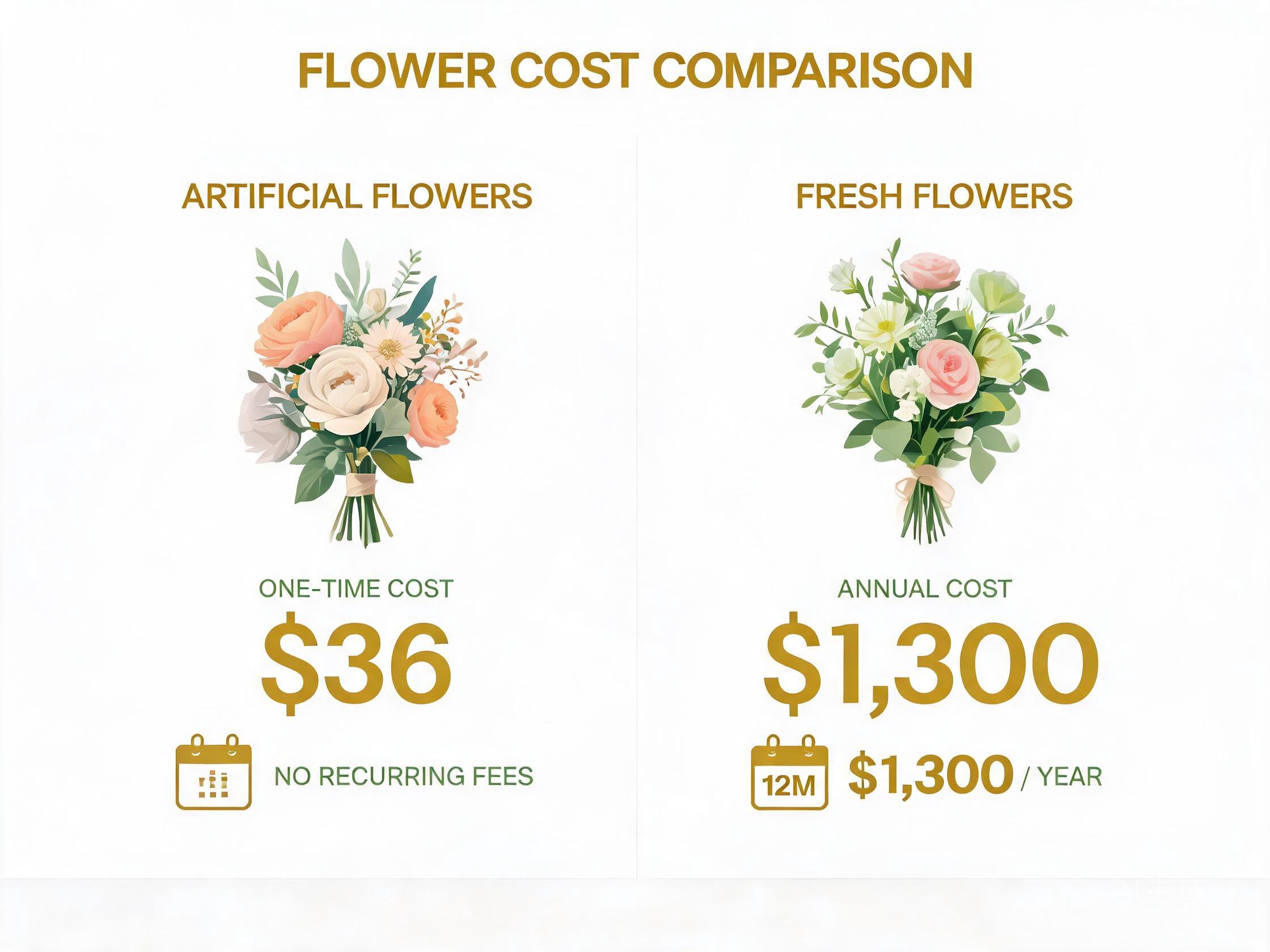
The financial case for artificial flowers is dramatic. A quality artificial arrangement costs $36 to $60 as a one-time purchase. Maintaining fresh flowers in the same space costs $750 to $1,300 per year.[1]
Over a 5-year period, that means spending $36-$60 once versus $3,750-$6,500 on weekly fresh flower replacements. The savings are 80-90% or more, depending on the arrangement size and flower type.
The global artificial flower market was valued at approximately $2.43 billion in 2026 and is projected to reach $3.6 billion by 2035, growing at a CAGR of 4.47%. Over 62% of commercial decorators now prefer synthetic floral products for long-term installations.[2]
Longevity: Years vs. Days
Fresh flowers last 5 to 7 days before wilting. Quality artificial flowers typically last 3-5 years indoors, and premium blooms can last 5 years or more with minimal care.[1] This is not a minor difference — it is a major improvement in lifespan.
The lifespan depends on material quality. Here is the durability hierarchy from longest to shortest lasting:
- Real touch flowers (polymer-coated petals): 5+ years
- Premium silk flowers (hand-painted, multi-layer): 5+ years
- Standard polyester flowers: 3-5 years
- Fresh cut flowers: 5-7 days
Zero Maintenance, Zero Stress
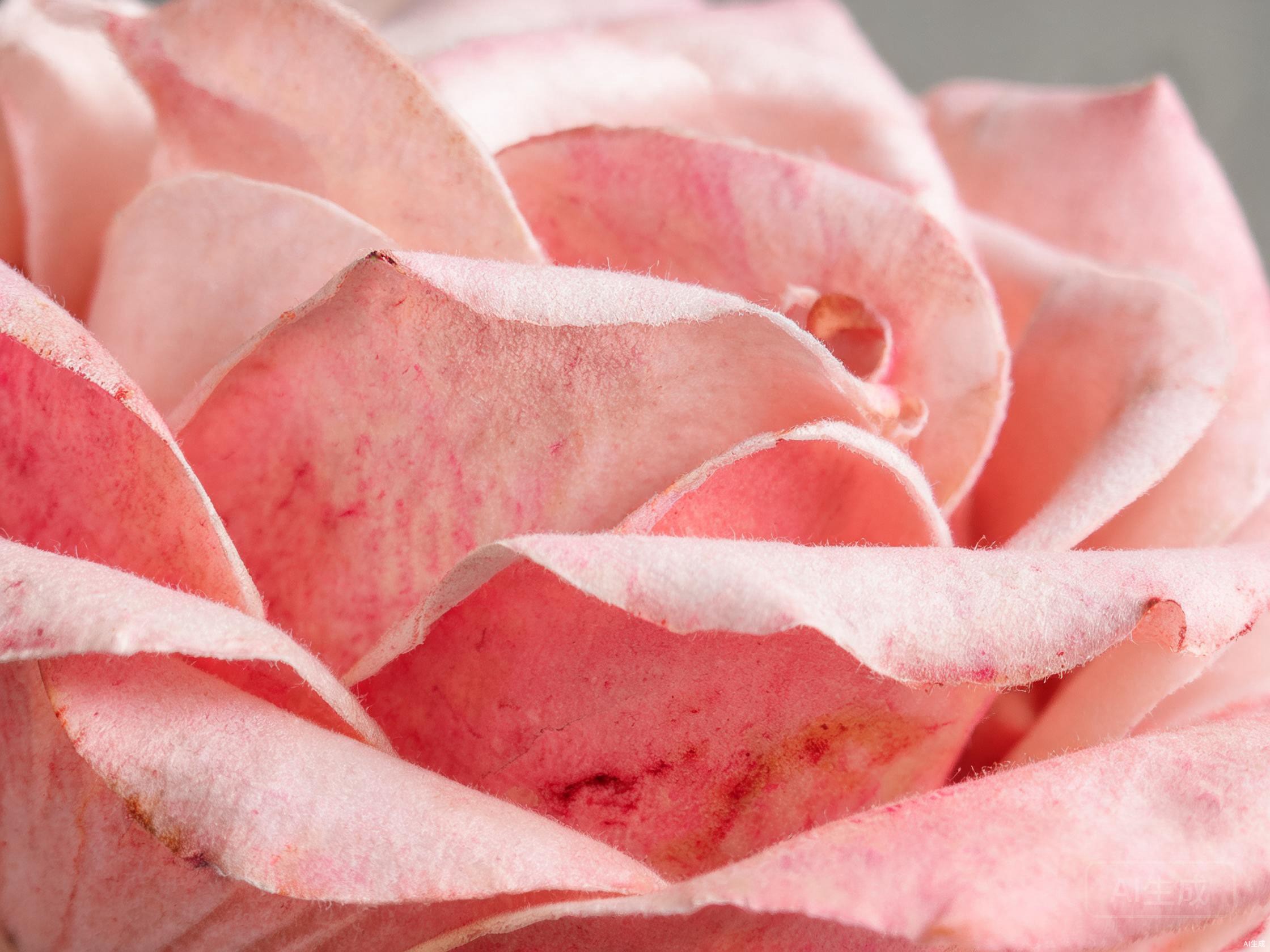
Fresh flowers demand daily attention: changing water, trimming stems, removing wilted blooms, and disposal. Artificial flowers need only occasional dusting — a quick pass with a soft brush or cool hairdryer every week or two.
For busy households, offices, and commercial spaces, this eliminates an entire maintenance cycle. No more dead flowers in the vase because someone forgot to change the water. No more weekly trips to the florist.
According to industry data, 58% of hospitality venues now prefer artificial flower installations because they reduce maintenance costs by approximately 45%.[2]
No Natural Pollen: What This Means for Sensitivity
Fresh flowers produce pollen, which triggers allergic reactions in millions of people. Symptoms include sneezing, itchy eyes, congestion, and skin irritation. For weddings and events, this can affect guests unexpectedly.
Artificial flowers are made with polyester and polymer materials and produce no natural pollen, which may suit pollen-sensitive households. Since petals can still collect dust, regular dusting is recommended. Common use cases include:
- Homes with family members who have pollen allergies
- Wedding venues with large guest lists
- Healthcare facilities and hospitals
- Offices and workplaces with sensitive employees
- Schools and childcare centers
Artificial flowers also have no scent, which benefits people with fragrance sensitivities. For those who want floral fragrance, essential oils can be added to stems without triggering pollen allergies.
Environmental Impact: The Hidden Cost of Cut Flowers
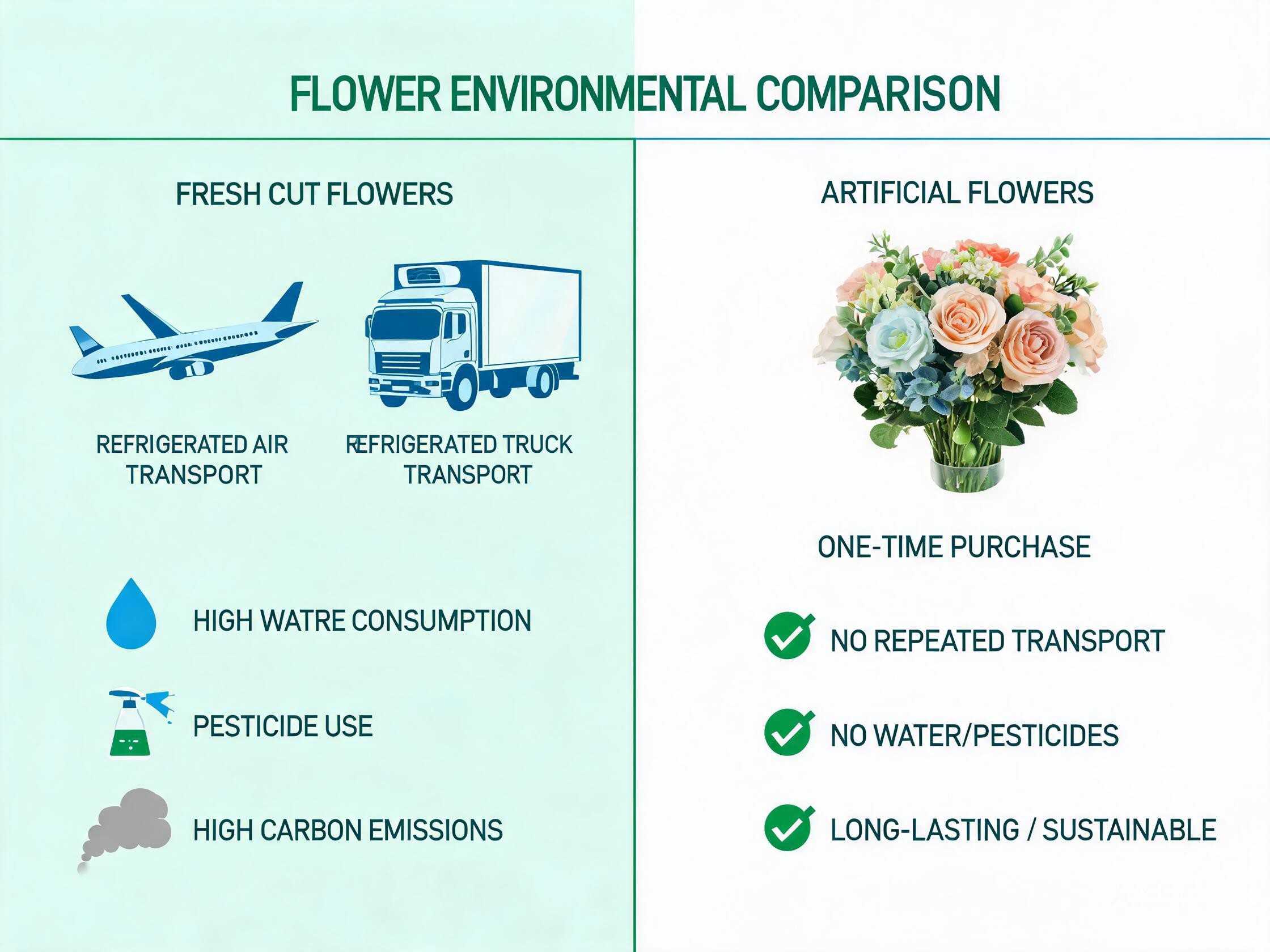
The fresh flower industry has a significant environmental footprint that most consumers never see. Cut flowers are typically grown in tropical countries like Colombia, Ecuador, and Kenya, then flown thousands of miles in refrigerated airplanes to reach markets in North America and Europe.
The Environmental Costs of Fresh Cut Flowers
- Carbon emissions: Refrigerated air transport produces significant CO2 per bouquet
- Pesticide use: Flower farms use heavy pesticide applications, often in countries with lax regulations
- Water consumption: Commercial flower farming requires intensive irrigation
- Refrigeration energy: Cold-chain storage from farm to retail consumes electricity continuously
- Waste generation: Millions of bouquets are discarded weekly after wilting
A single quality artificial flower arrangement lasting 10 years replaces approximately 500+ fresh flower bouquets over its lifetime. This eliminates 500 instances of refrigerated transport, pesticide exposure, and agricultural water use. Additionally, 34% of manufacturers now use recycled polyester and eco-friendly materials in artificial flower production.[2]
When Artificial Flowers Are the Smarter Choice
There are clear scenarios where artificial flowers are not just acceptable — they are objectively better than fresh flowers. Here are the most common use cases:
Home Decor
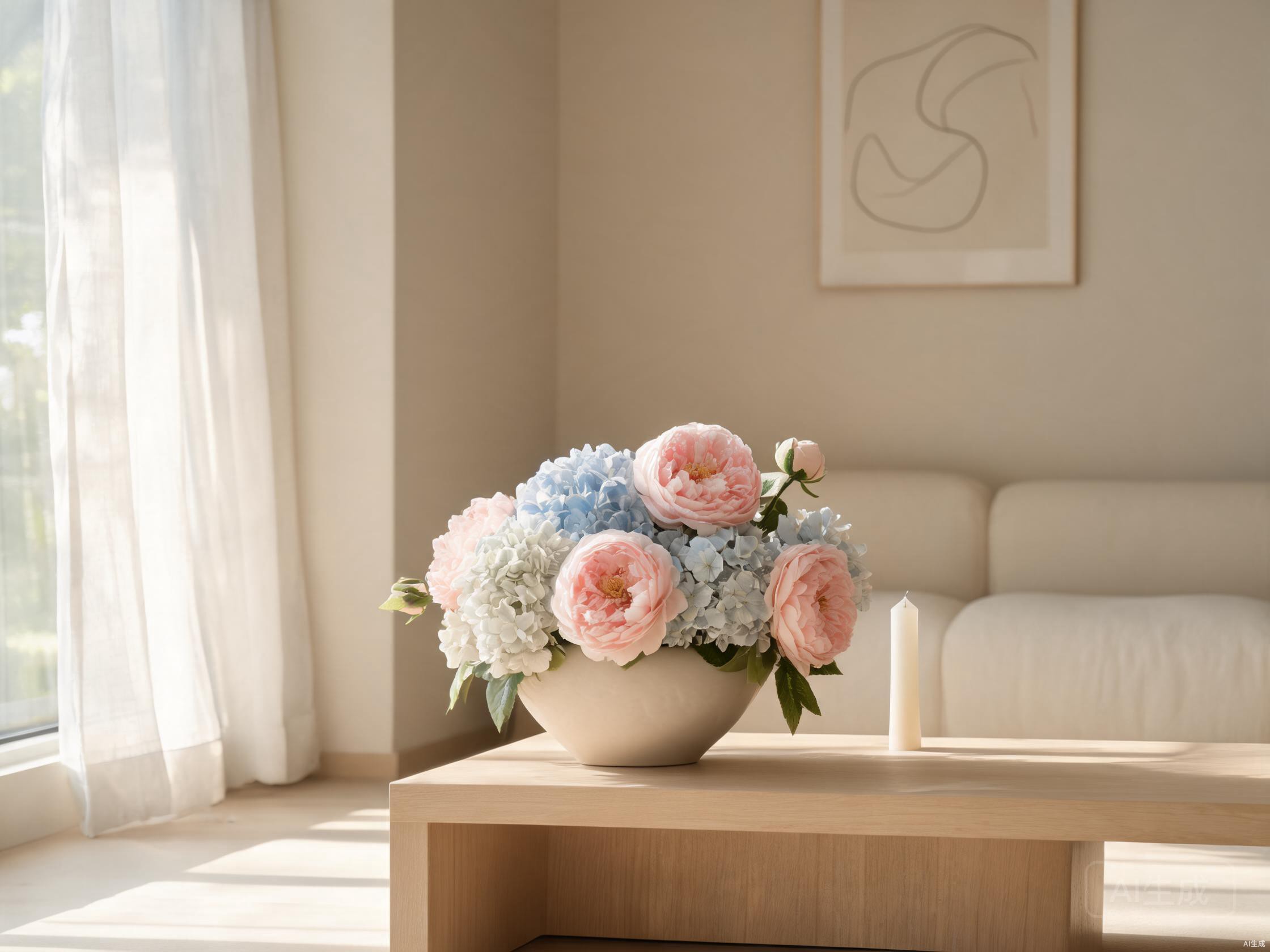
For year-round home decoration, artificial flowers eliminate the weekly replacement cycle. A quality arrangement provides consistent beauty for years with minimal care. They are especially practical in bathrooms where humidity kills fresh flowers quickly.[1]
- Living room centerpieces that always look fresh
- Bedroom nightstand arrangements for calming ambiance
- Entryway console tables welcoming guests year-round
- Bathroom decor where humidity destroys fresh flowers
- Office spaces where watering is unreliable
Weddings and Events
Artificial wedding flowers cost 50-70% less than fresh florals while eliminating wilting, seasonal shortages, and last-minute delivery stress. Modern silk and real touch bridal bouquets look indistinguishable from real flowers in photos — and they become lifelong keepsakes.[3]
- Bridal bouquets that won’t wilt in heat or humidity
- Centerpieces arranged weeks in advance
- Consistent color matching regardless of season
- No pollen allergies for sensitive guests
- Reusable for receptions, rehearsal dinners, and home decor
Commercial and Hospitality Spaces
Hotels, restaurants, and retail stores benefit enormously from artificial flowers. They provide consistent, maintenance-free ambiance every day with no wilted petals turning off customers. Industry data shows 58% of hospitality venues now prefer artificial installations.[2]
- Hotel lobbies and reception areas
- Restaurant table centerpieces
- Retail display windows
- Corporate office reception areas
- Event and exhibition spaces
Artificial vs. Real Flowers: Complete Comparison
| Factor | Quality Artificial Flowers | Fresh Flowers |
|---|---|---|
| Visual realism | Closely matches fresh blooms | Obviously real |
| Lifespan | 3-5 years (5+ for premium) | 5-7 days |
| Annual cost | One-time purchase (see product pages) | Recurring weekly cost |
| Maintenance | Dust weekly, reshape occasionally | Daily water change, trimming, disposal |
| Seasonal availability | Any flower, any time | Limited by growing season |
| Natural pollen | No natural pollen (polyester/polymer) | Pollen can trigger allergies |
| Fragrance | None (can add essential oils) | Natural fragrance |
| Environmental impact | One-time production; no refrigerated transport | Recurring pesticide, water, and transport emissions |
| Best for | Home decor, weddings, commercial spaces | Gifting, special occasions, when fragrance matters |
How to Choose Realistic Artificial Flowers
Not all artificial flowers are equal. To get flowers that closely match real blooms, follow this buying checklist:
Material Checklist
- Choose real touch flowers with polymer-coated petals for maximum realism
- Or select premium silk with multi-layer petal construction (5+ layers)
- Avoid plastic, foam, or single-layer polyester flowers
- Check that stems are wired and bendable for natural shaping
Visual Checklist
- Petals have a matte finish, not glossy or shiny
- Colors show natural gradients and hand-painted variation
- Petals have texture and slight imperfections, not perfectly smooth
- Blooms vary slightly in size and openness, not uniform
What to Avoid
- Shiny or glossy petal surfaces
- Uniform, flat, machine-dyed colors
- Visible glue or seams on petals
- Stiff, unbendable plastic stems
- Strong chemical plastic smell
Explore More Artificial Flower Guides
Do Silk Flowers Last Long? What Are Artificial Flowers Made Of? Are Fake Flowers Tacky? Wedding Flowers on a Budget: Why Choose Artificial Complete Buying Guide for Realistic Home Decor How to Arrange Artificial Flowers: 6 StepsTop Pick: The Bouquet That Makes the Cost Argument Concrete
If this guide has you leaning artificial, the quickest way to test the argument is a mixed bouquet you keep for years instead of a week.
- Product: 11 Stems Original Artificial Flowers Bouquet — mixed silk blooms
- Price: $46.99 with free shipping
- Why it fits this guide: one purchase replaces dozens of fresh bouquets, matching the 80–90% long-run savings above
Frequently Asked Questions
Why choose artificial flowers over real flowers?
Quality artificial flowers typically last 3-5 years indoors, with premium blooms reaching 5 years or more, compared to 5-7 days for fresh flowers. They require no watering and eliminate the recurring cost of fresh bouquets. Premium real-touch styles use polymer-coated materials made without natural pollen, so they carry none of the allergens fresh flowers can bring.
How long do artificial flowers last?
Premium silk and real-touch flowers with polymer-coated petals can last 5 years or more with proper care, while standard polyester flowers typically last about 3-5 years. This compares to fresh flowers which typically last only 5-7 days.
Are artificial flowers cheaper than real flowers?
Yes. A quality artificial flower arrangement costs $36-$60 as a one-time purchase, while maintaining fresh flowers costs $750-$1,300 per year. Over 5 years, artificial flowers save 80-90% compared to weekly fresh flower replacements.
Do artificial flowers look realistic?
Modern real touch artificial flowers use polymer-coated petals and hand-painted color gradients that are indistinguishable from real flowers at arm’s length. Interior designers, home stagers, and wedding planners now use premium artificial flowers routinely.
Are artificial flowers better for the environment?
Artificial flowers eliminate the recurring environmental costs of cut flowers, including pesticide use, refrigerated transport emissions, and water consumption. A single artificial arrangement replaces 250+ fresh flower bouquets over its lifetime, significantly reducing waste.
Can artificial flowers be used for weddings?
Yes. Artificial wedding flowers cost 50-70% less than fresh florals while eliminating wilting, seasonal shortages, and last-minute delivery stress. They also become lifelong keepsakes and can be reused for home decor after the event.
See the savings for yourself.
The Original Bouquet replaces years of fresh-flower spending — $46.99 with free shipping and 30-day returns.
Sources
- BloomWitness, “Are Fake Flowers Tacky?” — Internal research on artificial flower quality, lifespan, cost comparison, and styling. Comprehensive data on real touch vs. silk vs. polyester materials.https://www.bloomwitness.com/are-fake-flowers-tacky/
- Business Research Insights, “Artificial Flower Market Size, Share, Growth and Industry Analysis, 2026-2035.” Market valuation of $2.43 billion in 2026, projected $3.6 billion by 2035, CAGR 4.47%. Commercial adoption rates and material trends.https://www.businessresearchinsights.com/market-reports/artificial-flower-market-101200
- BloomWitness, “Wedding Flowers on a Budget: Why Choose Artificial” — Data on 50-70% cost savings, wilting elimination, and bridal bouquet realism for artificial wedding flowers.https://www.bloomwitness.com/wedding-flowers-on-a-budget-why-choose-artificial/