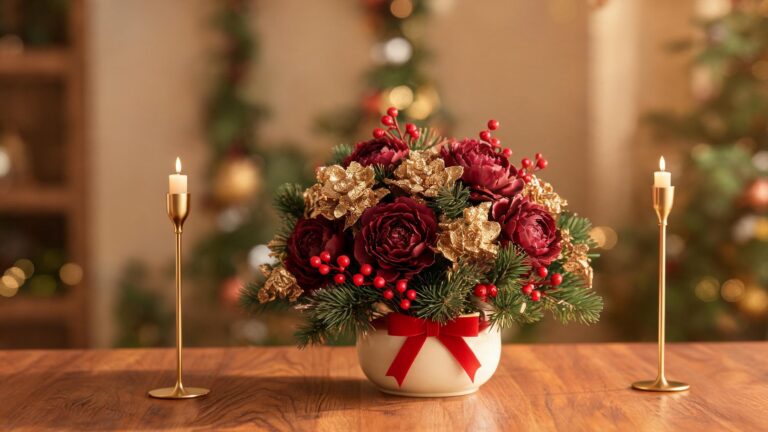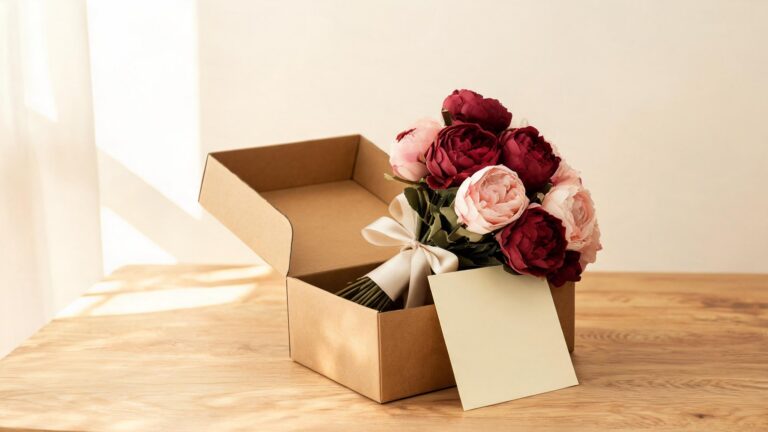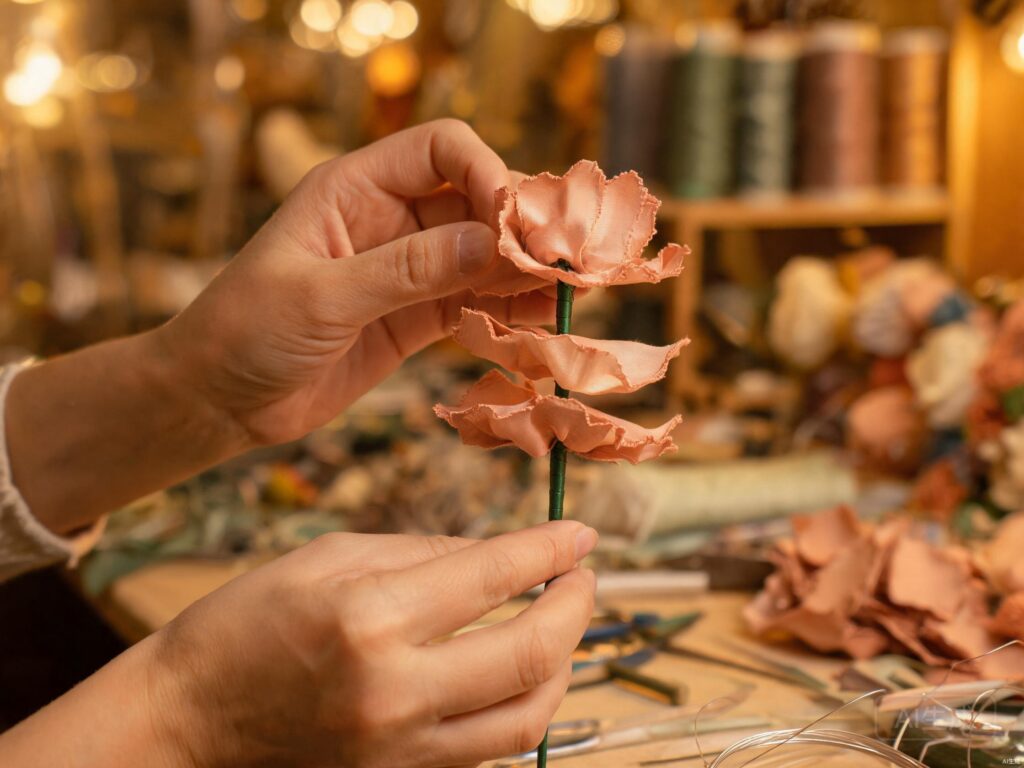
No, modern silk flowers are not made from real silk fabric. Since the 1970s, the vast majority of artificial flowers sold as “silk flowers” are made from polyester fabric — a synthetic material that mimics the sheen and drape of natural silk at a fraction of the cost.[1] The name “silk flowers” is a historical holdover from when artificial flowers were genuinely crafted from real silk, primarily in China and Italy.
Key Takeaways
- Modern “silk flowers” are made from polyester, not natural silk
- Polyester replaced silk as the industry standard in the 1970s due to lower cost and greater durability
- The term “silk flowers” persists as a generic category name, not a material description
- Marketing polyester as “silk” may violate the U.S. Textile Fiber Products Identification Act[2]
- Genuine silk flowers still exist as artisan crafts but represent less than 1% of the market
- A simple burn test can distinguish real silk from polyester
What Are Silk Flowers Really Made Of?
Today’s artificial flowers are crafted from several synthetic materials, with polyester being the dominant choice. According to Wikipedia, “polyester has been the main material for manufacturing artificial flowers since the 1970s” and “most artificial flowers in the market nowadays are made of polyester fabric and plastic.”[1]
The Wikipedia article on artificial plants further clarifies: “Flowers described as being made of silk with a ‘real touch technique’ are not made of silk, but rather are made of polyester, polymers and plastics.”[1]
The 6 Materials Used in Modern Artificial Flowers
- Polyester silk — The industry standard since the 1970s; woven to mimic real silk’s luminous sheen and soft drape
- Real Touch polymers (EVA) — Premium material that replicates the tactile feel, weight, and flexibility of living petals
- Latex-coated fabric — Hybrid material combining fabric base with latex overlay for a softer, natural feel
- PE foam — Budget option with molded, matte surface for shape retention at lower cost
- Polycarbonate — Used for stems and structural components; provides realistic flexibility
- Standard PVC plastic — The cheapest option; rigid, glossy, and best avoided for primary display
Why Polyester Replaced Real Silk
Polyester offered three decisive advantages over natural silk that drove the industry transition. First, polyester costs roughly 80-90% less than genuine silk fabric. Second, polyester is significantly more durable — it resists tearing, fading, and moisture damage. Third, polyester holds dye more consistently, enabling mass production with uniform color quality.
The transition happened gradually. Chinese factories in the Pearl River Delta region began mass-producing polyester flowers in the early 1980s, and by the 1990s, polyester had almost entirely replaced natural silk in commercial artificial flower production.[1]
The History: When Silk Flowers Were Actually Silk
Artificial flowers have been crafted for thousands of years, and the materials have evolved dramatically. The name “silk flowers” comes from a genuine historical era when real silk fabric was the primary material.
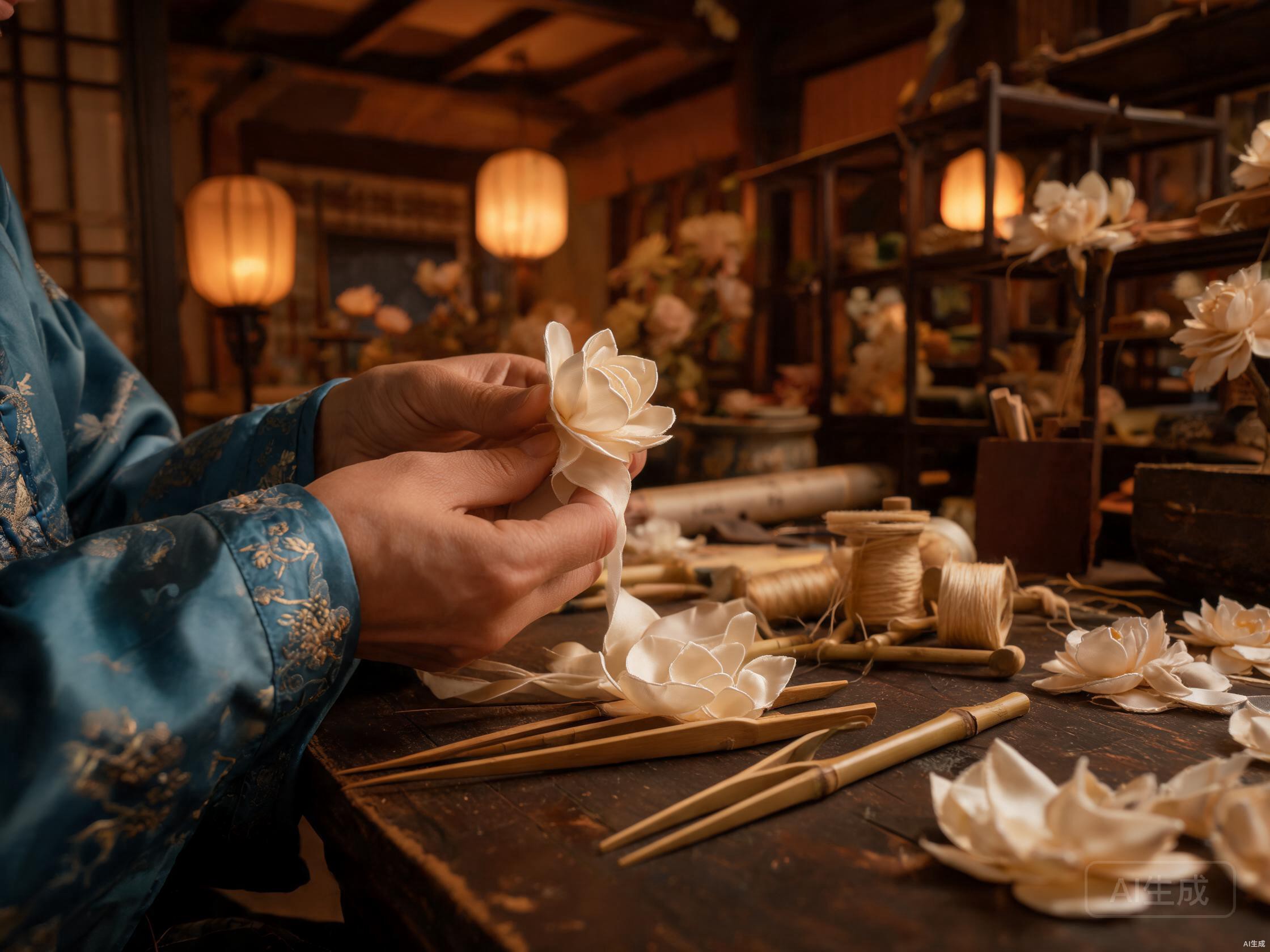
Timeline of Artificial Flower Materials
-
1500 BC (Ancient Egypt)
Thin linen and painted papyrus used for funeral garlands and temple decorations -
Ancient Rome
Wax-coated flowers created for banquets; gold and silver crowns for victors[3] -
17th–18th Century
True silk flowers hand-crafted in China and Italy; imported to Europe as luxury goods -
Victorian Era
Wax and fabric flowers mass-produced for home decor and hat-making; artisans like Emma Fürstenhoff gained international renown[3] -
1950s–1970s
Plastic (PVC) revolution made cheap artificial flowers widely available -
1980s–1990s
Polyester silk replaced natural silk as the industry standard — the name “silk flowers” stuck despite the material change[1] -
2010s–Present
Real Touch technology using EVA and polymer coatings set new realism standards
Why the Name “Silk Flowers” Stuck
The persistence of the “silk flowers” label is a classic case of linguistic inertia. Consumers, retailers, and manufacturers all continued using the familiar term even after the material changed, because the word “silk” conveyed a quality expectation — soft, lustrous, premium.
Retailers found that “silk flowers” sold better than “polyester flowers” or “fabric flowers.” The term became a generic category name rather than a precise material description, similar to how “tin foil” is still used for aluminum foil or “rubber bands” for synthetic rubber.
Beijing silk flowers (北京绢花) are a recognized Chinese intangible cultural heritage, still crafted by hand from genuine silk fabric. These artisan flowers can take hours to produce and cost significantly more than mass-market polyester alternatives.[4]
Legal Context: The Textile Fiber Products Identification Act
In the United States, labeling matters. The Textile Fiber Products Identification Act of 1959 requires that textile products disclose their actual fiber content accurately. According to Wikipedia, “textile items made of polyester but marketed as ‘silk’ violate the US federal law — specifically the 1959 Textile Fiber Products Identification Act.”[2]
However, “silk flowers” is generally treated as a generic product category name rather than a fiber content claim — similar to “cotton candy” not requiring cotton. The legal gray area has allowed the term to persist in common commercial use without widespread enforcement.
The U.S. Federal Trade Commission (FTC) enforces this act under 16 CFR Part 303, which mandates that textile products bear labels disclosing the generic names and percentages of all constituent fibers.[2] Consumers who want to know the true material composition should check product labels rather than relying on the “silk flowers” category name.
How to Tell If Your “Silk” Flowers Are Real Silk
If you want to determine whether your artificial flowers contain genuine silk or polyester, several practical tests can help. The most definitive method is the burn test, but visual and tactile inspections also provide useful clues.
1. Visual Inspection
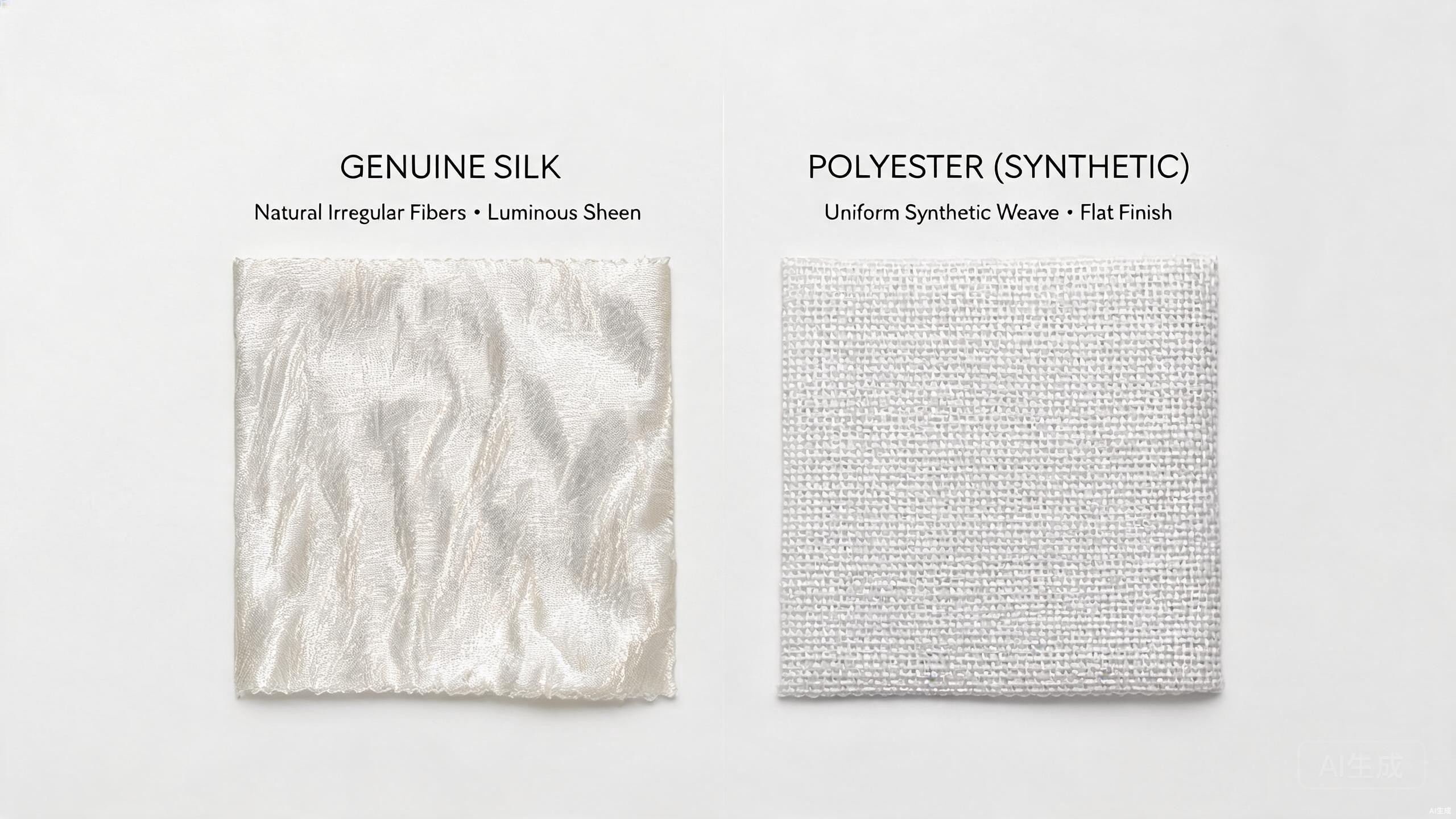
Examine the fabric under bright light. Real silk has irregular, slightly uneven fibers with a warm, natural luster. Polyester has uniform, perfectly consistent fibers with a cooler, sharper sheen.
2. Touch Test
Real silk feels warm to the touch and has a slight grip or friction when rubbed. Polyester feels cooler, smoother, and slips more easily between fingers.
3. The Burn Test (Definitive)
Remove a tiny, hidden fiber strand and carefully burn it with a lighter. The smell and ash tell you immediately what material you have.
4. Price Check
Genuine silk flowers are rare and expensive — often $30-$80+ per stem. If you paid $5-$15 per stem, they are almost certainly polyester.
The burn test should only be performed on a single, hidden fiber strand in a safe, ventilated area. Keep water nearby. Never burn an entire flower, as synthetic materials can release harmful fumes.
Polyester vs. Real Silk: Material Comparison
The table below summarizes the key differences between genuine silk and polyester as artificial flower materials. Understanding these differences helps consumers make informed purchasing decisions.
| Property | Genuine Silk | Polyester (Modern “Silk Flowers”) |
|---|---|---|
| Material origin | Natural protein fiber from silkworm cocoons | Synthetic petroleum-based polymer |
| Cost per stem | $30 – $80+ | $5 – $25 |
| Visual appearance | Warm, irregular natural luster | Cool, uniform synthetic sheen |
| Tactile feel | Warm, soft, slight friction | Cool, smooth, slippery |
| Durability | 3 – 5 years (prone to tearing) | 7 – 10 years (highly durable) |
| Color retention | Fades faster under UV exposure | Holds dye longer; better UV resistance |
| Moisture resistance | Low; absorbs water, warps | High; water-resistant, maintains shape |
| Market share | <1% of artificial flowers | >90% of artificial flowers[1] |
| Burn test result | Burns slowly; smells like burnt hair; brittle ash | Melts; chemical odor; hard plastic bead |
How Modern “Silk” Flowers Are Made
The manufacturing process for polyester silk flowers follows five main stages, according to the Encyclopedia Britannica and Wikipedia’s compilation of historical and modern sources.[3]
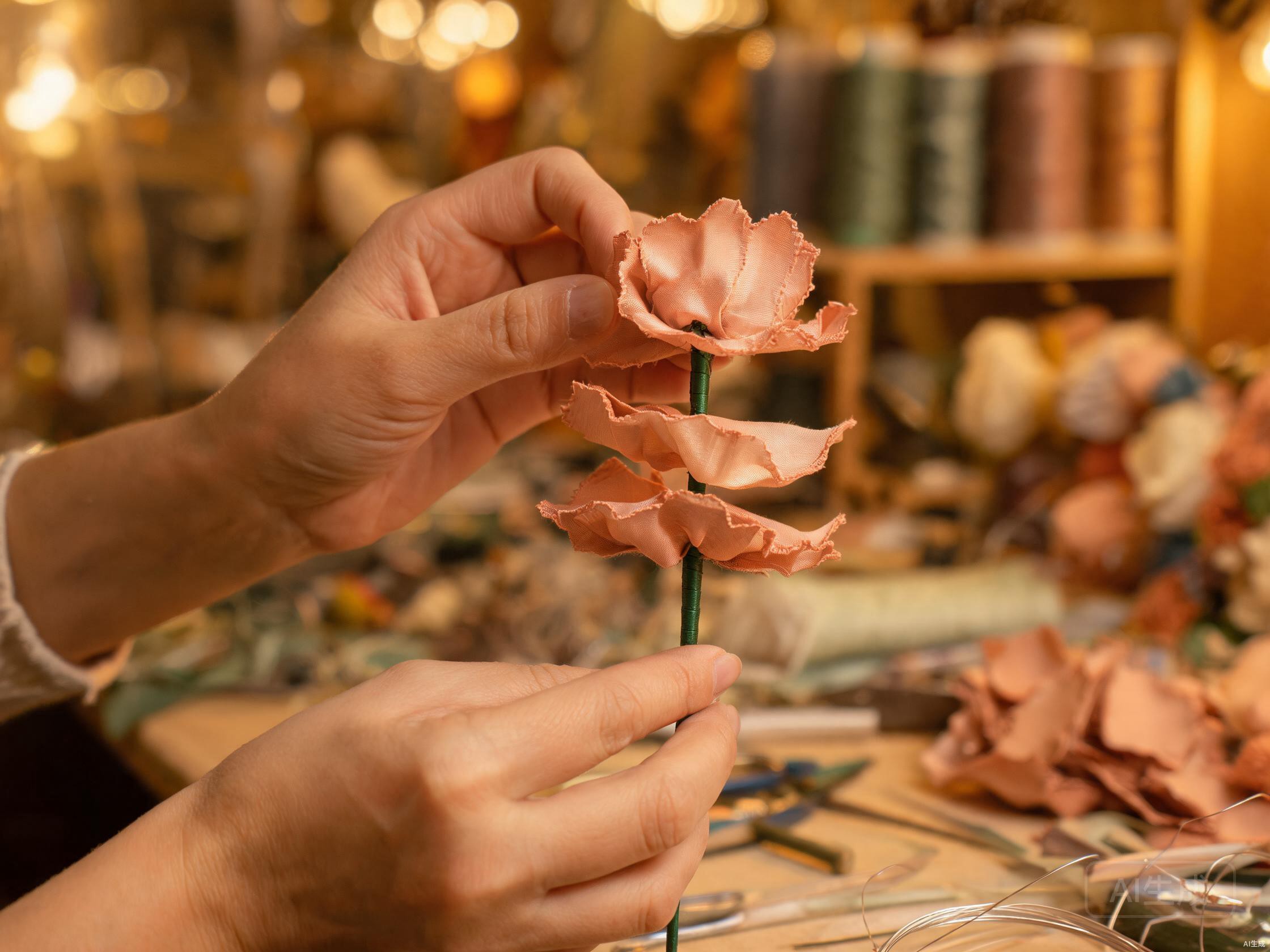
The 5-Step Manufacturing Process
- Fabric stiffening: Polyester fabric is treated with gelatine to stiffen it and hold petal shapes
- Cutting: Stamps or lasers cut the polyester into petal and leaf shapes — often cutting a dozen layers at once
- Coloring and veining: Petals are dyed via immersion or spray; leaf veins are impressed using silk screen printing with dye
- Shaping: Goffering irons of various shapes give petals their natural rounded, cupped forms
- Assembly: Skilled workers layer petals one by one from center outward, then mount the bloom on a wire stem wrapped with colored material[3]
Premium flowers receive additional hand-painted color gradients — darker at the center, lighter at the tips — mimicking natural flower pigmentation. This hand-assembly process takes 15-30 minutes per stem for quality flowers, compared to seconds for injection-molded plastic alternatives.
What This Means for Consumers
Understanding that “silk flowers” are actually polyester is not a reason to avoid them. In fact, polyester offers superior durability, color retention, and value compared to genuine silk. The key is knowing what you are buying and setting appropriate expectations.
Practical Takeaways for Buyers
- Don’t be misled by the “silk” label — assume most commercially available “silk flowers” are polyester unless specifically labeled as “100% natural silk”
- Polyester is the better material for most uses — it lasts longer, resists fading, and costs less than genuine silk
- Check product descriptions carefully — reputable sellers disclose the actual material (polyester, Real Touch, PE foam, etc.)
- “Real Touch” is a different technology — these flowers use EVA polymer coatings, not silk or polyester fabric
- Genuine silk flowers exist but are rare — look for artisan-made flowers from heritage workshops if you want the real thing
Top Pick: Polyester Blooms That Look Like Silk
If the material research above has you wondering which “silk flowers” actually deliver on the name, look for real-touch polyester blooms with hand-finished petals — they give you the soft, matte look of silk with better durability and a far lower price.
- Product: Artificial Roses Bouquet — real-touch faux silk roses
- Price: $16.99 with free shipping
- Why it fits this article: polyester petals with a soft real-touch coating — durable, realistic, and honestly labeled, so the material matches the description
Shop the Artificial Roses Bouquet →
Frequently Asked Questions
Are silk flowers actually made of silk?
No. Modern silk flowers are not made from real silk fabric. Since the 1970s, polyester has been the primary material for manufacturing artificial flowers. The term “silk flowers” is a historical name that has persisted despite the material change.[1]
What are silk flowers made of today?
Today’s silk flowers are primarily made from polyester fabric, which mimics the sheen and drape of real silk. Premium varieties may also use Real Touch polymers (EVA), latex-coated fabric, PE foam, and polycarbonate for stems.
Why are they called silk flowers if they are polyester?
The name “silk flowers” originated centuries ago when artificial flowers were genuinely crafted from real silk fabric in China and Italy. When the industry switched to polyester in the 1970s and 1980s due to cost and durability advantages, the familiar name remained in use.
Is it legal to call polyester flowers “silk flowers”?
Marketing polyester textile products as “silk” may violate the U.S. Textile Fiber Products Identification Act of 1959, which requires accurate fiber content labeling. However, “silk flowers” is widely treated as a generic category name rather than a fiber content claim.[2]
How can I tell if my flowers are real silk or polyester?
Real silk fabric has irregular, natural fibers with a warm, soft luster. Polyester has uniform, synthetic fibers with a cooler, sharper sheen. A burn test is definitive: silk smells like burnt hair and leaves a brittle ash, while polyester melts into a hard bead with a chemical odor.
Are real silk flowers still available?
Yes, genuine silk flowers are still crafted by artisans, particularly in China where Beijing silk flowers are a recognized intangible cultural heritage. However, they are rare, expensive, and represent a tiny fraction of the global artificial flower market.[4]
Are polyester flowers better than real silk flowers?
For most consumers, yes. Polyester flowers are more durable, more colorfast, more moisture-resistant, and significantly less expensive than genuine silk. Real silk flowers offer an authentic, artisanal quality that some buyers prefer for luxury or heritage purposes.
Sources
-
Wikipedia, “Artificial flowers.” States that polyester has been the main material for manufacturing artificial flowers since the 1970s, and that “silk flowers” with real touch technique are made of polyester, polymers and plastics, not silk.
https://en.wikipedia.org/wiki/Artificial_flowers -
Cornell Law Institute, “16 CFR Part 303 — Rules and Regulations Under the Textile Fiber Products Identification Act.” The U.S. federal law requiring accurate fiber content labeling for textile products.
https://www.law.cornell.edu/cfr/text/16/303 -
Encyclopædia Britannica (1911), “Flowers, Artificial.” Historical reference on artificial flower manufacturing processes, materials, and traditions. Digitized via Wikisource.
https://en.wikisource.org/wiki/1911_Encyclopædia_Britannica/Flowers,_Artificial -
China News Service (中国新闻网), “Beijing Silk Flower.” Reports on Beijing silk flowers as a Chinese intangible cultural heritage, still crafted by hand from genuine silk fabric.
http://m.chinanews.com/wap/detail/cht/sp/9790932.shtml -
BloomWitness, “What Are Artificial Flowers Made Of?” Internal reference on the six primary materials used in modern artificial flowers, including polyester silk, Real Touch latex, PE foam, and more.
https://www.bloomwitness.com/what-are-artificial-flowers-made-of/ -
The New York Times, “No Natural Light? No Problem” by Dina Gachman (May 11, 2020). Referenced by Wikipedia as a source on modern artificial plants and their materials.
https://www.nytimes.com/2020/05/11/style/fake-plants-decor.html
Want silk-style blooms without the silk price tag?
The Artificial Roses Bouquet is $16.99 with free shipping and 30-day returns — soft real-touch petals that keep the “silk” look for years.