Key Takeaways
Artificial flowers are a surgical gift: perfect for allergies, long distance, hospitals, parents, and housewarmings — wrong for first dates and fresh-flower loyalists. Here’s the honest framework.
Two opposing myths fight over whether artificial flowers make good gifts. One camp says they’re tacky — “fake flowers for a real person?” The other camp, mostly flower vendors, says they’re the perfect gift for everyone, forever. Both are wrong, and both cost you money at the wrong moment.
Artificial flowers are a genuinely excellent gift in specific situations — and genuinely wrong in others. This guide gives you the decision framework, not a sales pitch: the three questions that decide almost everything, seven occasions where artificial flowers land beautifully, four where they backfire, and how to make the bouquet feel like a present instead of a product.
Three Questions That Decide Whether It Works
Before any gift logic, run the bouquet through these three filters. If two of them pass, the gift works.
1. Will they keep it visible for months?
Artificial flowers earn their keep by being looked at repeatedly. Someone who displays a vase on the entryway table, office desk, or nightstand will enjoy the gift daily. Someone who barely decorates, or who clears surfaces after receiving gifts, will find it becomes clutter they feel guilty about.
2. Does the recipient care about “realness”?
Some people genuinely love the texture, scent, and impermanence of fresh flowers — for them, “artificial” reads as a downgrade no matter how good the blooms look. Others care about the gesture, the look, and the longevity. Know which one you’re buying for. If you’re unsure, the real-vs-artificial cost comparison covers what each person is actually paying for.
3. Is this moment about the gesture, or the bloom?
A birthday where you want “flowers that last until their next birthday” — artificial is the point. A first-date romantic gesture where the flowers are shorthand for “I thought of you today” — fresh is the point, and the wilt is part of the message. Match the material to what the moment is really saying.
Seven Occasions Where Artificial Flowers Are a Great Gift
For someone with allergies or asthma
This is the single best reason to gift artificial flowers. Real bouquets trigger pollen, scent, and fragrance reactions; quality faux blooms trigger nothing. It’s the difference between a thoughtful gift and one that makes the recipient sneeze for a week. Silk, polyester, and real-touch materials — the same materials explained in what artificial flowers are made of — are allergen-free by construction.
For long-distance relationships
A bouquet you mail across states or oceans arrives the same day, and it’s still there months later when you finally see it in person. Fresh flowers cannot survive shipping to most destinations without expensive overnight handling. An artificial arrangement is a piece of “you” that stays on their desk until you arrive.
For hospitals and recovery
Most hospitals restrict fresh flowers in ICUs and transplant units; many care facilities ban them outright. Artificial flowers sidestep the rule, survive the stay, and don’t require a nurse or visiting family member to change water. A small arrangement in a quiet color reads as calming, not decorative noise.
For parents and grandparents
Older recipients appreciate gifts that don’t demand upkeep and last beyond the visit. A quality peony or hydrangea arrangement — like our realistic peony bouquet — sits on a nightstand and reminds them of you every day, not for one week. It also avoids the perennial parent problem: “these are lovely, now where do I put dying flowers.”
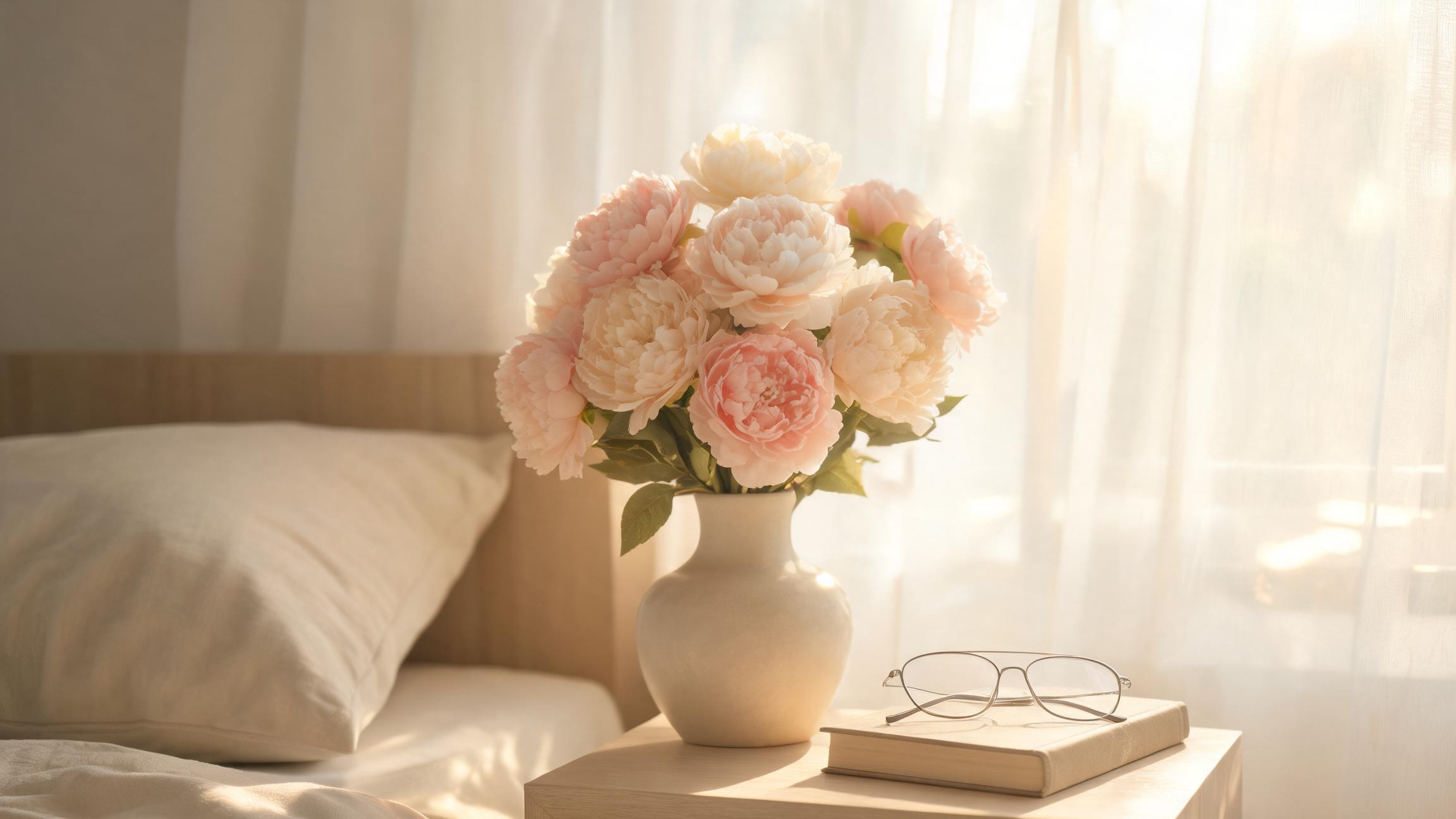
For anniversaries and memorial dates
When a date matters — anniversary, the anniversary of someone’s passing, a graduation — a flower that lasts as long as the memory is appropriate. Many people who receive fresh flowers on these dates are quietly disappointed when they’re gone in a week. A lasting arrangement becomes the fixture of the date.
For housewarmings and new jobs
Moving in or starting a new role means a new desk or shelf that needs something on it. An artificial bouquet is a “first thing on the new shelf” gift — practical, warm, and instantly wearable. It also pairs naturally with the practical angle: new homes and offices rarely have time for flower maintenance.
For people who kill every plant they own
There’s a specific person who has received forty “easy-care” plants and killed all forty. Gifting them fresh flowers or living plants is, at this point, almost insulting. An artificial bouquet is the respectful option: the beauty of flowers with zero failure mode. It’s the gift that finally works.
Four Occasions Where You Should NOT Gift Artificial Flowers
Honesty is what makes this guide useful, so here’s the other half of the list.
- First romantic gesture. Early in a relationship, fresh flowers carry a symbolic message that artificial ones undermine — the scent, the fragility, the “I thought of you today” energy. Save artificial blooms for an established relationship where longevity becomes the point.
- Weddings and formal events. Unless the couple explicitly asked for faux decor (and many do, for budget), showing up to a wedding with artificial flowers as your gift can read as cost-cutting. The wedding florals themselves are another story — that’s covered in silk vs. real for weddings.
- For someone who collects fresh-cut flowers. The person with a standing florist subscription has already told you what they love. Gifting the permanent version of their favorite thing can feel like a comment on their habit. Respect the subscription.
- Traditionalists. Some people simply hold that flowers, like food, should be real or not at all. You know who they are. This isn’t a debate worth having with them — a potted plant or a fresh bouquet wins.
Match the Flower to the Relationship
| Recipient | Best pick | Why |
|---|---|---|
| Mom or grandma | Peonies in soft pink / cream | Warm, classic, reads “cared for you” — peony bouquet |
| Partner (established) | Roses, deep burgundy or blush | Romantic without the “first date” baggage — realistic rose bouquet |
| Best friend / roommate | Bright tulips or mixed stems | Playful, unpretentious — tulip bouquet |
| Colleague / housewarming | Hydrangeas, neutral tones | Safe, sophisticated, fits any desk — hydrangea bouquet |
| Premium occasion | Real-touch arrangement or mixed luxury bouquet | Material quality carries the message — real-touch hydrangeas or the original mixed bouquet |
If the recipient’s style leans boho and earthy, read dried vs. artificial flowers first — a dried-and-artificial hybrid can be the most personal gift of all, because it doesn’t look like anything from a store.
Make It Feel Like a Gift, Not a Product
Artificial flowers fail as gifts mostly when they arrive looking like inventory. The fix is presentation, and it’s cheap:
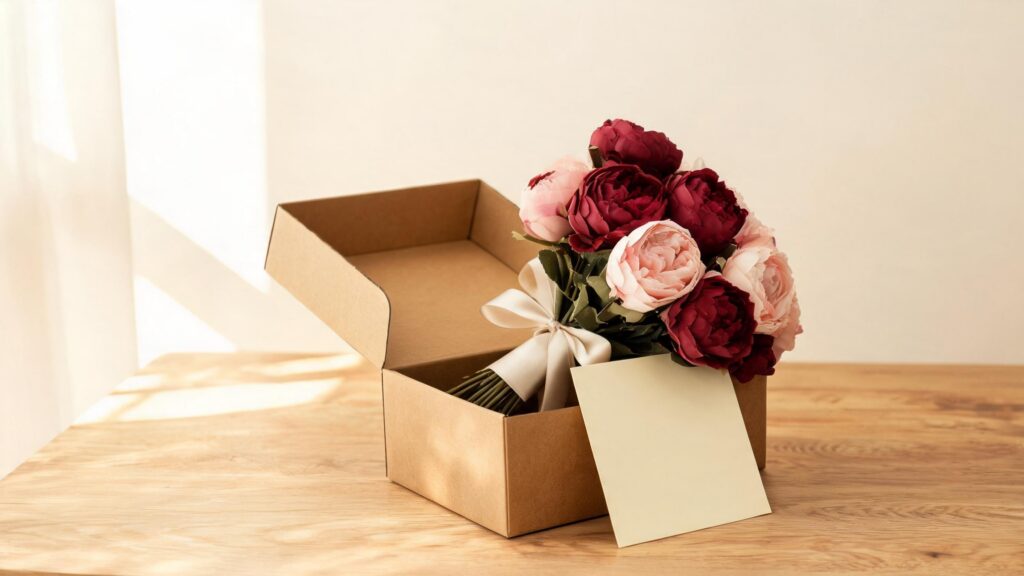
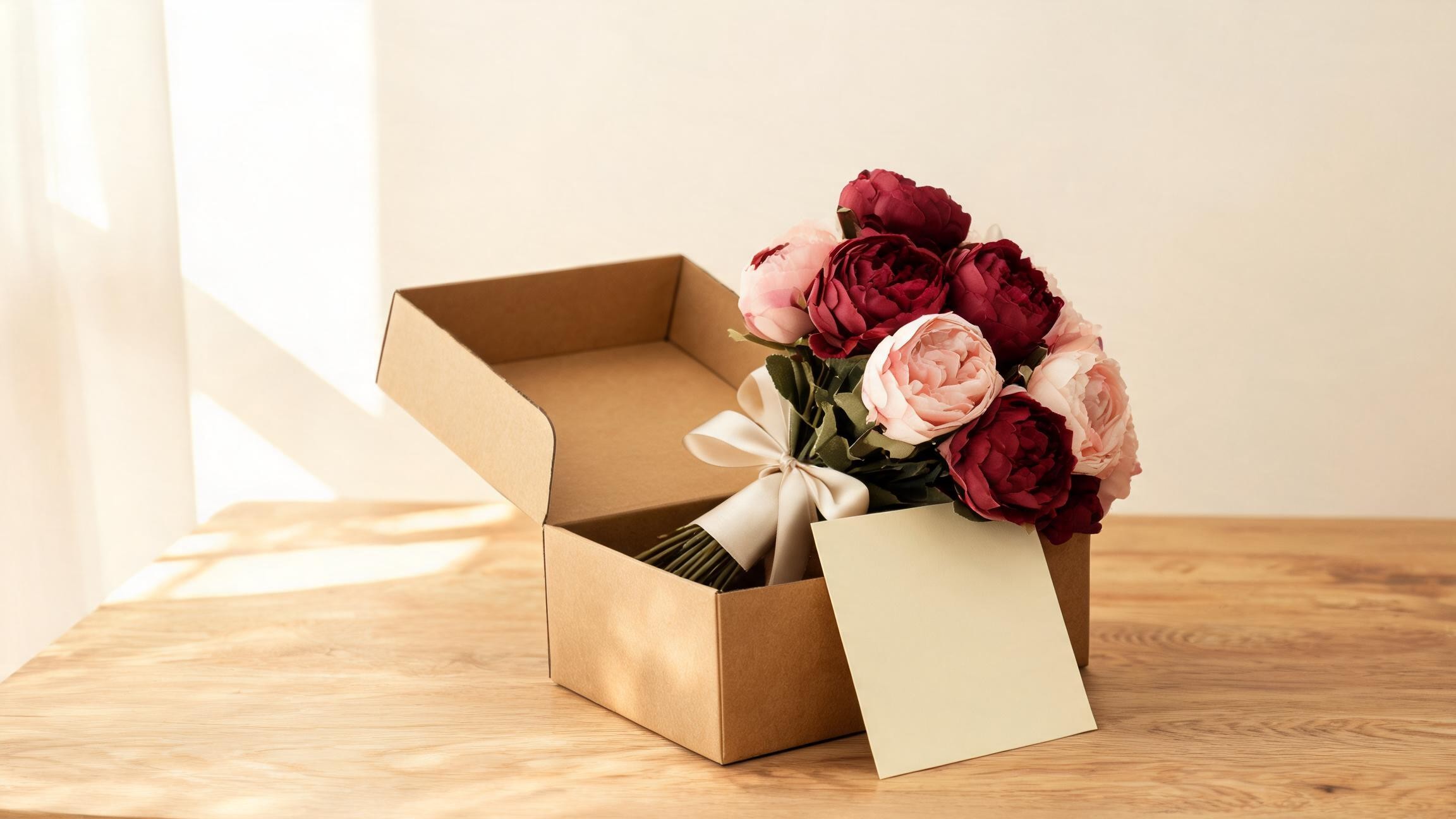
- Wrap it like a bouquet. Kraft paper or fabric wrap, silk ribbon, a small handwritten card. Thirty seconds of effort changes the entire category of the object.
- Include a vase or container. The #1 reason a gifted arrangement ends up in a drawer is that the recipient has nothing to put it in. Pair a bouquet with a basic ceramic vase and the gift is instantly complete.
- Write the reason. A card that says “these don’t need water, like our friendship” or “they’ll still be here next year, like us” turns a material gift into a message. The words do the work the flowers can’t.
- Fluff before giving. Shipping compresses petals. Spend five minutes separating petals and shaping stems before you hand it over — it’s the difference between “store-bought” and “arranged.”
The Cost Angle: What the Gift Actually Costs
An artificial bouquet costs $15–50 once. A comparable fresh bouquet costs $15–25 — weekly, if it’s being kept on a desk or nightstand. Over a year, the fresh route is $780–1,300 for something that’s gone every seven days; the artificial route is done at the moment of gifting. The full arithmetic, including the break-even point, is in our flower cost breakdown — and it’s the quiet reason this gift keeps working long after the occasion.
For practical questions about keeping either type clean and presentable for the months ahead, our artificial flower cleaning guide has the routine.
Top Pick: The Real-Touch Bouquet That Reads Premium in Any Home
For the “make it feel like a gift” test above, real-touch hydrangea reads as premium the moment it is unboxed — a strong default when the recipient is hard to read.
- Product: 6 Stems Real Touch Hydrangea Bouquet — lifelike faux silk blooms
- Price: $35.99 with free shipping
- Why it fits this guide: matches the premium-material and lasting-value checks for a successful gift
Shop the Real Touch Hydrangea Bouquet →
Frequently Asked Questions
Is it rude to give someone fake flowers?
Not inherently — but it depends entirely on the recipient and the occasion. It’s rude when it reads as cost-cutting to someone who loves fresh flowers, or on a first romantic gesture where the freshness is the message. It’s excellent when the recipient can’t keep real flowers alive, has allergies, lives far away, or wants a lasting reminder. Run the three questions at the top of this guide before deciding.
Do artificial flowers make a good Mother’s Day gift?
Yes, when the flowers are the point — many mothers appreciate a bouquet that stays perfect on the table all year instead of dying before the thank-you note. Add a handwritten card and pair it with a vase so it doesn’t feel like a shortcut. If your mom is a fresh-flower traditionalist, go with the real thing and a vase subscription instead.
How do I make an artificial bouquet look more expensive?
Quality material first — real-touch and premium silk petals don’t read as plastic — then presentation: fluff the petals, wrap in fabric or kraft paper, add a silk ribbon, and include a vase. The “does it look cheap” check explains exactly what gives cheap faux flowers away at arm’s length.
Can you send artificial flowers by mail?
Yes, and it’s one of their advantages over fresh. Artificial bouquets ship in boxes, survive days in transit, and need only a few minutes of fluffing on arrival. Fresh flowers need overnight courier handling and still arrive tired. For long-distance gifting, artificial flowers are the practical choice.
What’s the best artificial flower for someone who hates clutter?
A single elegant stem or small arrangement rather than a full bouquet — one tall vase with a few quality stems reads as intentional decoration, not stuff. Real-touch hydrangea stems work well because they look expensive and need no maintenance; the real-touch hydrangea guide explains why the material reads as premium.
The Bottom Line
Artificial flowers are not a universal gift and not a forbidden one. They are a surgical gift: perfect for allergies, long distance, hospital stays, parents, anniversaries, housewarmings, and the plant-killer in your life; wrong for first dates, wedding presents, and fresh-flower loyalists. Ask the three questions, pick the right bloom for the relationship, wrap it like a present, and write the reason on a card — that combination beats a $40 fresh bouquet that dies in a week, in the moments where it’s the right call.
Start with the material quality: a real-touch hydrangea bouquet that reads as premium in any home, or a soft peony bouquet for the classic, warm recipient. Pair it with a vase and a card, and the gift is complete.
Ready to give a gift that doesn’t wilt?
The Real Touch Hydrangea Bouquet is the premium pick — $35.99 with free shipping and 30-day returns.