Key Takeaways
Forget the $80 pre-made listings. Learn the 3 rules, 3 color schemes, and 5-step build that make a Thanksgiving centerpiece look styled — in under an hour.
Search “thanksgiving table centerpiece” and you’ll get 5,000 product listings — pre-made arrangements, most of them $80 or more, most of them sold out by mid-November. What you won’t get is the actual method: how to build one yourself, from a table runner to the final taper candle, in under an hour.
That’s this guide. No shopping list you have to copy exactly — just the rules that make a centerpiece look expensive, three color schemes to steal, and a five-step build sequence you can execute the afternoon before Thanksgiving. Whether you buy a pre-coordinated bouquet or assemble stems you already own, these rules are what separate “arranged” from “accidental.”
Three Rules That Make a Centerpiece Look Professional
Everything else in this article is a variation on these three rules. Get these right and the rest is taste.
Rule 1: Work in the conversation zone — or above it
The most common centerpiece mistake is the medium height: tall enough to block the person across the table, not tall enough to be dramatic. Pick one of two heights and commit:
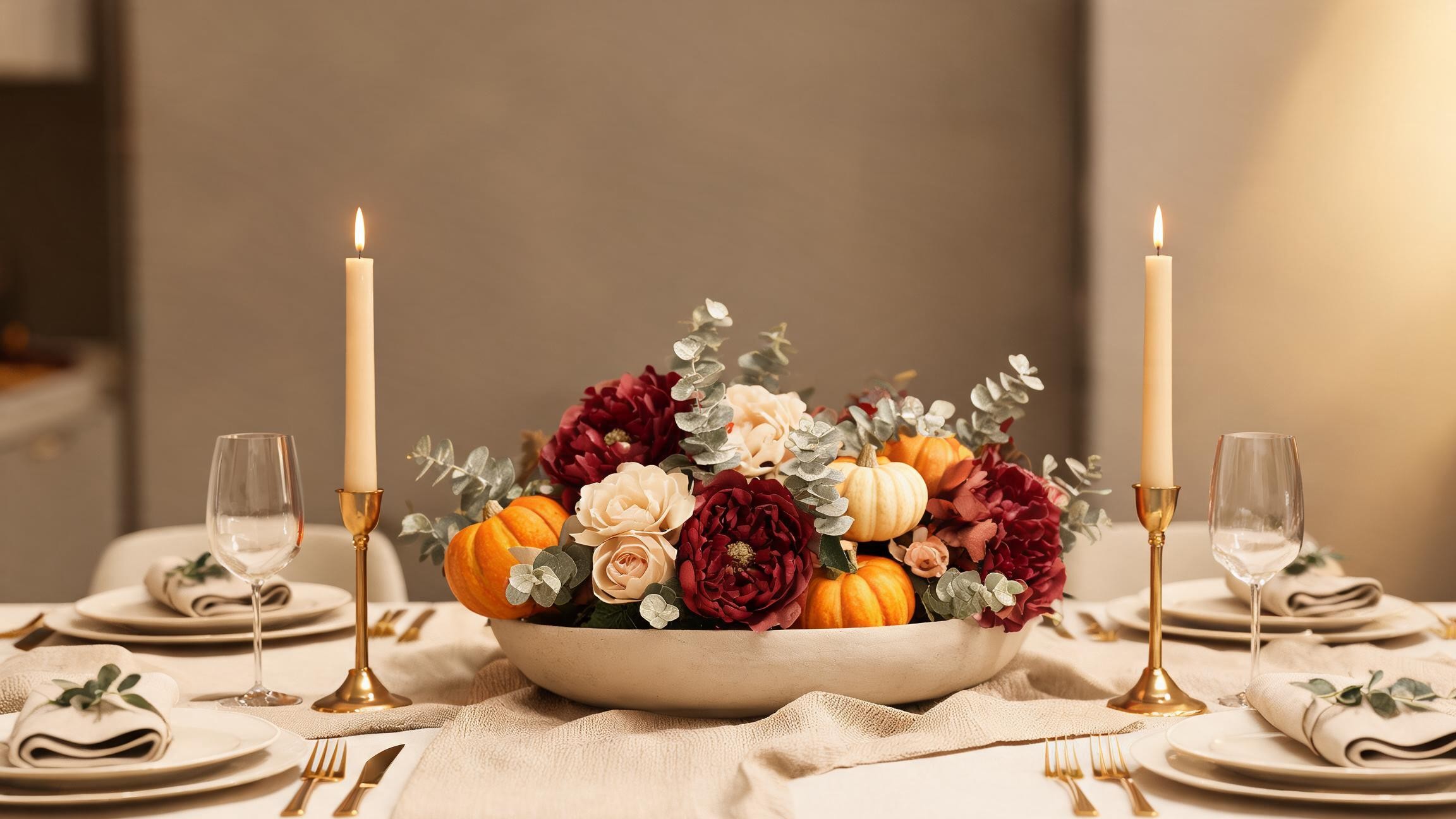
- Low (under 12″). Best for seated dinners and family gatherings where people talk. A low ceramic bowl with a full bloom arrangement and candles around the edge keeps the view open.
- High (over 24″). Best for buffets, sideboards, and standing receptions. A tall vase or candelabra arrangement clears sight lines entirely and reads as a statement.
Anything between 12″ and 24″ over a dining table is where conversations die. Choose low or high — never middle.
Rule 2: Use the 60-30-10 color formula
The formula interior designers borrow for rooms works on a table too:
- 60% neutral base — tablecloth or runner, plates, the container itself. Cream, oat, taupe.
- 30% fall hero color — the flowers. Burgundy, rust, terracotta, deep orange.
- 10% accent — small pumpkins, berries, candle wax, eucalyptus. The details your eye finds last and remembers.
When a centerpiece looks “busy,” it’s usually 80% accent color and no discipline. Rebalance toward the neutral base and it instantly calms down. Our complete guide to choosing and styling artificial flowers applies the same logic to the rest of the home.
Rule 3: Build in three layers, bottom to top
A one-layer arrangement — a vase of flowers, done — looks like a gift. A three-layer arrangement looks designed:
- Base layer: foliage and filler along the container rim. Eucalyptus, olive branches, seeded eucalyptus — anything that trails slightly.
- Hero layer: the largest blooms at the center, 2–3 colors max. These carry the 30% color.
- Height layer: taper candles, tall stems, or a branch reaching above the blooms. This gives the eye a vertical path.
This three-layer structure is exactly how pre-arranged fall bouquets are built — and it’s why a good one can be dropped into a vase and look finished. The fall bouquet we carry layers hydrangea, rose, peony, and dahlia in exactly this order, so it works as the hero layer of your centerpiece without any rearrangement.
Three Autumn Color Schemes You Can Steal
| Scheme | Base (60%) | Hero (30%) | Accent (10%) | Best for |
|---|---|---|---|---|
| Classic Harvest | Cream linen | Rust + terracotta dahlias | Mini pumpkins, amber candles | Traditional family table |
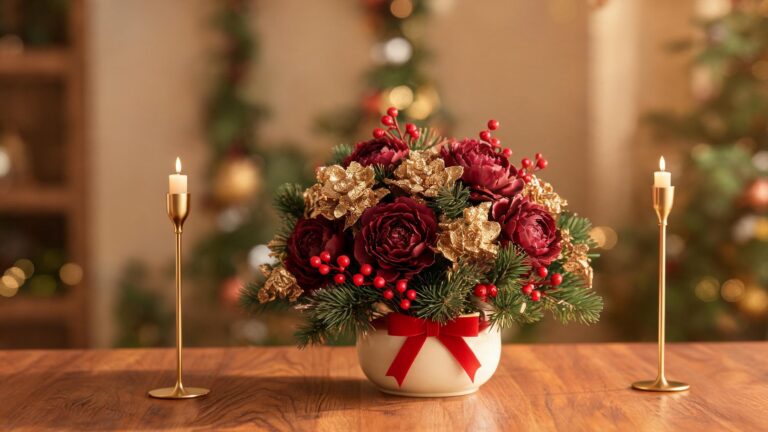
| Burgundy & Berry | Taupe or charcoal | Deep burgundy peonies/roses | Red berries, dark green eucalyptus | Evening dinner, moodier setting |
| Oat & Neutral | Oat linen | Cream + champagne blooms | Dried grass, beige pumpkins | Modern / boho tables |
If you’re matching existing tableware, pull the hero color from your plates or napkins — that one connection makes the whole table feel intentional. For the harvest palette specifically, the 16-stem peony fall bouquet covers the burgundy-and-berry scheme in a single purchase.
Choose the Right Container First
The container decides the arrangement’s height category, so choose it before the flowers:
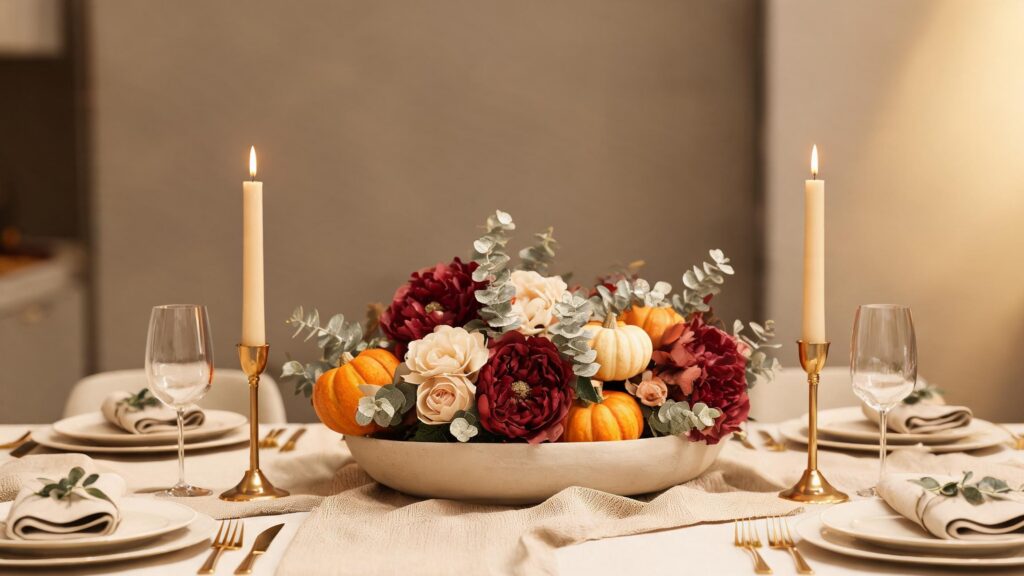
- Low ceramic bowl / pedestal bowl: the conversation-zone classic. Wide rim gives the three-layer structure room to breathe. This is what the hero photo above uses.
- Tall vase: for the high category. Choose a matte ceramic over clear glass — glass shows stem clutter and reads less “styled.”
- Pumpkin-shaped or wooden containers: instant autumn without extra effort. A gourd-shaped vessel does the seasonal work while your flowers stay reusable all year.
- Anything you own: a serving bowl, a wooden crate, a cake stand. The rules matter more than the vessel. If the container is wide and shallow, you’re in the low category and you win.
Mix Real, Dried, and Artificial on One Table
You don’t have to pick one material philosophy. The most convincing fall tables mix them deliberately:
- Artificial blooms for the hero layer — saturated color, stays perfect through the whole meal and every year after.
- Dried grass and pampas for texture — the muted, papery stems anchor the natural feel.
- Real elements only where they’re easy: small pumpkins, gourds, apples in a bowl, fresh eucalyptus if you have it.
This hybrid is the sweet spot of both worlds — and it’s covered in depth in our dried vs. artificial flowers comparison. One honest warning: dried stems are brittle and don’t survive being restyled between years, so use them as the throwaway base and put your money into artificial hero blooms that last.
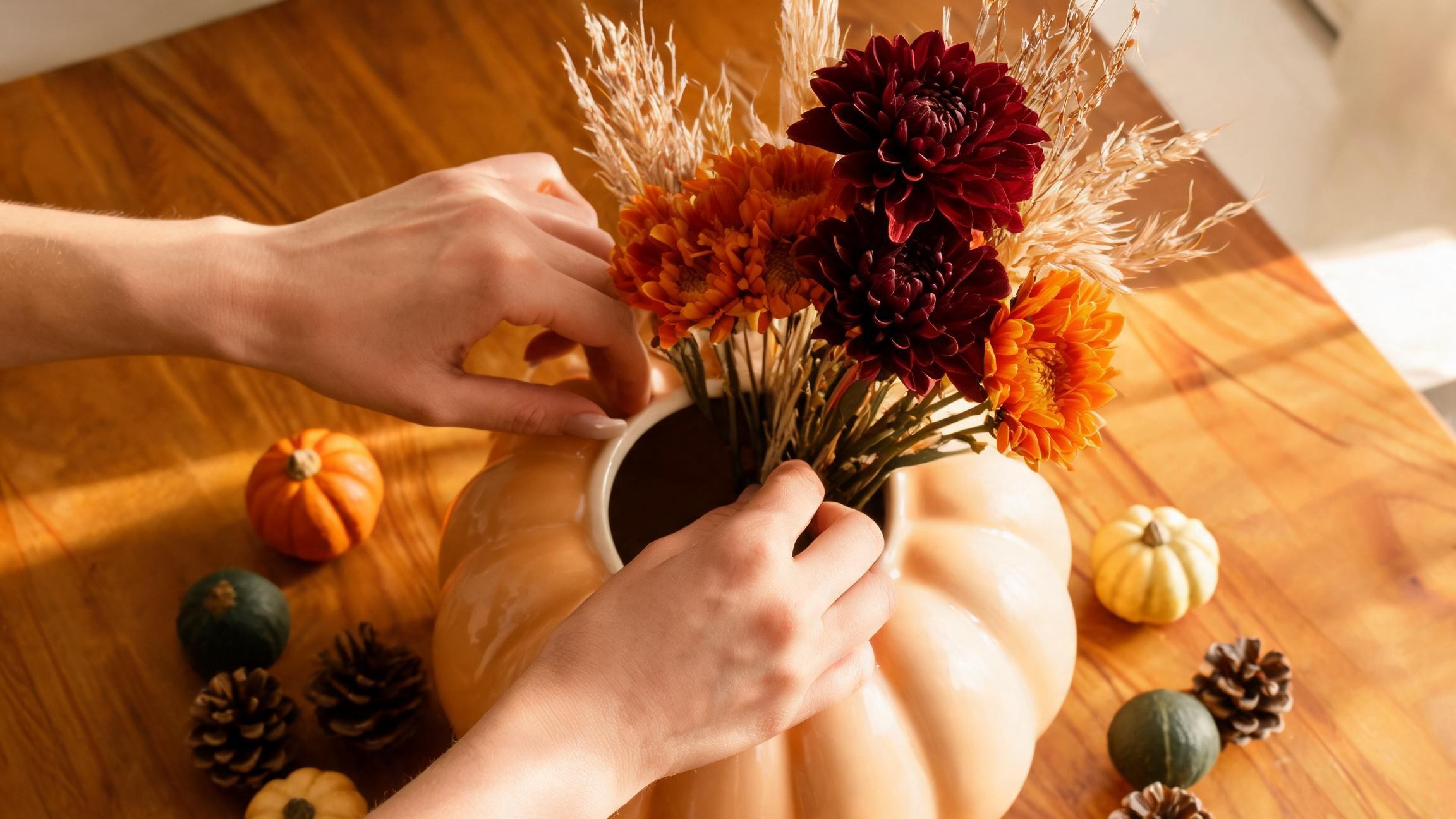
How to Build a Centerpiece in 5 Steps
Plan for 45–60 minutes, an hour before guests arrive. Lay everything on the table first so you can see the full inventory before you start placing.
Step 1: Set the table base
Runner or cloth down first, then the container centered. Place the centerpiece container slightly off the geometric center — a few inches toward the buffet side — so the table reads as a landscape, not a bullseye.
Step 2: Lay the foliage base
Cut stems to about 1.5× the container depth. Fan foliage low around the rim and let a few stems trail over the edge. This is your 60% neutral color doing the grounding work — resist adding color here.
Step 3: Place the hero blooms
Work from the center outward. The largest bloom goes in the middle, slightly taller than the foliage; the rest radiate around it in a loose triangle, not a ring. Alternate bloom sizes — one big, two medium, filler between. Rotate the container and check all sides; guests will see it from every seat. For arranging technique in a vase, our 6-step vase arrangement guide has the mechanics.
Step 4: Add the height elements
Taper candles in holders go outside the bloom zone, near the container edges, so flames never touch petals — artificial or real. If you’re in the low category, candles at 12″ are the entire vertical story. Add one or two taller stems (dried grass, curly willow, a branch) reaching above the flowers for the third layer.
Step 5: Do the sight-line check
Stand across the table from each seat and check: can you see the person opposite? If any flower or candle is at face level, lower it or move it outboard. Step back and scan for balance — the arrangement should be weighted toward the center, with accents (pumpkins, berries) distributed asymmetrically, never mirrored. Mirror = product catalog. Asymmetry = styled.
Budget in Three Tiers
| Tier | Cost | Approach |
|---|---|---|
| DIY from stems | $20–35 | 2–3 fall stem packs + a bowl you own + candles + pumpkins from the grocery store |
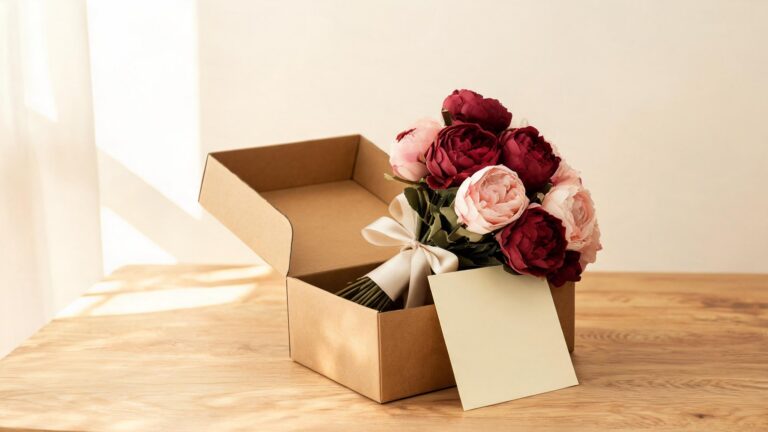
| Pre-coordinated bouquet | $45–50 | One fall bouquet dropped into a bowl, then add candles and pumpkins — 15 minutes, guaranteed |
| Full statement | $75+ | Bouquet + new low bowl + candelabra + dried grass bundle + premium linens |
The math behind the middle tier is worth stating: one $46.99 pre-coordinated bouquet replaces a stream of $15–25 grocery store mums every single fall. The real-vs-artificial cost comparison shows the two-year break-even — after that, the centerpiece is effectively free.
Thanksgiving Day Maintenance (or the Lack of It)
Real flowers on Thanksgiving need watering at 8 a.m., trimming at noon, and a mid-meal rescue when they droop by dessert. Artificial flowers need nothing — the turkey demands your attention enough.
If your hero blooms are artificial, the only maintenance is a dust before the table setting and a wipe of the petals if gravy lands near. If you’re mixing in real eucalyptus, pull it after the meal so it doesn’t dry and shed onto the tablecloth. One quality check before guests arrive: the “does this look cheap” test under indoor lights — flat, glossy petals are the only tell, and good blooms don’t have it.
Top Pick: A Pre-Coordinated Fall Bouquet for the Three-Layer Base
The fastest route to the three-layer structure above is a bouquet that already mixes hydrangea, rose, peony, and dahlia — so you can spend your effort on candles and tableware instead.
- Product: Artificial Fall Flowers Bouquet — mixed hydrangea, rose, peony & dahlia
- Price: $46.99 with free shipping
- Why it fits this guide: follows the hero-layer structure and autumn palette recommended in the steps above
Shop the Fall Flowers Bouquet →
Frequently Asked Questions
How tall should a Thanksgiving centerpiece be?
Under 12 inches for seated conversations, or over 24 inches for buffets and sideboards. The 12–24 inch zone blocks sight lines across the table and is the most common amateur mistake. Low arrangements with taper candles give you the height drama without the blockage.
Can I use artificial flowers on a Thanksgiving table?
Yes — and they’re the practical choice for a table that needs to stay perfect through a long meal. Artificial blooms won’t wilt mid-dinner, don’t need water near the food, and can be reused every fall. The one rule: buy quality blooms, because cheap artificial flowers are instantly visible at close table distance.
How do I keep a centerpiece from blocking conversation?
Stay in the low category (under 12″) and keep candles near the container edges rather than centered. Do the sight-line check from every seat before guests arrive. If any element is at face level, it’s too tall.
What flowers are in season for fall?
Dahlias, chrysanthemums, sunflowers, and sedum are the classic fresh fall flowers. For artificial arrangements, the palette matters more than the species — burgundy peony, rust dahlia, and cream hydrangea capture fall better than most “fall flower” mixes. Hydrangeas are the easiest bloom to fake well; the real-touch hydrangea guide explains why.
What’s the fastest Thanksgiving centerpiece?
Drop a pre-coordinated fall bouquet into a low bowl, add three taper candles and four mini pumpkins, and skip the foliage layer — the bouquet’s own greens do the base work. Fifteen minutes, and it outlasts the meal by years.
The Bottom Line
A great Thanksgiving centerpiece is not about buying more — it’s about three rules: stay in the conversation zone or above it, keep the 60-30-10 discipline, and build in three layers. Choose a color scheme first, let the container decide your height, and give the artificial blooms the job of carrying color so they’re reusable next year.
Start with the hero layer: a pre-coordinated fall bouquet that already follows the three-layer structure, then add candles, pumpkins, and your own tableware. The table will look styled for hours — and the flowers will still be perfect at next year’s dinner.
Related: Match your centerpiece to the rest of the room with the complete artificial flower guide, and read the cost breakdown before you decide where to spend.
Ready to set the table that holds all night?
The Fall Flowers Bouquet is the pre-built hero layer — $46.99 with free shipping and 30-day returns.