Most artificial bouquets are bought with the eye and regretted when they reach the vase. The photo looks full; the product arrives, and the arrangement feels thin, top-heavy, or simply wrong for the room. The fix is not buying a more expensive bouquet. It is deciding before you scroll: where it will sit, how wide the vase is, and how many stems that actually needs. This guide walks through those decisions one by one.
Where the Bouquet Will Live
Start with the surface, not the flowers. A dining table centerpiece needs a low, open profile that does not block conversation. A console or entryway can take height. A shelf needs something compact. Measure the vase opening first — it is the single number that decides everything else. A bouquet built for a narrow 6 cm neck will look sparse in a 15 cm wide-mouth vessel, and a dense multi-bunch arrangement looks cramped in the opposite.
Full-looking arrangements are a function of stem volume relative to the opening. Decide the spot, measure the mouth, then shop for stem count.
How to Read the Listing Like a Florist
Product photos are styled with filler, fluffing, and good light. The listing text is more honest. Three numbers to check before trusting any photo:
- Full height — a “60 cm bouquet” and a “flower head only” listing are different products. If the listing gives only flower diameter, the total height may disappoint.
- Stem count — a $29 bouquet with 6 stems and a $55 bouquet with 20 stems are not the same category. Count the stems, not the blooms per head.
- Single stem vs. assembled bunch — some listings sell one stem, others sell a wrapped bunch. The words “bouquet,” “bunch,” and “per stem” change the math completely.
If a listing omits these, that omission is itself information.
Stem Count: The Number People Get Wrong
The most common mistake is judging fullness by color or size instead of stem count. Here is the working reference we use for indoor vases:
| Vase opening | Stems you need (average bloom size) | Example |
|---|---|---|
| 6–9 cm (narrow neck) | 6–9 | compact entryway vase |
| 10–14 cm (standard) | 10–15 | living room side table |
| 15–20 cm (wide mouth) | 16–25 | dining centerpiece |
| 25 cm+ (floor vessel) | 30+ | floor arrangement |
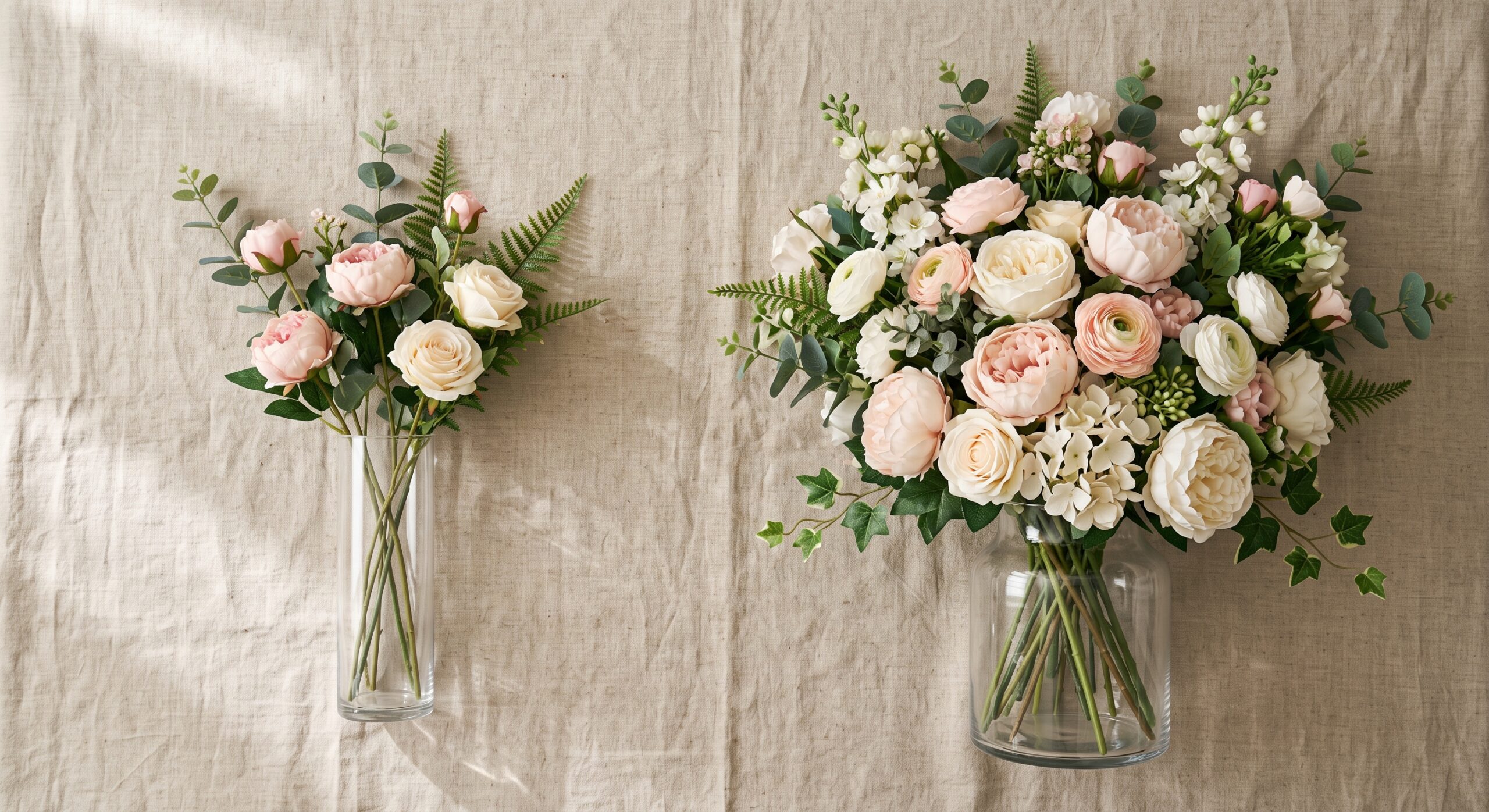
Two stems less than the table says is the difference between “styled” and “sparse.” If you plan to pair the bouquet with greenery or filler, add 30–40% more stems than the vase alone would suggest.
What a Natural Mixed Bouquet Actually Contains
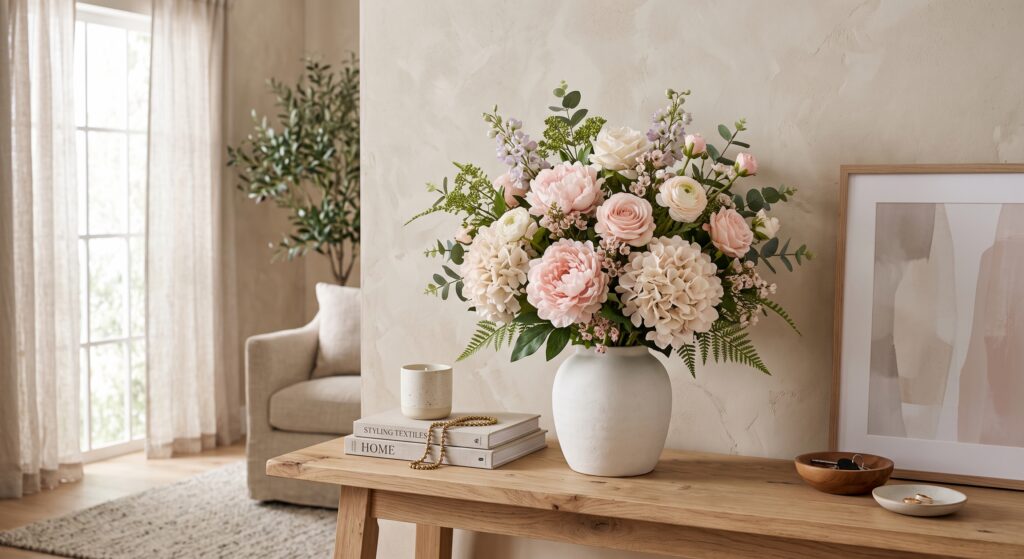
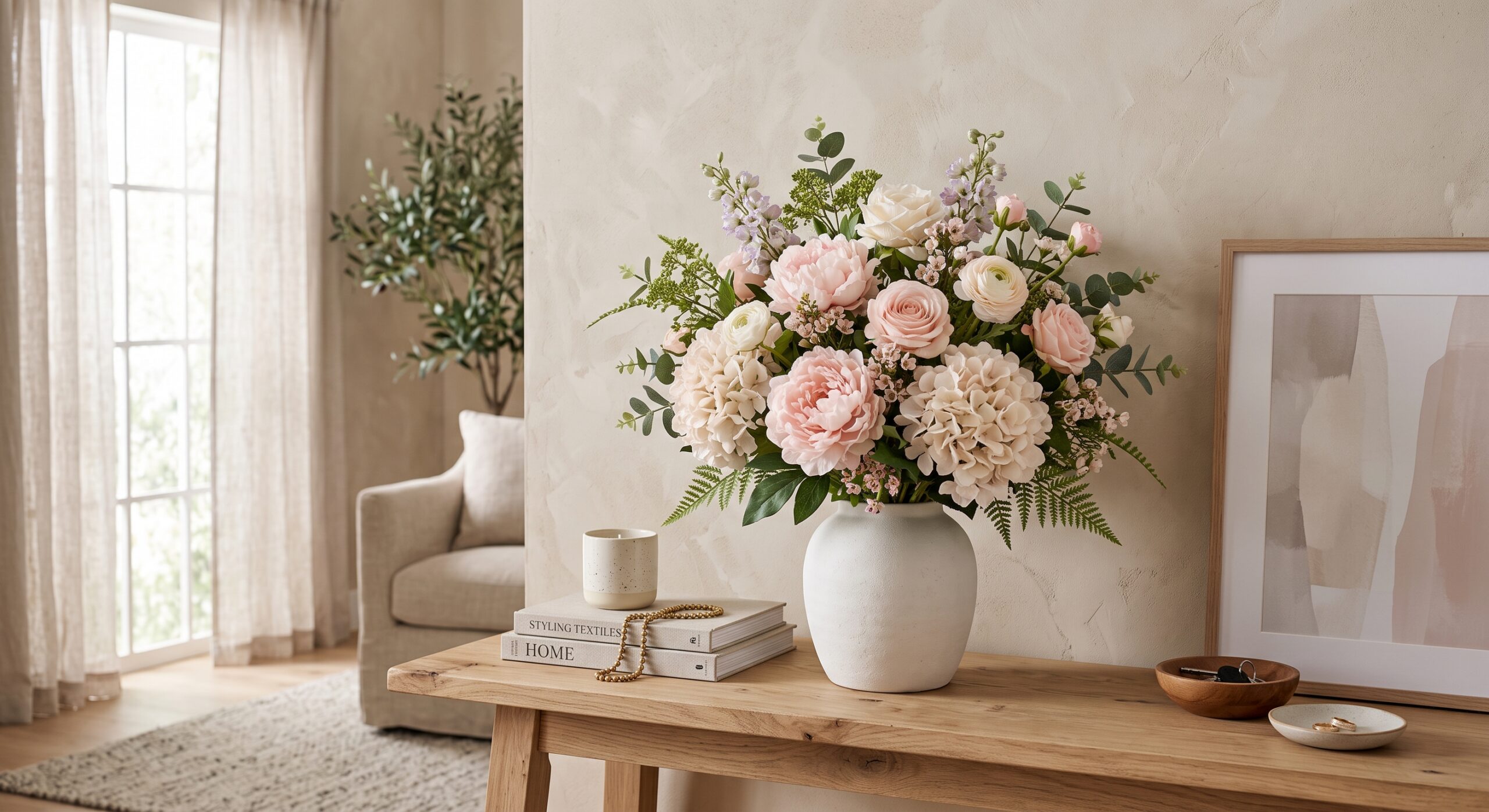
A realistic mixed bouquet is not a random collection of pretty flowers. It follows a quiet formula:
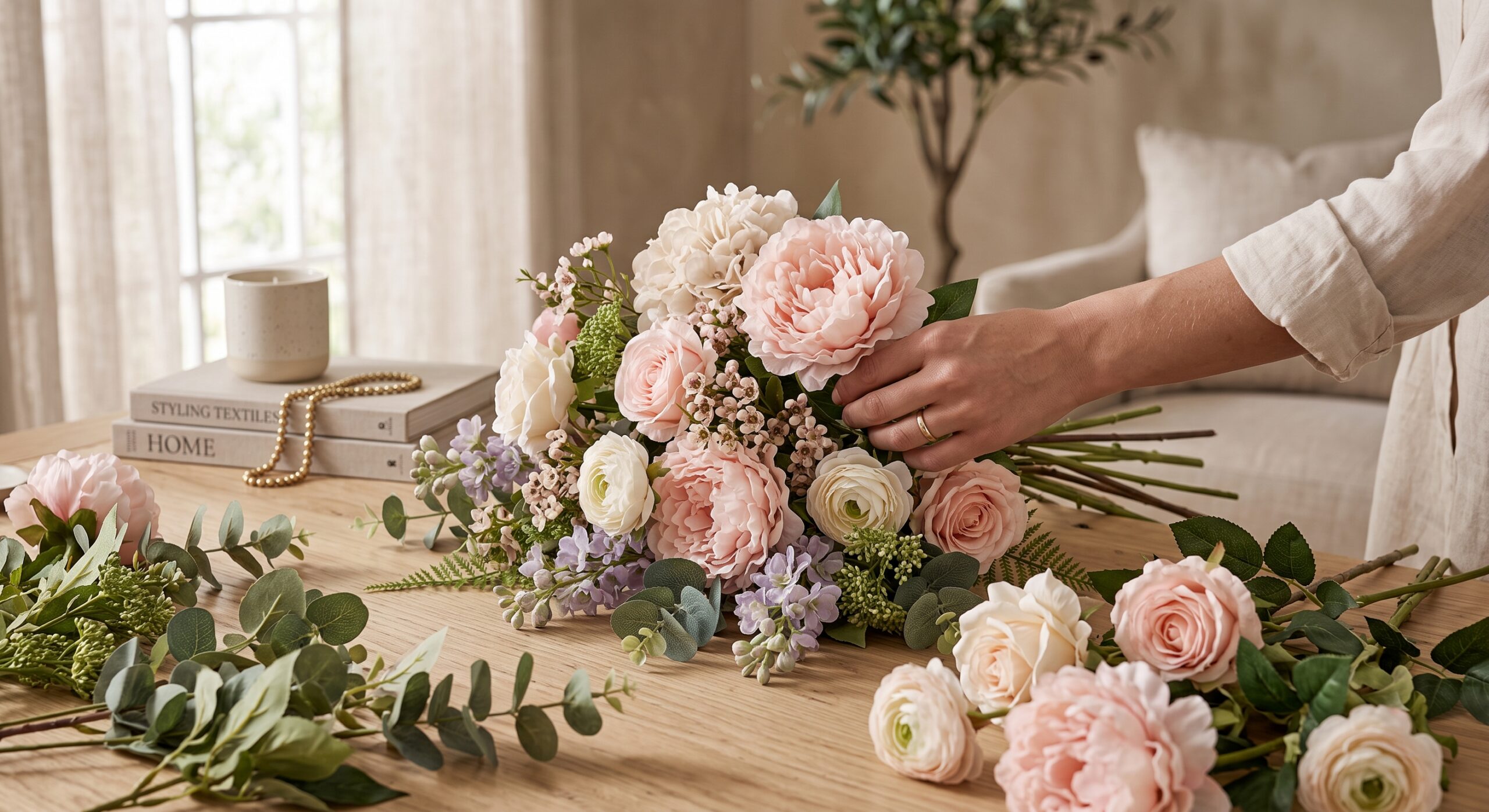
- Focal blooms — 4–6 large heads (peony, hydrangea, rose) set the eye level.
- Secondary blooms — slightly smaller flowers that add color and rhythm between the focal heads.
- Filler and foliage — smaller stems that soften the gaps and stop the arrangement looking like flowers standing in a line.
When you are comparing two mixed bouquets, check the ratio. One with too many equal-sized heads reads as a “bunch,” not as an arrangement. The blend — big + medium + small — is what makes it look like someone styled it, which is the entire point of buying a pre-assembled bouquet. Step-by-step, our vase arrangement guide walks through the same layering.
Material, Close Up: What Reads as “Real”
Skip the marketing name and use a three-second test:
- Matte, not glossy — light reflecting sharply off a petal is the fastest fake signal.
- Some variation in petal color and edge — flat, single-tone petals read as plastic.
- Bendable stems — a stem you can curve slightly and cut to length lets you fit the vase; a rigid one limits you to the photo’s shape.
Real-touch and soft-touch coatings feel closer to a living petal up close; silk-style fabric looks lush at a distance. For a dining table where guests touch the flowers, favor soft-touch. For a console you will see but rarely handle, silk-style is the better value.
A 5-Point Checklist Before You Check Out
- Vase opening measured? Then pick the stem range from the table above.
- Listing gives height and stem count? If not, treat the photo with suspicion.
- Focal + secondary + filler in the mix? Avoid equal-sized “bunches.”
- Petals matte, stems bendable?
- Will it survive the room — away from direct sun and heat sources? If sun exposure worries you, see how quickly fake flowers fade in sunlight.
Pass all five, and the bouquet will read as styled, not staged.
Top Pick: A Bouquet With the Stem Count to Back It Up
If you want a listing to measure against the checklist above, this one carries a verified stem count and a mixed, structured arrangement.
- Product: 11 Stems Original Artificial Flowers Bouquet — mixed silk blooms
- Price: $46.99 with free shipping
- Why it fits this guide: explicit stem count and a natural mixed structure, the two numbers this article says to verify
Frequently Asked Questions
Can a 9-stem bouquet fill a wide-mouth vase?
Not convincingly. A 9-stem compact bouquet suits a narrow-neck vase. For a 15–20 cm opening, plan on 16–25 stems, or add filler and foliage to close the gaps.
Do mixed bouquets ship looking flat?
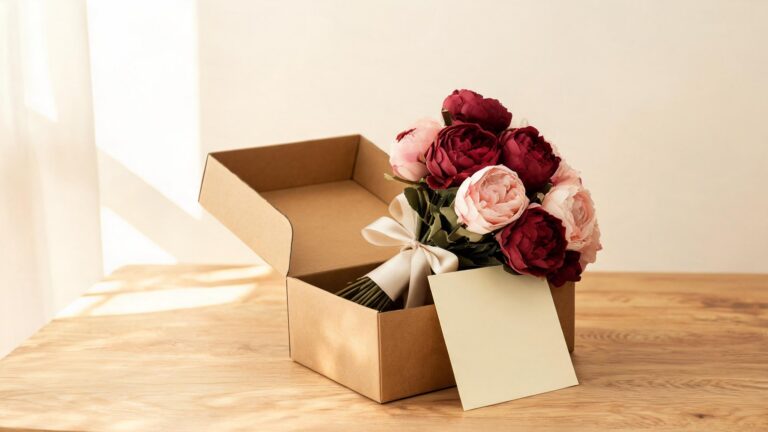
Most do — they are packed flat for transit. Petals and stems usually fluff back once you separate, shake, and gently bend them. Allow a few minutes of unboxing and fluffing time on delivery day.
Silk or real-touch for a dining table?
For a table people touch and sit near, real-touch/soft-touch coatings hold up to close inspection better. Silk-style reads beautifully from across the room at a lower price.
The Bottom Line
The bouquet that looks right in the product photo is the one bought on impulse. The bouquet that looks right in your home is the one chosen against a measured vase, a stem count, and a mix that has structure. Decide the room first, verify the numbers, and the flowers will do the rest.
Related: Choosing stems for a table centerpiece? See our vase sizing guide, or compare materials in real-touch vs. silk flowers.
Ready to choose your bouquet?
The Original Bouquet lists an 11-stem mixed structure you can verify before checkout — $46.99 with free shipping and 30-day returns.